Best Supplements for Muscle Growth: What Actually Helps?

Supplements can help with muscle growth, but they are often marketed as if they matter more than they really do.
In reality, most hypertrophy results come from a few fundamentals: progressive resistance training, enough calories, sufficient protein intake, sleep, and consistency over time. Supplements can support that process, but they cannot replace it.
The best supplements for muscle growth are not necessarily the most exciting ones. They are the ones with the strongest evidence, the clearest practical use, and the lowest need for marketing exaggeration.
This article explains which supplements are genuinely useful for building muscle, which ones are situational, and which are usually overrated.
TL;DR
- The best supplements for muscle growth are useful tools, not requirements.
- Creatine monohydrate has the strongest evidence for performance and hypertrophy support.
- Protein powder helps if you struggle to reach your daily protein intake.
- Caffeine can improve training performance and output.
- Pre-workouts depend entirely on their ingredients.
- BCAAs are usually unnecessary if protein intake is sufficient.
Beginner explanation: what do muscle growth supplements actually do?
Muscle growth happens when training provides a sufficient stimulus and the body has enough resources to adapt.
Supplements can support this process, but they rarely act directly. Instead, they improve performance, help meet nutritional needs, or increase consistency.
That means supplements do not replace good training or nutrition. They only enhance what is already working.
The foundation: supplements only work if the basics are in place
Before supplements matter, the basics must be in place.
This includes progressive overload, sufficient protein intake, adequate calorie intake, and recovery that allows adaptation.
If these are missing, supplements will have minimal impact. A good supplement strategy supports a good training system — it does not fix a poor one.
Not sure whether you’re eating enough to support muscle growth? Before spending money on supplements, use our free Macro Calculator to estimate your daily calorie, protein, carbohydrate, and fat targets based on your body weight, activity level, and goal.
The best supplements for muscle growth
To keep things practical, each supplement is given a simple THG verdict — a quick, evidence-based assessment of how useful it actually is.
| Supplement | Best use | THG verdict |
|---|---|---|
| Creatine monohydrate | Strength & repeated effort | Highest priority |
| Protein powder | Reaching protein intake | Very useful |
| Caffeine | Performance & focus | Useful |
| Pre-workout | Convenience | Situational |
| BCAAs | Recovery | Low priority |
Creatine monohydrate
Creatine monohydrate is the most consistently effective supplement for strength and hypertrophy.
It increases the availability of energy during high-intensity efforts, allowing you to train harder and accumulate more productive volume over time.
For practical dosing, see how much creatine to take per day.
Protein powder
Protein powder is not superior to whole foods — it is simply more convenient.
If you already reach your daily protein intake, it is optional. If you struggle to do so, it becomes highly practical.
For food-based options, see best protein sources for muscle growth.
Caffeine
Caffeine improves alertness, focus, and performance in many lifters.
This can lead to better training quality, but should be used strategically to avoid negative effects on sleep and recovery.
Situational supplements: useful, but not essential
Some supplements can be useful in specific contexts, but are not foundational.
Pre-workout supplements
Pre-workouts vary widely in quality. Their effectiveness depends entirely on the ingredients, not branding.
Many simply rely on caffeine as the main active component.
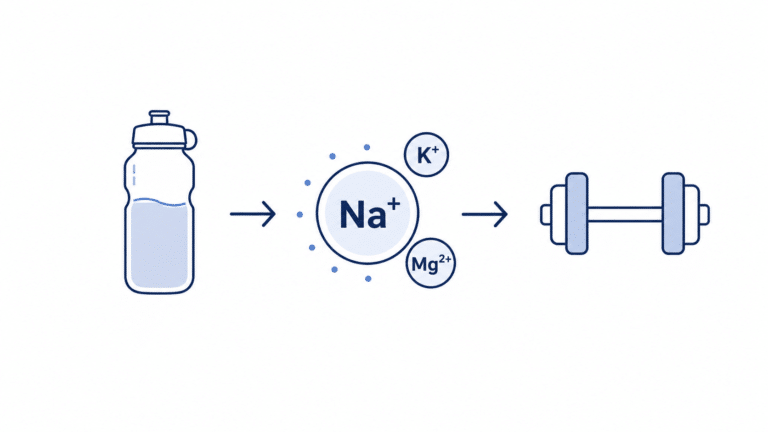
Electrolytes and carbohydrates
These may be useful during long or demanding sessions, but are rarely necessary for standard hypertrophy training.
Overrated supplements for muscle growth
BCAAs
BCAAs are unnecessary if total protein intake is already sufficient.
Complete protein sources already provide all essential amino acids required for muscle protein synthesis. For a deeper breakdown, read Are BCAAs Worth It for Muscle Growth?.
Testosterone boosters
Most testosterone boosters have little evidence supporting meaningful hypertrophy effects.
Fat burners
Fat burners do not contribute to muscle growth and may negatively impact recovery or calorie intake.
How to prioritize supplements for hypertrophy
- Creatine monohydrate
- Protein intake (food or powder)
- Caffeine (if useful)
- Everything else is optional
The goal is not to take more supplements. It is to use the few that actually support your training.
Why it matters
Supplements are easy to overvalue because they feel like a shortcut.
In reality, long-term hypertrophy depends on training, nutrition, and consistency.
A clear supplement hierarchy helps you avoid wasting money and focus on what actually drives results.
Practical takeaways
- Build the foundation first
- Use creatine consistently
- Use protein powder if needed
- Use caffeine strategically
- Avoid unnecessary supplements
What supplements are best for muscle growth?
The most useful supplements for muscle growth are creatine monohydrate, protein powder (if needed), and caffeine. These supplements either improve training performance or help you meet your nutritional requirements.
Do supplements actually build muscle?
Supplements do not directly build muscle. Muscle growth comes from resistance training, sufficient calories, protein intake, and recovery. Supplements can support this process, but they cannot replace it.
Is creatine the best supplement for muscle growth?
Creatine monohydrate is the most well-supported supplement for strength and performance. Over time, improved training performance can contribute to greater muscle growth.
Are BCAA’s worth it for muscle growth?
BCAAs are usually unnecessary if your total daily protein intake is sufficient. Complete protein sources already provide all essential amino acids needed for muscle growth.
Is protein powder necessary for building muscle?
Protein powder is not necessary if you already consume enough protein through food. However, it can be a convenient way to reach your daily protein target.
Should beginners
Beginners should focus on training, nutrition, and consistency first. Supplements can be added later if they solve a specific problem, such as low protein intake.
References
- Kreider RB et al. Creatine position stand
- Morton RW et al. Protein meta-analysis
- Grgic J et al. Caffeine meta-analysis
- Jäger R et al. Protein position stand
- Wolfe RR BCAA critique