Magnesium for Muscle Growth and Recovery: Does It Help?
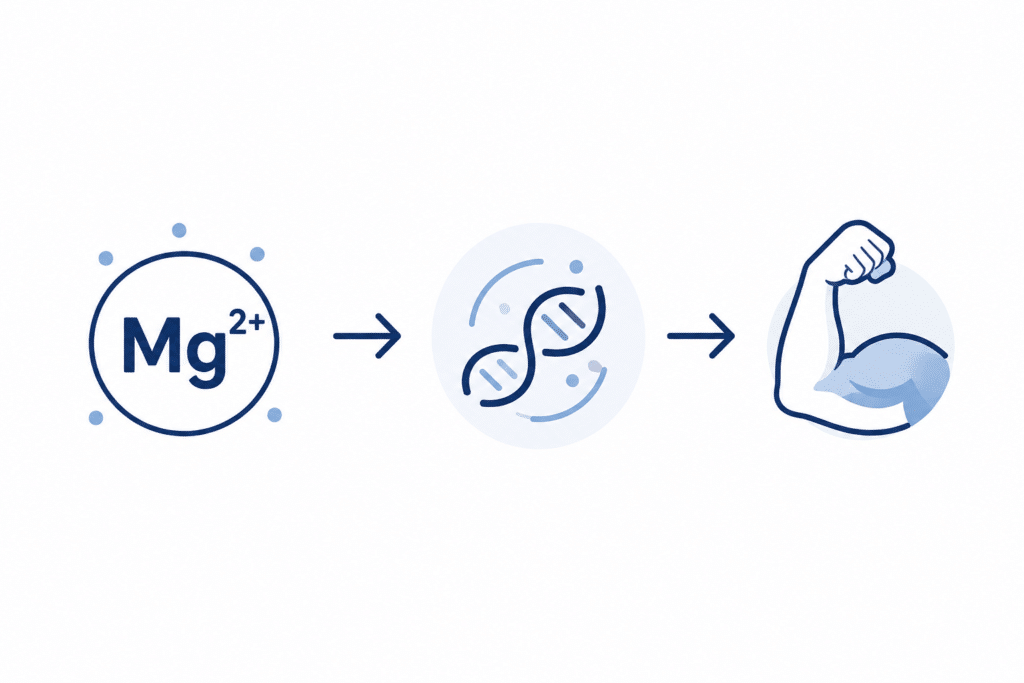
Magnesium for muscle growth sounds convincing on paper. It is involved in muscle contraction, energy production, nerve signaling, and protein synthesis—so taking more should help you build more muscle, right?
Not quite. Magnesium is essential, but that does not make it a muscle-building supplement in the same sense as creatine. Correcting a low intake may help you function and train normally; taking extra when your needs are already covered is unlikely to add noticeable muscle or strength.
I have used magnesium myself and discussed it with clients who were struggling with sleep, recovery, cramps, or muscle twitching. Sometimes it may be worth trying—but those symptoms are not a magnesium-deficiency test. Training fatigue, sleep, hydration, diet, stress, and caffeine often deserve attention first.
Key Takeaways
- Magnesium is essential for normal muscle contraction, energy metabolism, nerve function, and protein synthesis.
- Low magnesium intake may impair muscle function and physical performance.
- Supplementation is most likely to help people with a low intake, deficiency, or increased requirements.
- Magnesium is not a direct hypertrophy supplement and does not replace training, protein, calories, or sleep.
- Evidence for reduced muscle soreness and better recovery is promising but still limited.
- Magnesium does not reliably prevent ordinary muscle cramps in people who are not deficient.
- Magnesium glycinate and citrate are practical options, while magnesium oxide is generally less well absorbed.
What Is Magnesium?
Magnesium is an essential mineral involved in hundreds of enzymatic reactions throughout the body. These reactions include energy production, protein synthesis, glucose metabolism, nerve transmission, and normal muscle contraction.
Most magnesium in the body is stored in bone and soft tissue. Only a small amount circulates in the blood, which means a normal serum magnesium result does not always provide a complete picture of total magnesium status.
| Function | Why it matters for lifters |
|---|---|
| Energy metabolism | Supports reactions involved in producing and using ATP |
| Muscle contraction | Helps regulate normal contraction and relaxation |
| Nerve function | Supports communication between nerves and muscles |
| Protein synthesis | Contributes to normal tissue maintenance and repair |
| Bone health | Supports the skeletal system used during resistance training |
Does Magnesium Help Muscle Growth?
Magnesium supports processes that are necessary for muscle growth, but that does not mean supplementation directly increases hypertrophy.
Muscle growth is mainly driven by resistance training, sufficient protein, enough calories, progressive overload, and recoverable training volume. For the full foundation, read What Causes Muscle Growth?.
If magnesium intake is too low, normal muscle function and training performance may suffer. Correcting the problem could therefore help you train and recover more effectively. However, once magnesium needs are covered, taking more is unlikely to create an additional anabolic effect.
| Magnesium status | Likely effect of supplementation |
|---|---|
| Deficient or low intake | May improve normal muscle function and performance |
| Higher risk of low intake | Review food intake first; a supplement may help fill a persistent gap |
| Adequate intake and status | Direct muscle-growth benefit is unlikely |
This makes magnesium more similar to vitamin D than to creatine monohydrate. Correcting a deficiency can matter, but taking extra when your status is already sufficient does not automatically enhance hypertrophy.
Can Magnesium Improve Strength and Performance?
Research on magnesium supplementation and physical performance is mixed. Some studies report improvements in measures of strength or muscle function, particularly in older adults, untrained participants, or people with a lower magnesium intake. Other studies find little or no benefit in trained people with adequate nutritional status.
A systematic review and meta-analysis found no clear overall improvement in muscle fitness across all participants. Potential benefits appeared more likely in people with magnesium deficiency or in older adults.
For a healthy, resistance-trained person eating a nutrient-dense diet, magnesium should not be expected to work like a pre-workout or ergogenic supplement. Its main role is to support normal physiology rather than push performance beyond normal levels.
Does Magnesium Improve Muscle Recovery?
Magnesium is frequently marketed for post-workout recovery. There is some evidence that supplementation may reduce perceived soreness or markers of muscle damage after demanding exercise, but the research base is still relatively small.
A recent systematic review reported potentially beneficial effects on muscle soreness and recovery. However, only a limited number of studies met the inclusion criteria, and the protocols varied considerably.
The practical interpretation is that magnesium may help at the margins, especially when intake is low. It should not be treated as a reliable cure for soreness or poor recovery.
If you regularly struggle to recover, first evaluate training volume, proximity to failure, calorie intake, protein intake, and sleep. Read Recovery and Muscle Growth for the factors that matter most.
Magnesium, Sleep, and Muscle Growth
Magnesium is commonly taken before bed, but its normal physiological role does not prove that supplementation improves sleep. A 2025 randomized trial in 155 adults reporting poor sleep found a small improvement in self-reported insomnia severity after four weeks of magnesium bisglycinate. It did not establish a reliable deep-sleep or muscle-growth effect. This supports a cautious interpretation, not an automatic magnesium recommendation for anyone who is tired or stressed.
People with low magnesium intake may notice an improvement after correcting it. In people who already consume enough, the sleep benefit may be small or absent.
Even when magnesium improves sleep, the effect on muscle growth would be indirect. Better sleep can support recovery, training performance, and consistency, but magnesium itself is not triggering hypertrophy.
How I Would Apply This in Practice
When clients asked me about magnesium for sleep or recovery, I treated it as an option—not the answer. If their intake looked low, trying it could be reasonable. But I would still look at sleep habits, training load, diet, stress, and caffeine before expecting a supplement to fix the problem.
I have mainly used magnesium citrate myself. The clearest possible benefit I noticed came while using a citrate-and-glycinate blend: I did not fall asleep faster, but I sometimes felt better rested and more recovered from training. I cannot tell whether that came from magnesium, placebo, my diet, or something else in my routine. That uncertainty matters, and it is why I would never use my experience as proof that magnesium improves sleep.
Does Magnesium Prevent Muscle Cramps?
Magnesium is often recommended for muscle cramps, but the evidence does not show a reliable benefit for ordinary cramps in the general population.
Low magnesium can cause neuromuscular symptoms, so supplementation makes sense when deficiency is present. But cramps can also be influenced by fatigue, training load, hydration, sodium loss, exercise intensity, and individual susceptibility. For more context on fluid and mineral replacement, read Electrolytes for Strength Training.
A cramp after a demanding leg session is therefore not proof that you need magnesium.
I have seen people jump straight to magnesium when a muscle cramps or starts twitching. I have made that connection myself, particularly during periods when I ate fewer magnesium-rich foods. But an association is not a diagnosis. Poor hydration, inadequate sleep, high caffeine intake, and accumulated training fatigue can produce a similar picture, so magnesium should not become the automatic explanation.
Who Is Most Likely to Benefit?
Magnesium supplementation may be most useful for people whose food intake or lifestyle makes low intake more likely.
- People who eat few whole grains, legumes, nuts, seeds, and leafy vegetables
- People following a highly restrictive diet
- People with gastrointestinal conditions that reduce absorption
- People taking medications that affect magnesium status
- Older adults
- Athletes with a high training load and an inadequate overall diet
- People with a medically confirmed deficiency
Heavy sweating can contribute to mineral losses, but it does not automatically mean every lifter needs a magnesium supplement. Total dietary intake remains the most important starting point.
Best Food Sources of Magnesium
Many nutrient-dense foods contain magnesium. A balanced diet can often cover your needs without supplementation.
- Pumpkin seeds
- Chia seeds
- Almonds and cashews
- Beans and lentils
- Whole grains
- Spinach and other leafy vegetables
- Dark chocolate
- Avocado
Many of these foods also provide fiber, vitamins, minerals, and calories that support overall nutrition. Supplements can fill a gap, but they do not provide the same nutritional package as food.
How Much Magnesium Do Lifters Need?
Recommended daily magnesium intake varies by age and sex. Adult men generally need around 400–420 mg per day, while adult women generally need around 310–320 mg per day from all sources.
These numbers describe total daily intake from food, drinks, and supplements. They do not mean you need a 400 mg supplement.
For someone who wants to supplement, a moderate amount such as 100–250 mg of elemental magnesium per day is often enough to help fill a dietary gap. The correct amount depends on how much you already get from food.
| Label term | What it means |
|---|---|
| Magnesium glycinate: 1000 mg | Total weight of the magnesium compound |
| Elemental magnesium: 140 mg | The actual amount of magnesium provided |
Always check the amount of elemental magnesium rather than only the total weight of the compound.
Which Type of Magnesium Is Best?
| Form | Practical use | THG note |
|---|---|---|
| Magnesium glycinate | General supplementation | Often well tolerated and commonly used before bed |
| Magnesium citrate | General supplementation | Well absorbed but can have a laxative effect |
| Magnesium malate | General supplementation | A reasonable option, but not proven superior for recovery |
| Magnesium oxide | Low-cost products | Provides a high elemental amount but is generally less well absorbed |
| Magnesium threonate | Premium supplements | Expensive and not established as better for muscle growth |
Magnesium glycinate or citrate are sensible default options. There is no strong evidence that an expensive specialty form builds more muscle or meaningfully improves recovery. For a closer look at sleep evidence, gut effects and label doses, see our magnesium glycinate vs citrate comparison.
I have not noticed any benefit from magnesium oxide and generally prefer citrate or a citrate-and-glycinate blend. That does not prove one form will work better for everyone. It does give me two practical reasons to look beyond the cheapest product, though: how well you tolerate it and how much elemental magnesium the label actually provides.
When Should You Take Magnesium?
Timing is not important for muscle growth. Consistent intake matters more than whether magnesium is taken before training, after training, or before bed.
Taking it with food may reduce stomach discomfort. People who find magnesium relaxing may prefer taking it in the evening, but this is a matter of tolerance and routine rather than a special anabolic window.
Safety and Side Effects
Magnesium from food is generally safe. Supplemental magnesium can cause diarrhea, nausea, and abdominal cramping, especially at higher doses or when using forms such as magnesium citrate or oxide.
The US tolerable upper intake level for magnesium from supplements and medications is 350 mg per day for adults. This limit does not include magnesium naturally present in food.
People with impaired kidney function should not take magnesium supplements without medical guidance because the kidneys are responsible for removing excess magnesium.
Magnesium can also interact with certain antibiotics, osteoporosis medications, diuretics, and other drugs. Speak with a healthcare professional if you use medication or are treating a medical condition.
Should Bodybuilders Take Magnesium?
Magnesium can be useful for bodybuilders whose intake is low, but it is not a core muscle-building supplement.
| Goal | Magnesium usefulness | THG verdict |
|---|---|---|
| Direct hypertrophy | Limited | Not a primary muscle-building supplement |
| Normal muscle function | High | Essential nutrient |
| Strength | Possible benefit when intake is low | Correct deficiencies first |
| Recovery and soreness | Promising but limited evidence | Potential support, not a guarantee |
| Muscle cramps | Unreliable without deficiency | Do not assume cramps mean low magnesium |
For the broader evidence-based hierarchy, read Best Supplements for Muscle Growth and the Evidence-Based Supplements Hub.
You can also compare magnesium with other health-focused supplements in Omega-3 for Muscle Growth and Vitamin D for Muscle Growth and Strength.
THG Verdict
My verdict is fairly simple: magnesium matters, but more magnesium does not automatically mean more muscle.
If your intake is low, supplementation may help restore normal function and could support strength, recovery, or sleep. If you already get enough, I would not expect extra magnesium to produce noticeable muscle growth.
Magnesium supplementation is most defensible when it addresses a persistent dietary shortfall or an identified clinical need. It should not replace progressive training, adequate protein and calories, or sleep.
FAQ
Does magnesium build muscle?
Magnesium does not directly build muscle. It supports normal muscle function, energy metabolism, and protein synthesis, but hypertrophy still depends primarily on resistance training, protein, calories, and recovery.
Does magnesium improve muscle recovery?
Some research suggests magnesium supplementation may reduce soreness or support recovery after demanding exercise. However, evidence is limited, and benefits are most plausible when magnesium intake is low.
Which magnesium is best for muscle recovery?
Magnesium glycinate and citrate are practical, well-absorbed options. No specific form has been proven to produce superior muscle growth or recovery.
How much magnesium should lifters take?
Total daily requirements are approximately 400–420 mg for adult men and 310–320 mg for adult women. If supplementation is needed, 100–250 mg of elemental magnesium may be enough to fill a dietary gap.
Should magnesium be taken before bed?
It can be taken before bed if that fits your routine or feels relaxing, but timing is not important for hypertrophy. Consistent intake and total magnesium status matter more.
Does magnesium prevent muscle cramps?
Magnesium does not reliably prevent ordinary muscle cramps in people without a deficiency. Cramps can also result from fatigue, training load, hydration, electrolyte losses, and other factors.
Is magnesium better than creatine for muscle growth?
No. Creatine has much stronger evidence for improving resistance-training performance and supporting lean mass gains. Magnesium is primarily useful for meeting normal nutritional needs.
References
- National Institutes of Health Office of Dietary Supplements. Magnesium Fact Sheet for Health Professionals.
- Wang R, et al. The effect of magnesium supplementation on muscle fitness: a meta-analysis and systematic review. Magnesium Research. 2017.
- Tarsitano MG, et al. Effects of magnesium supplementation on muscle soreness in different types of physical activity: a systematic review. Journal of Translational Medicine. 2024.
- Zhang Y, et al. Can magnesium enhance exercise performance? Nutrients. 2017.
- Garrison SR, et al. Magnesium for skeletal muscle cramps. Cochrane Database of Systematic Reviews. 2020.
- Castiglioni S, et al. The central role of magnesium in skeletal muscle. Cellular and Molecular Life Sciences. 2024.