Creatine Without Exercise: Muscle Growth or Water Weight?
Creatine without exercise sounds like a shortcut to building muscle. Before changing your routine, ask a more useful question: did the researchers measure new muscle tissue, a change in lean mass, or better performance?
Creatine can increase body water and change lean-mass readings. That does not establish how much new muscle tissue you have gained. For a muscle-building goal, I would keep resistance training as the foundation and treat creatine as an optional addition to it.[2], [5]
What did the 2026 creatine-without-exercise study test?
Published online August 11, 2026, this trial ran for 12 weeks.[1]
| Detail | Protocol |
|---|---|
| Participants analyzed | 64 sedentary adults, aged 45–65. |
| No-exercise comparison | 13 creatine participants and 13 placebo participants. |
| Supplement | 10 g/day creatine monohydrate or placebo. |
| Assignment | Supplement randomized and blinded; participants chose exercise plus a weight-loss diet or the non-exercise condition. |
| Body composition | DXA scans; no separate body-water measurement reported. |
The authors reported higher lean tissue and improved strength in the non-exercise creatine group. DXA did not identify how much was new muscle.[1]
Small groups and participant-chosen exercise limit interpretation. AlzChem supplied supplements and funded an assay; an author declared advisory ties. Sponsors reportedly had no role in data collection, analysis or interpretation.[1]
More lean mass is not automatically more muscle tissue
DXA is useful, but its lean-tissue result is not a direct count of newly built muscle protein. Hydration and glycogen changes can alter that reading. In an experiment involving 12 active men, dehydration lowered measured lean tissue, while subsequent carbohydrate loading and recovery raised it over a short period.[3]
Creatine has also increased measured total body water in a placebo-controlled study. That provides a credible reason to consider water when interpreting an early change in body weight or lean mass.[2]
A separate 2025 trial helps show why the starting point matters. During a seven-day supplement-only phase, the creatine group gained approximately 0.51 kg more DXA lean mass than a no-supplement control. After the subsequent 12 weeks of resistance training, both groups increased lean mass without a significant between-group difference. This trial did not establish that the early scan change was new muscle tissue.[4]
My interpretation is to keep three questions separate:
- Did the measured number change? A scan or scale can answer that.
- What changed inside the body? That requires measurements suited to the tissue or fluid in question.
- Did the change improve what matters to you? Appearance, training performance and everyday function are different outcomes.
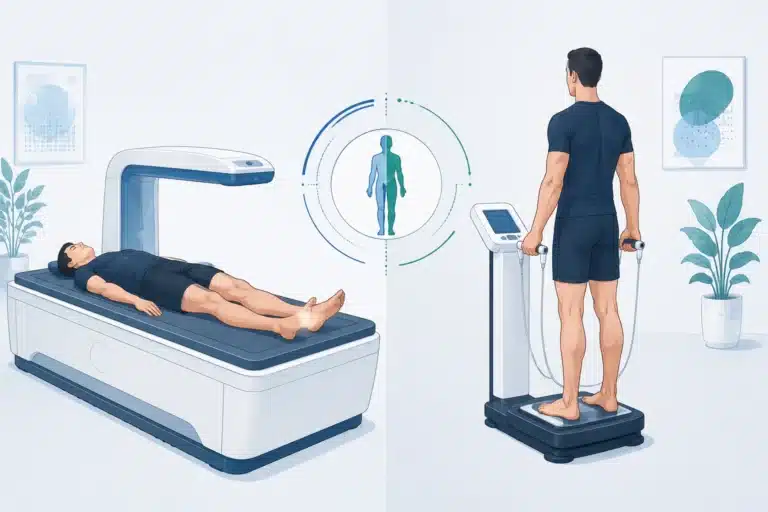
For the practical distinction between swelling, scale weight and fat gain, see the creatine water-retention guide. For comparing measurement methods, see DEXA versus InBody.
Does creatine still help muscle growth when you train?
The relevant evidence goes beyond whole-body lean-mass scans. A 2023 meta-analysis included 10 trials using regional MRI, CT or ultrasound measurements. Its pooled estimate favored a very small additional hypertrophy benefit from creatine alongside resistance training, with substantial uncertainty: the 95% credible interval extended from slightly below zero to a small positive effect.[5]
That supports realistic expectations. A supplement may be useful without being the main reason your physique changes. It also explains why one person’s impressive scale increase is a poor benchmark for what another lifter should expect.
Common-questions research on creatine describes its role in supporting energy availability during high-intensity efforts. It does not make the demands of a training program disappear.[6]
I would assess the program first: can you perform the exercises, repeat the sessions and gradually improve the work you do? Our full-body training guide is a better starting point for that decision than choosing a supplement dose from a headline.
How I judge a body-composition change
When I coached clients, I used InBody measurements alongside photos, body measurements and training progress. I have seen readings vary when hydration or eating patterns differed. A result that appeared to show less muscle was not something I would interpret confidently from the number alone.
That experience is with bioelectrical impedance, not the DXA scanner used in the study. I do not treat the two methods as interchangeable. What carries over is my approach to judging progress: understand the measurement and compare like with like.
I prefer photos taken with similar lighting, position and time of day. With tape measurements, I pay attention to using the same location. With a training log, I look for repeatable improvements rather than one unusually good session.
I also avoid treating strength as a perfect measure of muscle growth. Getting stronger is useful progress, but it does not tell me exactly how much muscle someone has built. I want several pieces of information pointing in the same direction over time.
For someone disappointed by a single scan, my first response would be to check the conditions and the longer trend. I would not rewrite the program or declare a supplement successful solely because one estimate moved.
What should you do in your situation?
| Your situation | My practical priority |
|---|---|
| You are not training and want more muscle. | Find a manageable resistance-training routine before expecting a supplement to transform your physique. |
| You are training but have limited time. | Choose a routine you can keep doing. A shorter repeatable session is more useful than an ambitious plan you keep missing. |
| You already take creatine and have rest days. | Use a consistent routine. Rest days and abandoning training are different situations. |
| A scan suddenly shows more lean mass. | Check recent supplementation, hydration, food intake and measurement conditions before attaching a muscle-growth claim to it. |
If time is your obstacle, the 45-minute workout review shows how I would examine exercise selection, rest and setup time.
For supplement details, use the daily creatine dosage guide. If you have paused supplementation, use the missed-creatine guide. I would keep those decisions separate from the question of whether a scan proves new muscle.
Creatine without exercise: frequently asked questions
Can you take creatine without working out?
Creatine’s effects are not confined to the minutes you spend exercising. For a muscle-building goal, however, I would prioritize a training routine and treat supplementation as an optional addition. Broader health uses need their own evidence and individual context.[6]
Does extra lean mass on DXA always mean muscle growth?
No. Hydration and glycogen changes can affect DXA lean-tissue readings. The number needs to be interpreted alongside the measurement conditions and other evidence of progress.[3]
Does creatine-related weight gain mean fat gain?
Not automatically. Creatine can increase body water, so a scale increase does not identify fat gain. Our water-retention guide explains how to separate those possibilities.[2]
Do the headlines mean I should take a higher dose?
A study protocol is not a personalised dosage recommendation. Use the dosage guide for the usual approach rather than increasing intake solely because a headline sounds promising.
Put the training foundation in place
If you want a clear starting routine, our free eight-week full-body program includes three weekly sessions, sets, reps, effort targets and progression guidance.
Get the free full-body programResearch sources
- Chun J, et al. Creatine with and without exercise and diet intervention. Journal of the International Society of Sports Nutrition. 2026. Full text. DOI: 10.1080/15502783.2026.2716273.
- Powers ME, et al. Creatine supplementation and total body water. Journal of Athletic Training. 2003;38(1):44–50.
- Toomey CM, et al. Hydration status and DXA lean-tissue measurements. European Journal of Applied Physiology. 2017;117:567–574. DOI: 10.1007/s00421-017-3552-x.
- Desai I, et al. Creatine and lean body mass with and without resistance training. Nutrients. 2025;17(6):1081. DOI: 10.3390/nu17061081.
- Burke R, et al. Creatine, resistance training and regional muscle hypertrophy: meta-analysis. Nutrients. 2023;15(9):2116. DOI: 10.3390/nu15092116.
- Antonio J, et al. Common questions and misconceptions about creatine supplementation. Journal of the International Society of Sports Nutrition. 2021;18:13.