Weight Gain After Starting Creatine: Water, Not Fat (Usually)

TL;DR
Weight gain after starting creatine is common — and in most cases, it’s caused by increased water stored inside muscle cells, not fat gain.
- Most early weight gain from creatine is water stored inside muscle cells
- Typical increase: ~0.5–2 kg in the first 1–3 weeks
- This is not fat gain
- True fat gain requires a calorie surplus
- Muscle water retention may slightly increase scale weight without changing body fat %
Beginner Explanation: Why the Scale Goes Up
Many people misinterpret weight gain after starting creatine as fat gain, even though the mechanism is primarily intracellular water retention.
Creatine increases intramuscular phosphocreatine stores.
When creatine accumulates inside muscle cells, it pulls water with it via osmotic forces.
Result:
- Muscles hold more water
- Total body weight increases
- Body fat does not automatically increase
This process is called cell volumization.
It is a physiological effect — not a metabolic one.
Why It Matters:
If you don’t understand this mechanism, you may:
- Panic and stop supplementation
- Mistake water weight for fat gain
- Misinterpret short-term scale changes
For physique athletes and beginners alike, scale literacy matters.
For a full breakdown of how creatine works and why it increases muscle stores, see our complete guide to creatine benefits and safety.
Science Review: What Does Research Say?
Short-term creatine supplementation typically increases body mass by:
0.5–1.5 kg within the first 1–2 weeks, especially if using a loading phase.
Importantly:
- DXA scans show no rapid increase in fat mass
- Weight gain is primarily fat-free mass
- Intracellular water increases significantly
Long-term studies show that creatine combined with resistance training can increase lean mass — but not via fat accumulation.
Mechanism Breakdown
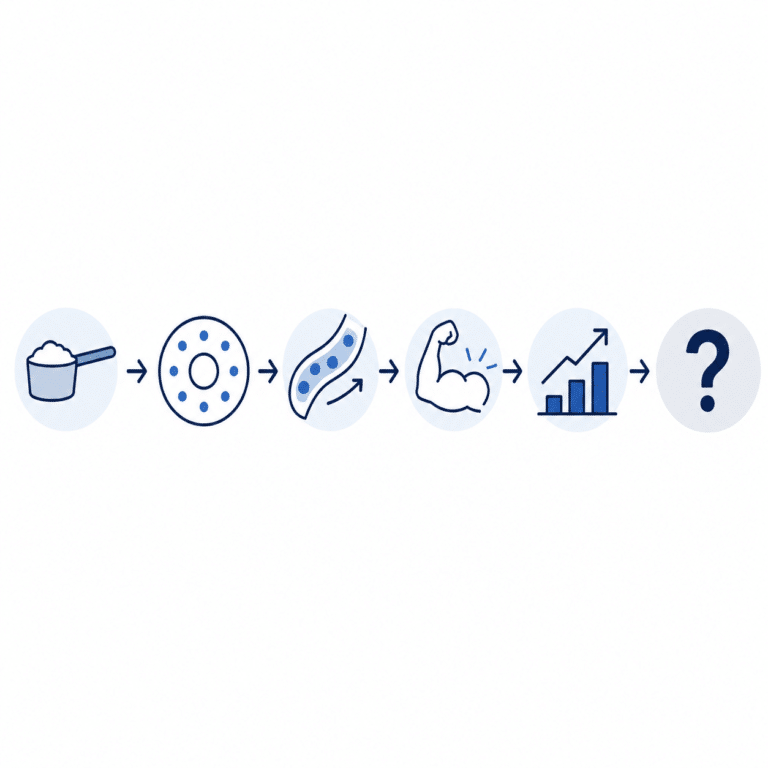
Creatine → ↑ Intramuscular creatine
↑ Intramuscular creatine → ↑ Osmotic pressure
↑ Osmotic pressure → ↑ Intracellular water retention
This water is stored inside the muscle cell, not subcutaneously.
That’s why creatine does not cause a “puffy” look in most individuals.
Does Creatine Ever Cause Fat Gain?
Only indirectly.
Creatine itself contains zero calories.
Fat gain occurs when:
- Calorie intake exceeds expenditure
- Energy balance is positive over time
If someone gains fat after starting creatine, it is almost always due to:
- Increased appetite
- Increased food intake
- Less tracking precision
Not the creatine molecule itself.
How Much Weight Gain Is Normal?
| Phase | Expected Weight Change |
|---|---|
| Loading (20 g/day) | 1–2 kg within 7 days |
| No loading (5 g/day) | 0.5–1.5 kg over 2–4 weeks |
| Long-term | Gradual lean mass increase (training dependent) |
If scale increases exceed ~2–3 kg rapidly, reassess:
- Sodium intake
- Calorie intake
- Measurement consistency
How to Tell If It’s Water or Fat
If you gain 1–2 kg within 7–14 days of starting creatine, it is almost certainly water.
Fat gain requires:
- A sustained calorie surplus
- Multiple weeks
- Gradual accumulation
Water retention from creatine:
- Happens quickly
- Stabilizes after saturation
- Does not continuously increase
If body fat percentage remains stable and waist circumference does not increase, the added weight is not fat.
If you’re specifically concerned about bloating or visible water retention, read our detailed article on whether creatine causes water retention.
Additionally, rapid weight gain from creatine typically stabilizes once muscle stores are saturated. If body weight continues to increase steadily for several weeks without changes in training performance or muscle fullness, caloric intake — not creatine — is the more likely explanation.
Dosing strategy can influence how quickly weight increases, especially during a loading phase.
Practical Takeaways
- Expect mild early weight gain
- It is primarily water inside muscle
- It is not body fat
- Do not stop creatine because of short-term scale changes
- Track waist measurement or body fat % if concerned
References
Kreider RB, Kalman DS, Antonio J, et al. International Society of Sports Nutrition position stand: safety and efficacy of creatine supplementation in exercise, sport, and medicine. J Int Soc Sports Nutr. 2017;14:18.
https://pubmed.ncbi.nlm.nih.gov/28615996/
Powers ME, Arnold BL, Weltman AL, et al. Creatine supplementation increases total body water without altering fluid distribution. J Athl Train. 2003;38(1):44–50.
https://pubmed.ncbi.nlm.nih.gov/12937471/
Chilibeck PD, Kaviani M, Candow DG, Zello GA. Effect of creatine supplementation during resistance training on lean tissue mass and muscular strength in older adults: a meta-analysis. Open Access J Sports Med. 2017;8:213–226.
https://pubmed.ncbi.nlm.nih.gov/29138605/