Lifting Straps for Muscle Growth: When and How to Use Them
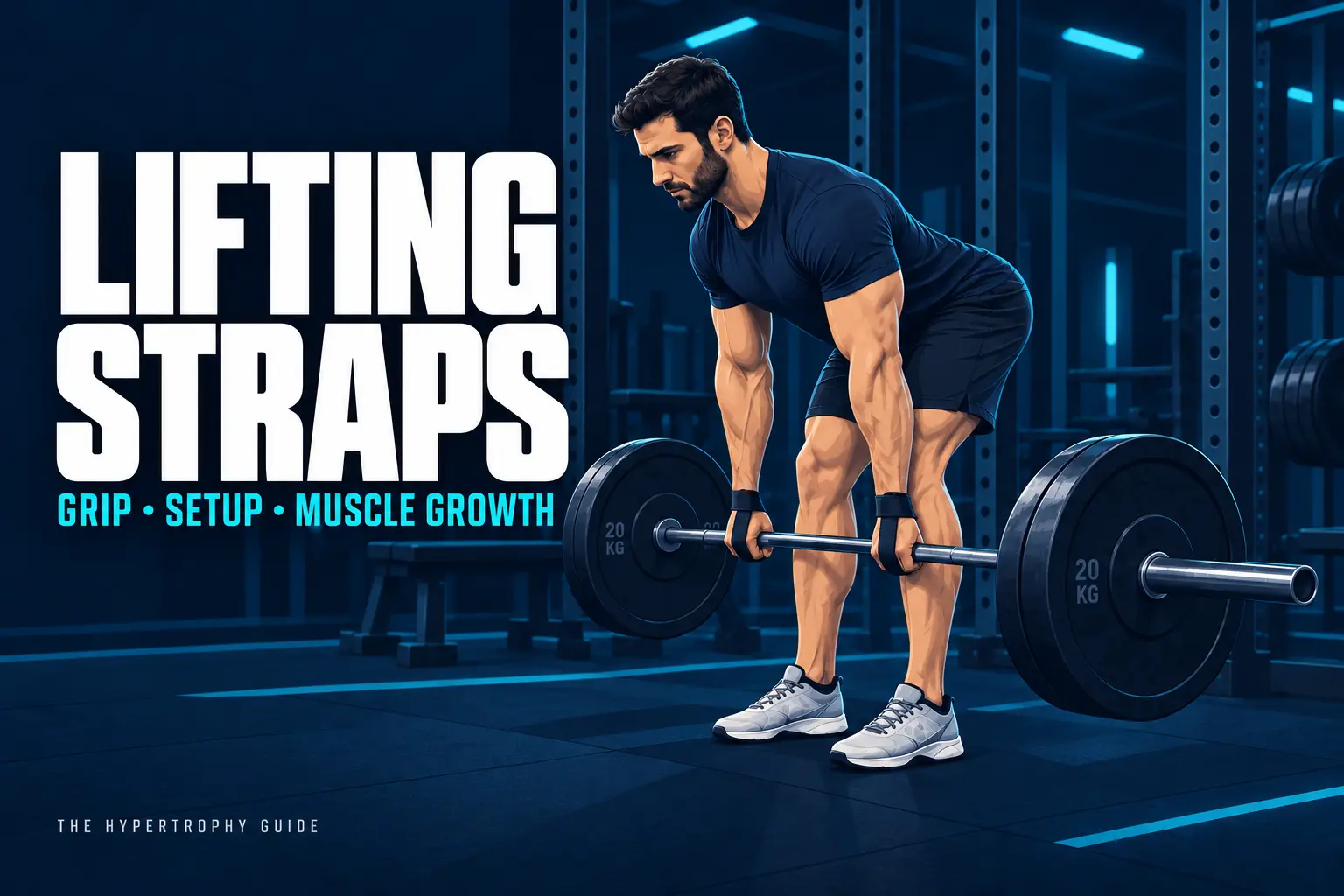
Lifting straps for muscle growth can be useful when grip strength or grip endurance is the limiting factor. They do not build muscle by themselves, but they may help you keep hold of the load long enough to train your back, hamstrings, glutes or traps as intended.
What Do Lifting Straps Actually Do?
A lifting strap loops around your wrist and then around a barbell, dumbbell or cable handle. This creates an additional connection between you and the implement, so your fingers do not have to supply the entire holding force by themselves.
The important distinction is that straps assist your hold. They do not move the weight for you, correct a poor hip hinge or remove the biceps from a pulldown. If your hands stay secure but your torso position changes, the bar drifts or the target muscles have already reached the intended effort, straps do not solve the real problem.
Do Lifting Straps Help Build Muscle?
Potentially—but indirectly. If grip failure leaves your target muscles far from the intended effort, straps may let you perform more useful work with those muscles. This is especially relevant during demanding hinges, rows, pulldowns and loaded holds.
The evidence does not show that simply wearing straps increases muscle activation or guarantees more growth. A 2026 review found possible improvements in maximal strength, grip perception and deadlift work, but inconsistent results for pulling exercises and no direct evidence for long-term hypertrophy outcomes.1 That means the honest claim is narrower: straps can remove a bottleneck; whether that improves your programme depends on whether grip was actually the bottleneck.
In one small crossover study, 11 resistance-trained men performed three deadlift sets at 90% of one-repetition maximum with and without straps. The strapped condition changed the force, speed and duration of the repetitions and increased the work performed, but this was an acute performance test—not a muscle-growth trial.2
When Should You Use Lifting Straps?
Use the reason a set ended—not the exercise name or weight on the bar—to decide.
| What happens during the set? | Use straps? | Why? |
|---|---|---|
| Your fingers begin opening while the target muscles could continue with the same form. | Usually reasonable | Grip is cutting the intended set short. |
| Forearm fatigue from earlier exercises limits later back work. | Consider them for the later hard sets | They can reduce accumulated grip interference. |
| Your grip remains secure until the target muscle reaches the planned RIR. | Not necessary | Straps are not removing a meaningful limitation. |
| Your torso position, range of motion or control breaks down first. | Not as the first solution | Review the load, exercise and technique instead. |
| Developing grip is a primary goal of the set. | No | The holding demand is part of what you are training. |
| The strap pinches, obstructs the setup or makes the exercise less stable. | No | Equipment should improve the set, not create a new problem. |
You do not need a universal threshold such as “start using straps above 100 kg.” A higher-repetition dumbbell RDL may challenge one person’s grip before a heavier barbell pull challenges another’s. Compare the same exercise with and without straps and look at what ends the set.
Which Exercises Work Well With Straps?
Pull-ups are less convenient because setting the straps can be awkward while hanging, and many lifters do not need assistance to keep hold of the bar. They are not forbidden; they are simply a weaker default use case than RDLs, heavy rows or shrugs.
When Should You Avoid Using Straps?
- During lighter warm-ups when you can comfortably hold the load.
- On every back exercise by default before you know whether grip is limiting.
- When the purpose of the exercise is to train grip, forearms or an unsupported hold.
- When they make the setup slower, less secure or uncomfortable enough to distract from the lift.
- When the rules of your sport or competition do not allow them.
Straps may leave temporary pressure marks or mild skin irritation during heavy work. Stop and reset if you experience sharp pain, numbness, tingling, unusual colour change or loss of hand function. Do not treat impaired circulation as evidence that the strap is working correctly.
How to Use Lasso Lifting Straps
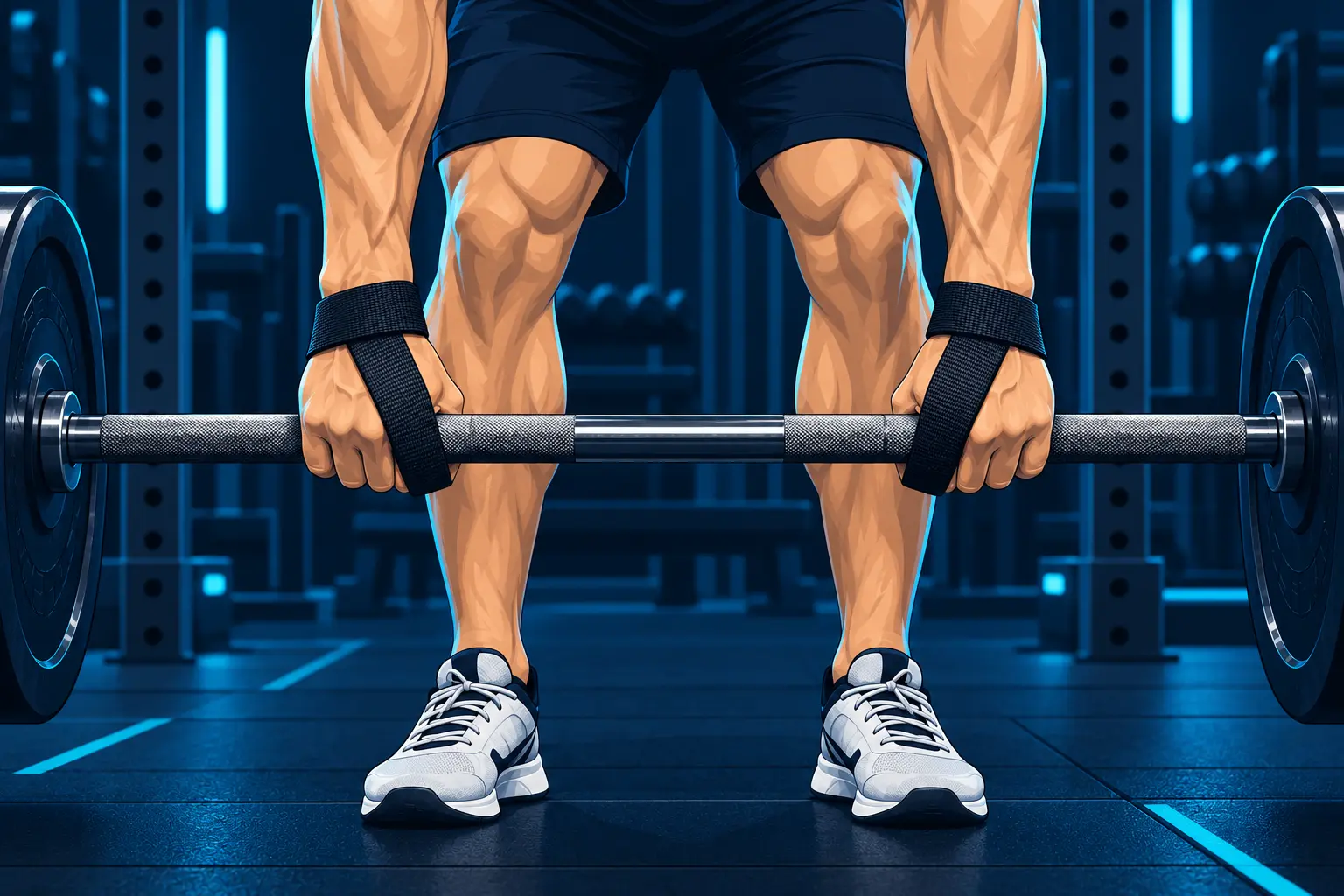
- Create the wrist loop. Feed the loose end through the fixed loop, then slide your hand through the new opening.
- Position the loose end. It should run from the wrist into the palm so it can reach the bar without twisting uncomfortably.
- Take a double-overhand position. Place the first hand on the bar and feed the loose end underneath it.
- Wrap the tail around the bar. Use the free hand to help with the first side. On the second side, use your fingers to continue feeding the strap around the bar.
- Remove the slack. Close your hands and roll the bar slightly into the straps until the connection feels firm and even.
- Test before the work set. Practise with a light load until you can secure and release both straps without hesitation.
Which Type of Lifting Strap Should You Choose?
| Type | Main characteristics | Best fit |
|---|---|---|
| Lasso straps | Adjustable loop with a tail that wraps around the implement; versatile and easy to tighten gradually. | General hypertrophy training, RDLs, rows, pulldowns and shrugs. |
| Figure-eight straps | Two fixed loops create a very secure connection but can be slower to release. | Very heavy pulls when maximum security is the priority. |
| Olympic straps | Shorter, quicker loop designed to release more readily. | Olympic lifts and lifters who prioritise rapid release. |
| Hooks or grip-style aids | Rigid hook or palm section reduces wrapping demands but changes hand feel. | People who struggle to manipulate a traditional strap; product fit matters. |
Material changes the feel. Cotton is usually soft, flexible and easy to wrap. Nylon can feel firmer and may be more durable, while leather often takes longer to soften and conform around a handle. Padding may improve wrist comfort, but extra bulk is not automatically better.
What to look for before buying
- A strap type that matches your main exercises and desired release speed.
- Enough length to create a secure wrap without an excessive loose tail.
- A material you can manipulate easily around bars and cable handles.
- Comfortable seams and optional padding that do not dig into the wrist.
- Clear sizing, care instructions and a suitable load rating from the manufacturer.
Will Straps Weaken Your Grip or Forearms?
There is not enough direct long-term research to quantify how regular strap use affects grip or forearm development.1 The practical concern is simpler: if straps replace every demanding hold, you remove some opportunities to practise holding heavy loads.
You do not have to choose between never using straps and using them on every pulling set. Warm up without them, keep one or two pulling exercises strapless, or train grip separately. Then use straps for the sets where another muscle group is the clear priority.
This is the approach I use myself. Some pulling work remains strapless so that my grip continues to receive training, while straps are non-negotiable for my hard RDLs. It also avoids the psychological feeling that a productive session is impossible whenever the straps are forgotten.
Lifting Straps vs Wrist Wraps
| Equipment | Primary purpose | Common exercises |
|---|---|---|
| Lifting straps | Connect the hands to the implement and reduce grip limitation. | Deadlifts, RDLs, rows, pulldowns and shrugs. |
| Wrist wraps | Provide external support against unwanted wrist extension. | Heavy bench press and overhead press. |
The names sound similar, but the products solve different problems. Wrist wraps do not attach your hands to a bar, and lifting straps are not designed to stabilise the wrist during pressing.
Frequently Asked Questions
Should beginners use lifting straps?
Not automatically. First learn the exercise and see whether grip actually limits it. If a beginner can perform more controlled leg work while holding dumbbells with straps, using them can still be reasonable; they simply should not become the default on every pulling exercise from day one.
Should I use straps for every back exercise?
No. Use them on sets where grip fails before the back. If your hands remain secure, straps may not change the quality of the set.
Are straps cheating on deadlifts?
They are a training tool. Whether they are allowed in competition depends on the sport and federation, but using them during hypertrophy or strength training does not invalidate the work performed by the rest of the body.
Can lifting straps improve my mind-muscle connection?
They may make it easier to focus on the intended movement when grip fatigue is distracting, but they do not automatically increase target-muscle activation or correct technique.
Should I use chalk or straps?
Chalk improves friction while your hands still provide the hold. Straps add a mechanical connection to the implement. Try chalk when slipping is the problem; consider straps when grip strength or endurance remains the limiting factor.
How tight should lifting straps be?
Firm enough that the wrap does not slip before the repetition begins, but not so tight that you develop numbness, tingling, colour change, sharp pain or loss of hand function.
Bottom Line
Lifting straps are most useful when your grip ends a set before the muscles you intended to train. They can make RDLs, deadlifts, rows, pulldowns, shrugs and heavy dumbbell leg work easier to load as planned, but they do not create muscle growth independently or repair poor technique. Keep some work strapless if grip matters to you, learn to secure and release the straps with a light load, and judge them by whether they improve the quality of your target-muscle training.
References
- Martins R, et al. Are Lifting Straps a Game Changer for Resistance Training or an Overrated Tool? An Exploratory Review of Current Evidence and Future Research Directions. Int J Sports Physiol Perform. 2026;21(3):342–349.
- Coswig VS, et al. Kinematics and Kinetics of Multiple Sets Using Lifting Straps During Deadlift Training. J Strength Cond Res. 2015;29(12):3399–3404.
- Yeh HC, et al. Influence of lifting straps on force, rate of force development and impulse outputs during isometric mid-thigh pull. PLoS One. 2026.