Intermittent Fasting for Fat Loss: Does 16:8 Help If You Lift Weights?
I like breakfast. When I tried 16:8 intermittent fasting, I waited until noon for lunch and finished my last meal by 8 p.m. I could concentrate better during the hours I fasted. I also felt nauseous on and off, and at first it was hard to think about anything other than food. My workouts felt worse, too.
These days I feel better eating four or five times a day. That includes one or two snacks, usually something as simple as skyr or a shake and a banana. Someone who rarely wants breakfast might find my old schedule easier than my current one. If you lift weights and want to lose fat, that difference matters: which schedule helps you maintain a calorie deficit and still enjoy your training?
Does 16:8 help you lose more weight?
With 16:8, you fit your meals into eight hours and fast for the other sixteen. Say your usual evening includes a bowl of cereal at 10 p.m. If finishing dinner by eight means you skip that bowl, the window has helped you eat fewer calories. If you have the same cereal at 7:45 instead, you have changed the timing while keeping the calories the same.
Researchers tested this distinction by providing food for 41 adults with obesity and either prediabetes or diet-controlled diabetes. Both groups received diets with matched calories and nutrients. One group ate within ten hours and had most of its calories early. The other could eat across a longer day. After 12 weeks, the groups had lost 2.3 kg and 2.6 kg respectively. The difference was statistically uncertain. This small trial tested a ten-hour window, so it helps answer the calorie question without telling us exactly how an eight-hour window feels for a lifter. Read the controlled feeding trial.
A larger review combined 99 randomised trials. Daily eating windows generally produced weight loss similar to a conventional calorie-restricted diet. Fasting every other day had a small advantage, averaging 1.29 kg more weight loss than daily calorie restriction, mainly in shorter studies. That result applies to a different fasting schedule than skipping breakfast. Read the BMJ review.
What happens when you add lifting?
In a review comparing people who lifted weights on different eating schedules, those using a restricted window ate fewer calories on average and lost more fat than those following their habitual eating pattern. The researchers found no clear difference in strength or muscle mass between groups. That comparison matters: the lifters could change how much they ate. It answers a different question from the trial where researchers provided the food. Read the resistance-training review.
A group average can coexist with a rough Tuesday in the gym. In my case, the sessions felt worse. I didn’t measure how much of that came from meal timing, so I’d describe it exactly that way. For your own comparison, pick a lift you know well and look at your usual load, reps and how hard the sets feel over several similar sessions.
Two training days with the same eating window
You train at 7 a.m. and look forward to breakfast. With a noon-to-eight window, several hours may pass between your last set and your first meal. If you spend the morning hungry or repeatedly struggle through your sessions, try breakfast on training days. You can include it in the same daily calorie budget. For more on where that meal fits, see our guide to protein timing.
You train after work and rarely want breakfast. Lunch at noon, skyr or a shake and a banana before the gym, then dinner afterwards might already fit the way you eat. If finishing dinner by eight also puts an end to the grazing you wanted to cut back on, the window has a practical purpose. Keep an eye on whether there is enough room for your usual meals, especially on days you train late.
What do we know about fasting in women?
Women accounted for 93% of participants in the controlled feeding trial above. The average age was 59, and the researchers measured weight and blood sugar. A younger lifter asking whether 16:8 affects her menstrual cycle is asking a question that trial was never designed to answer.
A separate review found just six studies on daily eating windows and female reproductive hormones. The randomised studies in women with obesity found no significant changes in the key hormones measured. The evidence is too limited to draw a broad conclusion about long-term menstrual health in younger lifters. Read the review of reproductive hormones.
Would I choose 16:8 for a cut?
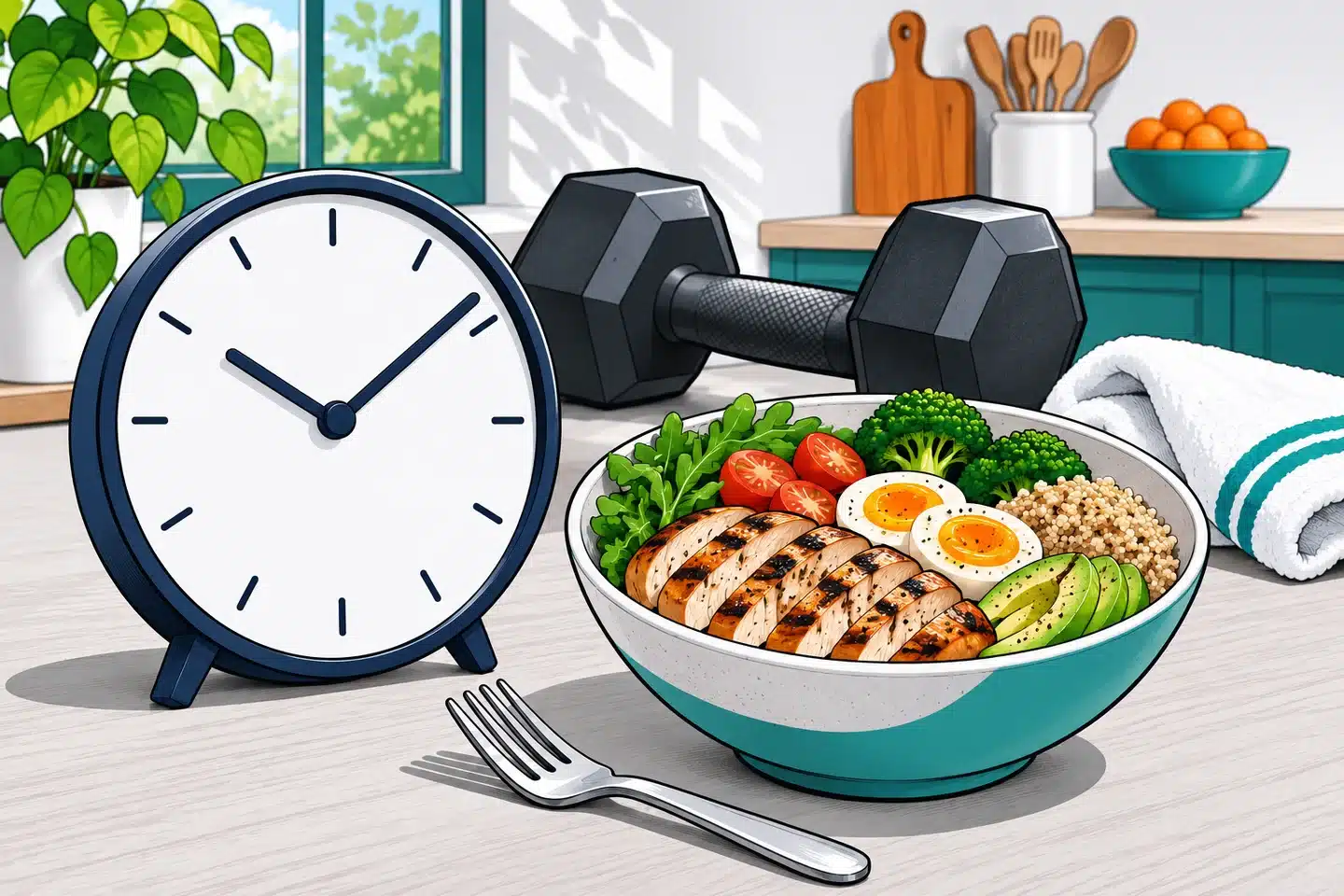
I’d keep breakfast. Better concentration was a real upside for me, but on balance I prefer how I feel and train when I spread my food across the day. If an eight-hour window makes your calorie deficit easier, leaves room for the meals you enjoy and fits around the gym, it can earn its place. If breakfast and an afternoon snack make that easier, you can keep both. Here’s what that kind of eating day can look like.