Lifting Straps vs Hooks: Grip, Fit & Control
← Weightlifting equipment · THG equipment comparison
Comparing lifting straps vs hooks is different from deciding whether you need grip assistance at all. Our lifting straps guide covers when and how to use straps. This page focuses on which format is practical to buy and use.
Assessment: manufacturer descriptions and published research checked on 16 November 2026, with Alex’s own training preferences and coaching observations identified below. THG has not load-tested the example products or compared named brands hands-on. The manufacturer links here are not affiliate-tracked.
What Is the Difference Between Straps and Lifting Hooks?
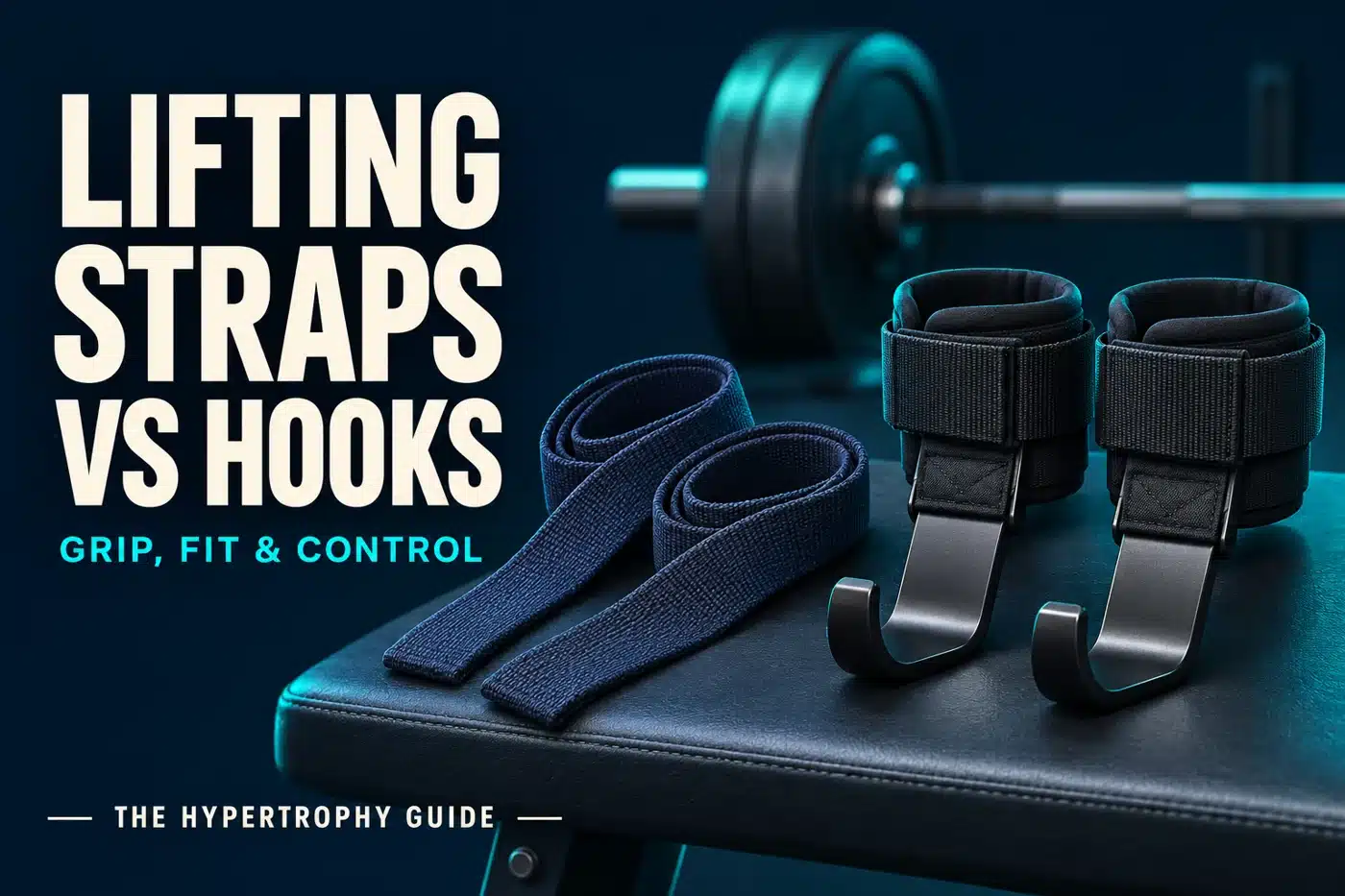
A lasso strap uses a fabric tail that wraps around the bar or handle. A lifting hook uses a rigid hook attached to a wrist cuff. Both create an additional connection to the load, but their shape changes the setup and the implements they fit.
Lifting hooks are not the same as a hook grip. A hook grip is a way of gripping the bar with your thumb under your fingers; it does not require this piece of equipment. Wrist wraps are different again: they support the wrist during selected lifts rather than attach you to a handle.
| What to compare | Lasso straps | Rigid lifting hooks |
|---|---|---|
| Setup | Wrap and tighten the fabric tail; takes practice. | Position the cuff and hook under the implement; can be easier for someone who struggles to wrap. |
| Compatibility | Fabric can wrap around different handles, depending on length and access. | The hook must fit the bar’s diameter and the handle’s shape. |
| Feel | Fabric tension around the wrist and bar; comfort varies. | Cuff position and padding affect pressure; not automatically comfortable. |
| Release | Depends on the strap style, wrapping and movement. | Depends on hook geometry and how the implement is positioned. |
| Buying priority | Tail length, wrist fit, fabric and stitching. | Hook opening, wrist size, padding, fastening and compatibility. |
Alex’s Experience: Long Straps, Short Straps and Hooks
Those observations describe practical experiences, not proof that every hook is quicker, more comfortable or safer than every strap. We are not assigning Alex’s experience to a named product that he has not identified. Wrist size, padding, fastening and the implement can change the result.
Which Format Fits Your Exercises?
Rows and lat pulldowns
Start with the handle and your access to it. Can you reach it comfortably and set the aid without losing your position? A long strap is flexible but adds wrapping. A short strap may be convenient, while a rigid hook may not sit well on an angled, thick or unusually shaped handle.
Try the setup at a light load first. If a hook changes where the hand sits or bumps into a machine, the format is not a useful solution for that exercise. See the lat pulldown and seated cable row guides for the movement itself.
Romanian deadlifts and other controlled pulls
If your fingers open before the hamstrings or back have completed the planned set, grip assistance may be worth trying. Choose a format you can fit and release predictably. Changing the equipment does not fix a bar drifting away from the body or a load that you cannot control.
The Romanian deadlift guide explains the hinge and exercise setup. Keep some suitable work without assistance if developing grip is one of your training goals.
Fast lifts, unfamiliar movements and competition
Do not assume an aid suited to a controlled row is appropriate for every lift. Release requirements differ. IronMind’s weightlifting guidance specifically cautions against using straps for squat cleans and discusses releasing a missed lift. [2] Follow the appropriate coaching guidance and the equipment’s instructions rather than generalising this comparison to technical Olympic lifts.
Competition rules are separate from gym convenience. Check the rules of your federation and event before planning to use any grip aid on the platform.
What to Check Before Buying
- Identify the limitation. Is grip ending the intended set, or are you mainly looking for an easier setup? Buying hooks will not fix an unsuitable exercise.
- Check wrist fit. Look at the stated size and fastening range. A thick padded cuff can still fit poorly.
- Match your bar and handles. For hooks, check the opening and shape. For straps, check whether you can wrap the tail where you train.
- Practise setup and release at a light load. Do not discover a compatibility problem during a demanding set.
- Inspect wear. Check fabric, stitching, fastening, padding and any rigid parts. Follow manufacturer care and replacement instructions.
- Compare complete pairs. Include shipping and any return conditions, and check whether the listing is for one item or two.
Two manufacturer examples to inspect
IronMind lifting straps
IronMind offers several strap styles, including Strong-Enough, Short & Sweet and Sew-Easy. Use the manufacturer’s range to compare the design rather than assuming every strap has the same loop or tail. [3]
Compare IronMind strap styles ↗Manufacturer link. No THG load test, named-model personal test or best-price claim.
Schiek 1200 CYLENCE Lifting Hooks
Schiek describes this model as a small size intended for smaller wrists, with a padded cuff and open hook. That makes it a useful example of why wrist sizing matters; it should not be treated as a universal fit. [4]
Read Schiek’s fit and design details ↗Manufacturer description, not an endorsement of its performance claims or a product Alex has identified as personally tested.
Do Hooks Build More Muscle Than Straps?
We do not have direct comparative evidence here establishing a long-term muscle-growth advantage for hooks over straps. An acute deadlift study in 11 trained men found that straps changed the mechanics and increased the work performed across demanding sets. It compared straps with no straps, not straps with rigid hooks, and did not measure long-term hypertrophy. [1]
Our practical recommendation therefore rests on the limitation you are solving, compatibility and usability. Choose long lasso straps when they work comfortably across your pulling exercises. Consider hooks when wrapping is frustrating or coaching experience suggests a simpler setup may help. Keep the aid only if it makes the intended training easier to execute.
Frequently Asked Questions
Are lifting hooks easier for beginners?
They can be easier for someone who struggles to wrap straps, as Alex has found with clients. That is not a reason every beginner needs them. Start by deciding whether grip assistance is useful and checking fit at a light load.
Are hooks more comfortable on the wrists?
Some of Alex’s clients report that, but comfort depends on the person, cuff, fastening and lift. Do not treat a comfort report as proof of injury prevention or keep using an aid that causes pain or numbness.
Are short straps always better for pulldowns?
No. Alex sometimes finds them quicker when access is awkward, but the handle and available space determine what works. This is a reason to try the setup, not a universal rule about strap length.
Sources
- Coswig et al. (2015). Kinematics and Kinetics of Multiple Sets Using Lifting Straps During Deadlift Training. DOI: 10.1519/JSC.0000000000000986.
- Jim Schmitz, IronMind. Straps: what, how, why and when to use them. Coaching guidance; not a comparative hook trial.
- IronMind. Lifting strap range.
- Schiek. 1200 CYLENCE hook specifications. Manufacturer information checked 16 November 2026.