Knee Sleeves for Squats: Are They Worth It?
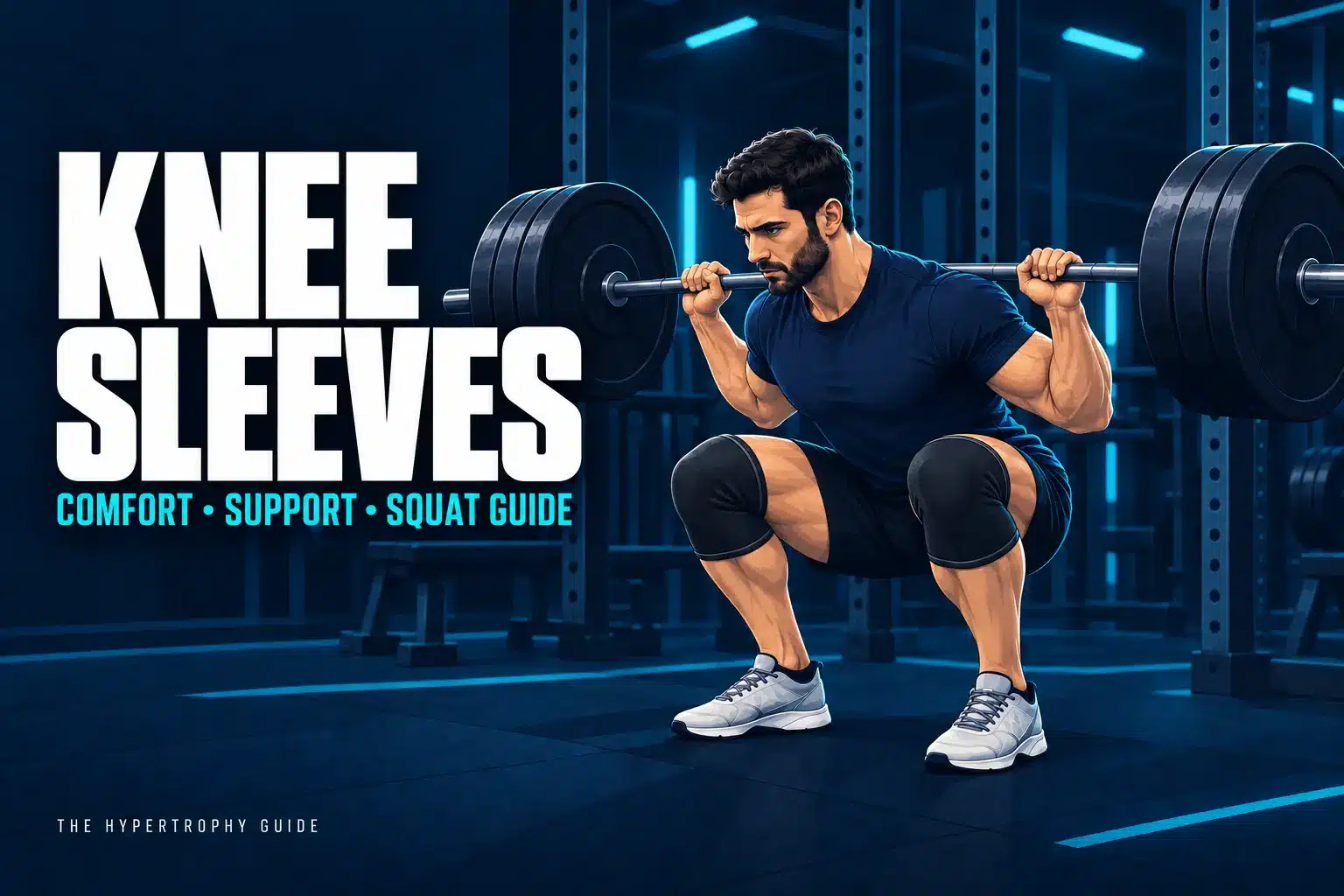
Knee sleeves for squats can make training feel warmer, more compressed and more secure, but they do not guarantee a stronger squat or prevent knee injuries. Their best-supported practical value is often comfort and confidence—and that can still make them worthwhile.
What Do Knee Sleeves Actually Do?
Knee sleeves are usually made from neoprene or a similar compressive material and slide over the knee. They create pressure, retain warmth around the area and can change how secure the joint feels during movement. That is different from proving that the sleeve physically stabilises every knee or prevents injury.
The subjective effect matters. A lifter who feels more comfortable and confident may move with less hesitation and enjoy the session more. The honest question is not only “does this add kilograms?” but also “does it improve the quality of training enough to justify the cost and maintenance?”
Do Knee Sleeves Make Your Squat Stronger?
Not reliably. In a 2021 study, 15 resistance-trained men and women performed 1RM and submaximal back squats with and without knee sleeves. The sleeves did not improve maximal weight lifted and did not meaningfully change the frontal-plane knee mechanics measured.1
More recent work comparing sleeve densities suggests that some designs may create small mechanical differences, but these findings should not be converted into a guaranteed performance increase.2 A tight powerlifting sleeve, a flexible weightlifting sleeve and a loose general-fitness sleeve are not interchangeable products.
This also explains why personal experience can be strongly positive while a controlled trial finds no average 1RM benefit. Warmth, pressure, confidence, familiarity and expectation can all influence how a set feels without necessarily changing the measured maximum.
Do Knee Sleeves Help Knee Pain?
Some people report that training feels more comfortable in sleeves. That does not identify why the knee hurts or show that the underlying issue has been corrected. Sleeves should not be used to push through symptoms that are worsening or changing your movement.
If discomfort is mild and familiar, compare the same exercise, load and range with and without the sleeve. If symptoms persist, recur or include swelling, locking, giving way, numbness or acute trauma, seek an appropriate assessment.
5 mm vs 7 mm Knee Sleeves
| Thickness | Likely appeal | Trade-off |
|---|---|---|
| 3–5 mm | More flexible for dynamic training, weightlifting or longer sessions | Less of the rigid compressed sensation some squatters want |
| 7 mm | More material and a firmer feel for squats and strength work | Hotter, harder to put on and potentially restrictive |
| Competition-focused designs | Maximum compression within a sport’s rules | Expensive, difficult to size and often excessive for general training |
Thickness alone does not tell you how a sleeve feels. Neoprene density, cut, seam placement and sizing all matter. My preference is 7 mm because I value the stronger compressed sensation, but my experience with 5 mm was brief and does not make 7 mm the universal choice.
How Tight Should Knee Sleeves Be?
A training sleeve should sit smoothly over the knee and remain in place during the set. Some effort to pull a snug sleeve over the calf is normal, particularly with larger calves, but pain and neurological or circulation-related symptoms are not goals.
- The knee sits centrally within the sleeve.
- The sleeve does not repeatedly fold behind the knee.
- You can reach your intended depth without a painful pinch.
- There is no numbness, tingling, unusual colour change or loss of function.
- You can remove the sleeve without an unsafe struggle.
Use the manufacturer’s size chart and measure exactly where instructed. Sizing down for maximum compression is not automatically better for ordinary hypertrophy training.
Which Exercises Suit Knee Sleeves?
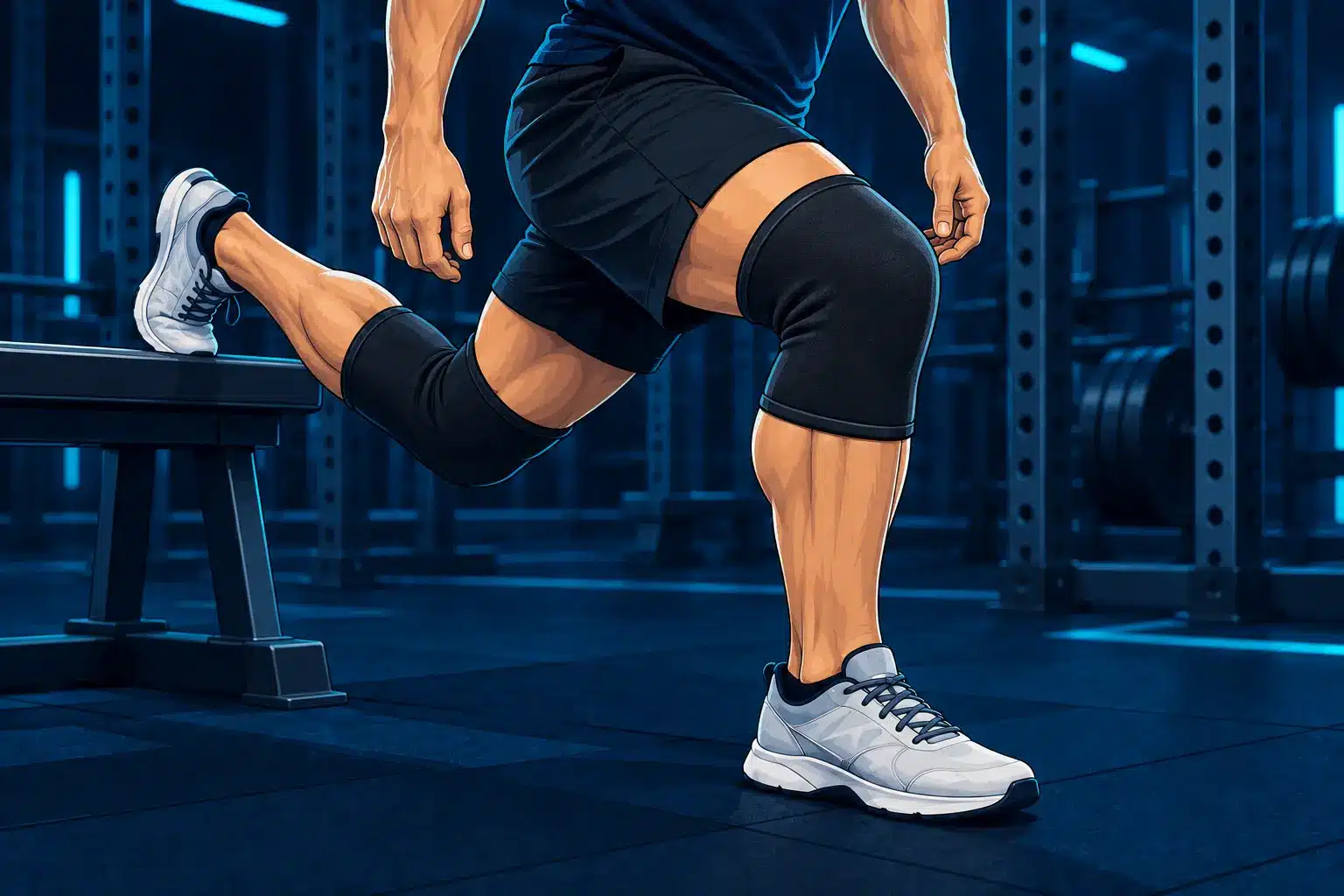
If warmth is part of why you value sleeves, put them on during the warm-up rather than waiting for the top set. You can pull them down between relevant exercises instead of keeping them over the knee for the entire session.
Knee Sleeves vs Knee Wraps
Sleeves are tubular garments that provide compression and warmth. Knee wraps are long elastic strips wound tightly around the knee and can contribute more stored elastic assistance. Wraps require a more deliberate wrapping technique and are a different strength-sport tool.
Do not assume that evidence or competition rules for wraps apply to sleeves. If you compete, check the current approved-equipment list and dimensions for your federation.
Care, Sweat and Smell
Air sleeves immediately after training instead of leaving them rolled in a gym bag or around your ankles in the car. Follow the manufacturer’s washing instructions, avoid heat that can damage neoprene or adhesive, and allow them to dry fully before the next session. Owning two pairs may be practical if you train legs frequently.
Do Beginners Need Knee Sleeves?
No beginner needs them, but sleeves are one of the earlier optional purchases I would consider if a borrowed pair clearly improves comfort. First learn the exercises and make sure the sleeve is supporting a good training decision rather than covering a load, depth or symptom you have not addressed.
My Experience: “Love at First Squat”
I first borrowed knee sleeves from a colleague roughly three or four years ago. The first squat immediately felt warmer, more comfortable and more stable in the bottom. Since then I have worn 7 mm sleeves from warm-ups through the loaded compound work in squats, hack squats, lunges and Bulgarian split squats.
The downside is psychological familiarity. When I forget them, my knees feel colder and the session feels less secure, even though I cannot prove that my objective performance would be lower in a controlled test. I pull the sleeves down for leg extensions and curls, and the biggest practical drawback is the smell if I fail to air and wash them.
If I had known how much I personally valued the comfort, I would have bought them sooner. My recommendation remains: you do not need sleeves, but borrowing a pair is a sensible way to decide whether the experience is worth paying for.
Frequently Asked Questions
Are knee sleeves necessary for squats?
No. Many people squat successfully without them. They are an optional comfort and compression tool.
Will knee sleeves increase my squat 1RM?
Do not assume so. A controlled 2021 study did not find a higher 1RM with sleeves, although individuals may value the feel.
Should beginners buy 7 mm sleeves?
Not automatically. A 5 mm sleeve may be easier for mixed training, while 7 mm gives a stronger compressed feel. Try before buying when possible.
Can I wear knee sleeves for the entire workout?
You can, but there is little reason to keep them over the knee for exercises where they add no benefit. Heat and sweat also increase.
Can knee sleeves prevent injury?
That has not been established. Comfort and perceived support should not be presented as guaranteed protection.
Bottom Line
Knee sleeves for squats are worth considering when warmth, compression and confidence noticeably improve your training. They are not essential, they do not reliably add weight to the bar, and they should not be used to ignore persistent symptoms. Choose the fit and thickness that suit your actual training—not the most extreme product you can force over your calf.
For footwear that changes squat positioning, see the guide to lifting shoes for squats. Compare all five tools in the weightlifting equipment guide.
References
- Bennett HJ, Trypuc A, Valenzuela KA, Sievert ZA. Wearing knee sleeves during back squats does not improve mass lifted or affect knee biomechanics. Human Movement. 2021.
- Leschot-Gatica J, et al. Effects of knee sleeve density on theoretical neuromuscular and mechanical contributors to squat performance. 2026.