Wrist Wraps for Lifting: When Should You Use Them?
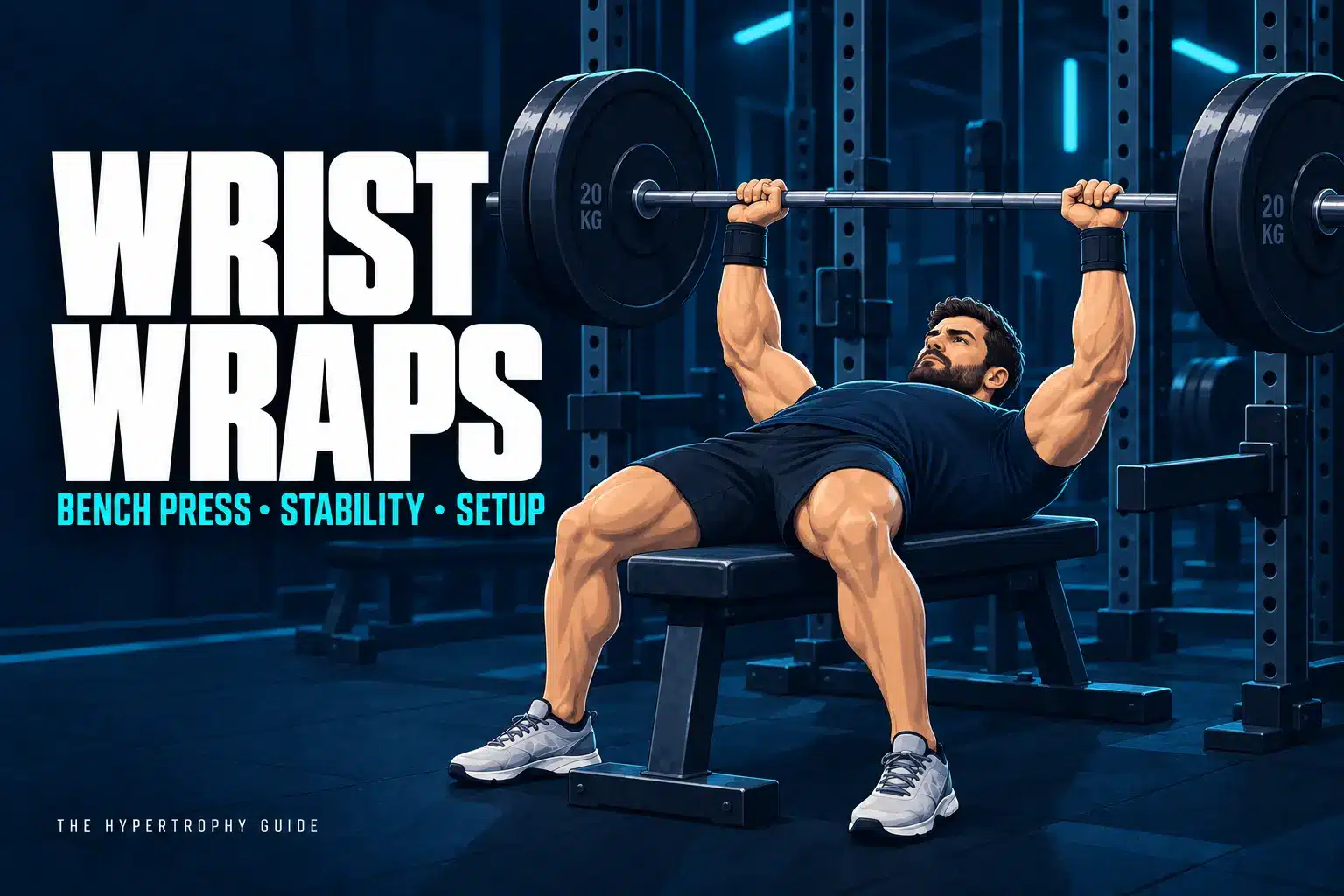
Wrist wraps for lifting can make heavy bench presses and overhead presses feel more stable, but they do not automatically increase strength. Use them to support a deliberate wrist position on selected heavy sets—not to hide a grip or technique problem.
What Do Wrist Wraps Actually Do?
Wrist wraps are lengths of elastic fabric wound around the wrist to resist unwanted movement, particularly extension during pressing. Correctly positioned wraps cross the wrist joint and reach towards the base of the hand. They should not sit only around the lower forearm.
The bar should still be supported by your hands and aligned over the forearm as well as your anatomy and grip allow. A wrap adds external stiffness; it does not teach the position or correct an unsuitable load.
Do Wrist Wraps Increase Bench-Press Strength?
The best direct evidence currently argues against expecting a performance boost. A 2024 study in resistance-trained men and women found that wrist wraps did not significantly improve bench-press strength, power or endurance. Participants nevertheless perceived greater wrist stability while wearing them.1
That distinction matches the practical use case. A wrap may make a heavy attempt feel more organised without adding kilograms or repetitions in a controlled test. Confidence and comfort can still matter, but they should not be marketed as guaranteed strength.
There is also insufficient evidence to promise that wrist wraps prevent injuries. They may reduce unwanted movement in the moment, but pain, load selection and technique still require their own decisions.
How to Wear Wrist Wraps
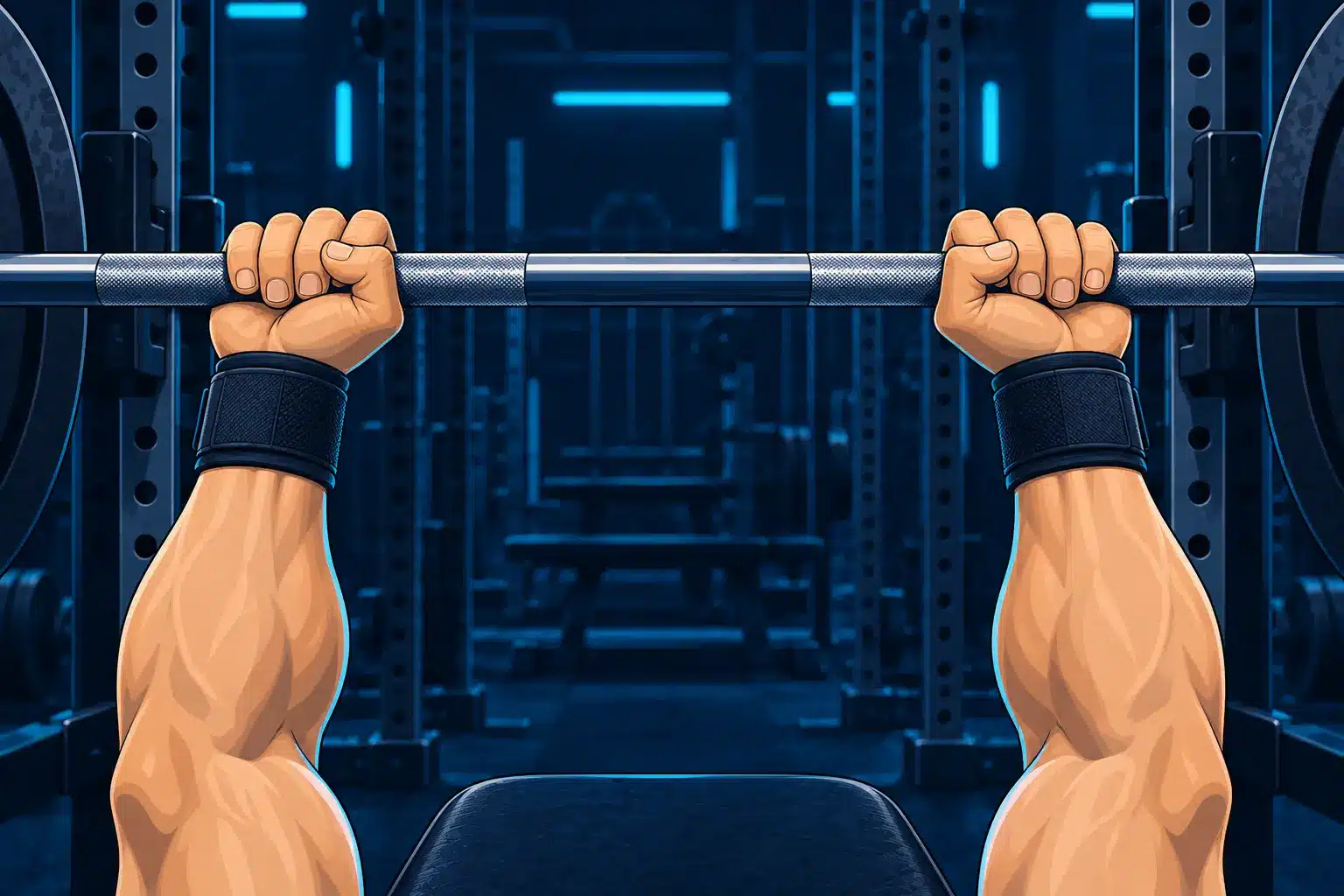
- Find the wrist joint. Do not start so far down the forearm that the joint remains unsupported.
- Use the thumb loop for positioning if the product is designed that way. Follow the manufacturer’s instructions and current competition rules regarding whether the loop remains on during the lift.
- Wrap diagonally across the joint. Allow part of the material to reach towards the base of the palm while keeping the hand functional.
- Create firm, repeatable tension. The wrap should add stiffness without neurovascular symptoms.
- Loosen it between hard sets. There is no prize for leaving a very tight wrap on while resting.
“Tight enough” depends on wrap stiffness, length, hand size and the task. If the hand becomes numb, tingles, changes colour, becomes increasingly painful or loses function, remove or loosen the wrap. Those are not intended signs of an effective setup.
When Should You Use Wrist Wraps?
A powerlifter may use wraps more often because maximal bench-press performance is the sport. A general hypertrophy trainee may never need them. The decision should follow the demands of the set rather than the name of the exercise.
Can Wrist Wraps Hide Poor Technique?
Yes, if they allow you to ignore where the bar sits or how far the wrist is bending. Some extension can occur during pressing and anatomy varies, but an uncontrolled wrist collapsing backwards is not corrected simply because fabric now surrounds it.
Use manageable loads to practise stacking the bar over the hand and forearm. If a particular grip width, bar position or exercise consistently causes pain, assess the movement rather than wrapping more tightly.
Wrist Wraps vs Lifting Straps
| Equipment | Main job | Typical exercises |
|---|---|---|
| Wrist wraps | Add stiffness around the wrist joint | Bench press and overhead press |
| Lifting straps | Connect the hand more securely to the load and reduce grip limitation | RDLs, rows, pulldowns, shrugs and loaded holds |
The similar names cause unnecessary confusion. Wraps support the wrist; straps help you hold a load. A wrist wrap should never be wound around the bar.
What to Look for Before Buying
- Length: longer wraps allow more overlap and potentially more stiffness, but take longer to apply.
- Elasticity: a stretchier wrap is easier to customise; a stiffer wrap may suit maximal pressing but feel excessive for general use.
- Width and edge comfort: the material should support the joint without cutting painfully into the hand.
- Closure: hook-and-loop should fasten securely and remain accessible.
- Thumb loop: it should help alignment without dictating an uncomfortable position.
- Rules: competitive lifters should check current federation dimensions and approved products.
You do not need the stiffest wrap available. Choose the least equipment that solves the actual problem and remains practical to use.
Do Beginners Need Wrist Wraps?
Usually not. A beginner should first learn pressing technique, select an appropriate load and develop control. If wrist symptoms persist despite sensible changes, that is not automatically a shopping problem. Wraps can be tested later if heavy pressing becomes a genuine priority.
My Experience Chasing a 140 kg Bench Press
I began using wraps many years ago while pursuing a 140 kg bench press. The main benefit was stability: my wrist felt less likely to move backwards and forwards, and I spent less attention controlling it during a heavy attempt. The equipment also created a psychological “armour” effect that signalled a serious set.
Today I use them mainly for very heavy bench singles and occasionally heavy overhead presses. I do not normally use them for early warm-ups, dumbbell presses, lighter incline work or ordinary sets of six to ten repetitions.
I prefer a very firm wrap placed close to the joint and slightly towards the hand, but that is a personal performance setup—not permission to tolerate numbness or visible circulation changes. My conclusion is narrow: wraps are useful optional equipment for my heaviest pressing, not a requirement for building muscle.
Frequently Asked Questions
Do wrist wraps make your bench press stronger?
A 2024 study found no significant improvement in strength, power or endurance, although participants felt more stable.
How tight should wrist wraps be?
Firm enough to add the desired stiffness, but never so tight that they cause numbness, tingling, unusual colour change, increasing pain or loss of function.
Should wrist wraps cover part of the hand?
They generally need to cross the wrist joint and may reach towards the base of the palm. They should not sit only around the lower forearm.
Should I wear the thumb loop during the lift?
Follow the product instructions and current competition rules. The loop is commonly used to position the wrap, but rules and designs differ.
Can wrist wraps help wrist pain?
They may change how pressing feels, but they do not diagnose or treat the cause of pain. Persistent symptoms need appropriate assessment.
Bottom Line
Wrist wraps for lifting are a specialised support tool for heavy pressing. They can make the wrist feel more stable without necessarily improving measured performance. Position them across the joint, use firm but safe tension, keep lighter work wrap-free when appropriate and never confuse them with lifting straps.
Compare wraps with the other personal tools in the weightlifting equipment guide.
References
- Harris DR, Harris DR, Cardaci TD, et al. Wrist Wraps Do Not Affect Barbell Bench Press Muscular Strength, Power, or Endurance in Resistance-Trained Men and Women. J Strength Cond Res. 2024.