Weightlifting Belt: Do You Need One?
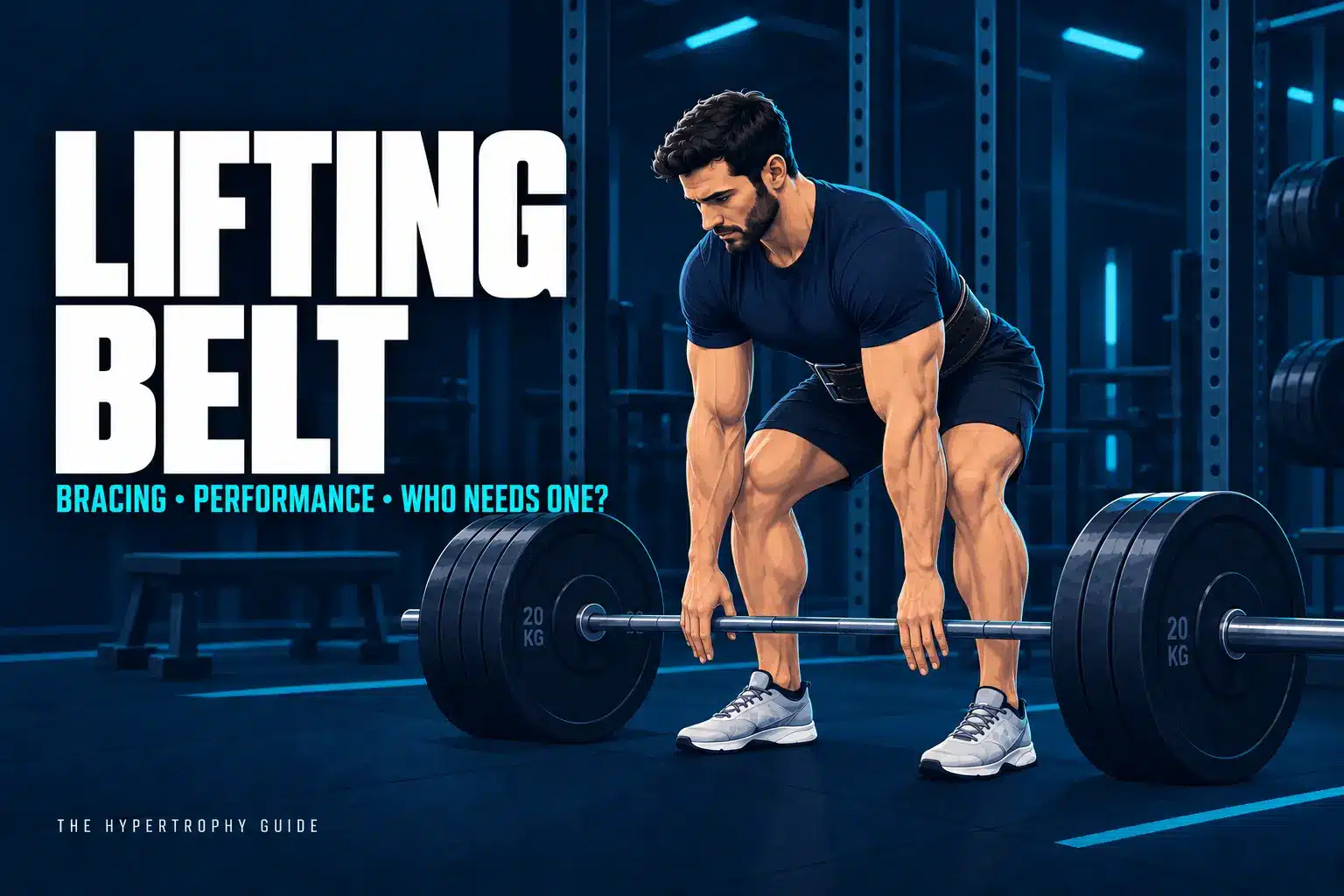
A weightlifting belt can be useful for heavy squats, deadlifts and presses when it improves your brace or performance. It is not mandatory for strength or muscle growth, it does not brace on your behalf, and evidence that gym belts prevent back injuries is not established.
What Does a Weightlifting Belt Actually Do?
A lifting belt gives the torso a firm external surface to expand and brace against. The belt does not switch on the core or physically hold the spine in place. You inhale, organise the torso and create tension; the belt changes the feedback you feel while doing it.
Older laboratory studies found that belts can alter intra-abdominal pressure during squat-style lifting, although the response depends on the task, load and lifter.1, 2 This supports a narrow claim: a belt can change the bracing environment. It does not prove that every lifter needs one.
Can a Belt Make You Stronger?
It can improve performance for some lifters, particularly when they are familiar with using it. In a 1992 study, belt use changed intra-abdominal pressure and the timing of repeated squat repetitions.1 A 2025 study of 26 male college athletes reported an average parallel-squat 1RM that was about 2.8 kg higher with a belt, but individual variation was substantial.3
That does not mean a belt adds a fixed percentage to every lift. The result depends on the exercise, skill with the belt, belt construction, placement and whether the unbelted brace was already effective. A belt is most defensible as an optional performance tool for hard compound sets—not a requirement for ordinary hypertrophy work.
Does a Weightlifting Belt Protect Your Back?
Do not buy a belt as an insurance policy. Changes in pressure or torso mechanics are not the same as proof that belts prevent injuries. Back pain and injury risk are influenced by many factors, and the lifting studies do not establish that wearing a gym belt guarantees protection.
A belt may indirectly help when it improves your brace and makes the movement more repeatable. It may also create false confidence and encourage a load the lifter cannot control. Technique, programming, fatigue management and an appropriate progression still matter.
If you have persistent pain, neurological symptoms or a recent injury, a belt should not be used to self-diagnose or conceal the problem. Seek an appropriate clinical assessment rather than treating equipment as rehabilitation.
How to Brace With a Lifting Belt
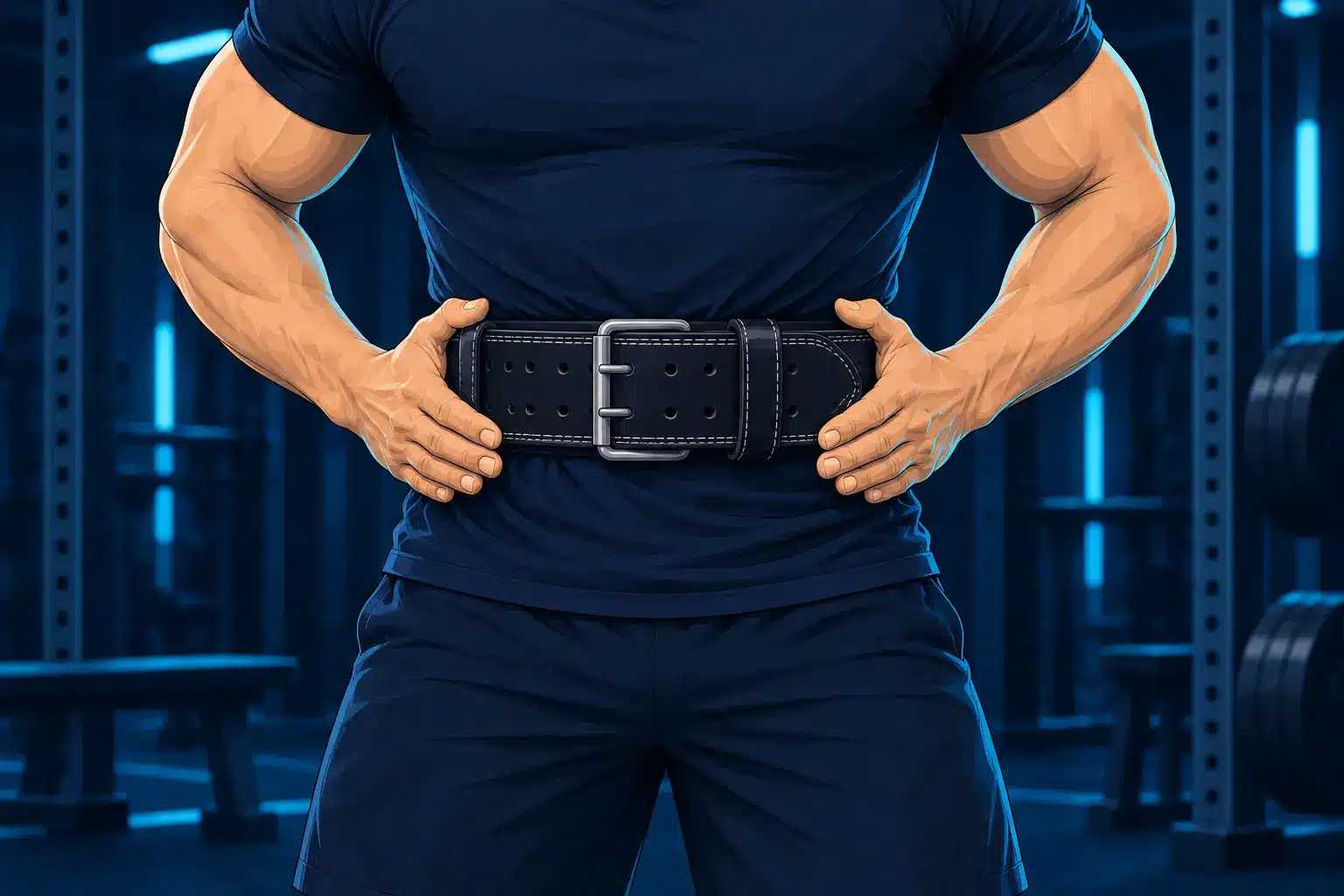
- Set the belt before the heavy attempt. Position it where it does not collide with your ribs, hip crease or start position.
- Take a controlled breath into the torso. Think about expansion through the front, sides and back rather than only pushing the abdomen forward.
- Create tension against the belt. The pressure should come from you; do not rely on the buckle to create the brace.
- Maintain the position through the demanding phase. Reset between repetitions when needed instead of allowing each rep to become progressively looser.
A useful drill without a belt is to place your own fingers around the sides of the torso—or have a coach provide light tactile feedback—and gently push outward while keeping the ribcage and pelvis controlled. This teaches the action before adding equipment.
How Tight and Where Should the Belt Be?
The belt should be snug enough that you can feel and use it, but not so tight that you cannot take a useful breath, reach the starting position or complete the range of motion. “As tight as possible” is not a universal setup rule.
Placement is individual. Many lifters begin around the space between the lower ribs and the top of the pelvis, then adjust slightly higher or lower for squats and deadlifts. Shorter torsos or deep deadlift start positions may require a narrower belt or different placement. Pressure marks can occur, but sharp pinching, breathing restriction or loss of position is a reason to adjust.
When Should You Use a Belt?
You do not have to choose between always belted and never belted. Warm up without it, introduce it during heavier preparation sets and keep some unbelted work if maintaining both skills matters to you.
Leather, Velcro, Prong or Lever?
| Type | Strength | Trade-off |
|---|---|---|
| Single-prong leather | Rigid, familiar and adjustable by holes | Slower to fasten; stiffness can pinch |
| Double-prong leather | Similar rigid support | Usually more awkward without a clear training benefit |
| Lever belt | Fast, repeatable tightness | Adjustment may require tools and one setting may not suit every lift |
| Velcro or fabric | Light, flexible and quick | Usually less rigid; quality and intended use vary |
Choose by torso fit, intended exercise and preferred feedback. Competition-approved dimensions matter only if you plan to compete under a federation’s current rules.
Do Beginners Need a Belt?
No. A beginner benefits more from learning the lift, managing the load and practising a brace they can reproduce. A belt can be introduced later when the lifter understands what it is supposed to improve. It should solve a defined performance or feedback problem rather than signal that the workout has become “serious.”
My Experience: Why I No Longer Use One
I began using a belt after roughly two or three years of training, mainly as my deadlifts became heavier. The clearest benefit was external feedback: feeling the belt reminded me to expand and create tension. With time, that became partly psychological; I started feeling that heavy lifts were less possible without it.
I first owned a fabric-and-Velcro belt and later a rigid leather model. I even wore the first belt for bench press partly because I liked how it looked. That was habit and identity, not a real training need.
I have now trained without a belt for approximately two or three years. The rigid model made squats and deadlifts feel compressed and uncomfortable, while my unbelted brace improved enough that I no longer valued the trade-off. If I bought another, I would personally prefer a traditional prong belt over the Velcro model I used, but my honest recommendation to a general hypertrophy trainee is that a belt is optional—not necessary.
Frequently Asked Questions
Should I wear a belt for every set?
Usually no. Many lifters keep early warm-ups unbelted and add the belt only when load and intent justify it.
Does a belt weaken your core?
The available lifting studies do not support the simple claim that wearing a belt switches the trunk muscles off. However, you should still learn to brace and move without depending on equipment.
Can I use a belt for hypertrophy training?
Yes, when it improves a demanding compound set. It is unlikely to add value to every exercise and is not required for muscle growth.
Should I use a belt after a back injury?
That is an individual clinical and training decision. Do not treat the belt as rehabilitation or proof that a painful lift is safe.
Is a lever belt better than a prong belt?
Not universally. A lever is fast and repeatable; a prong is easier to adjust between positions. Fit and intended use matter more than the closure alone.
Bottom Line
A weightlifting belt is a tool for bracing feedback and, for some lifters, heavy-lift performance. Learn to brace without it, introduce it only where it improves a specific lift and reject the idea that it automatically protects your back. If it restricts your breath or position, adjust it or lift without it.
See the weightlifting equipment guide to compare belts with straps, sleeves, wraps and lifting shoes.
References
- Lander JE, Hundley JR, Simonton RL. The effectiveness of weight-belts during multiple repetitions of the squat exercise. Med Sci Sports Exerc. 1992.
- McGill SM, Norman RW, Sharratt MT. The effect of an abdominal belt on trunk muscle activity and intra-abdominal pressure during squat lifts. Ergonomics. 1990.
- Enoki S, Shiba J, Hakozaki T, Kuzuhara K. The effect of wearing a weight belt on one-repetition maximum for the parallel back squat. Isokinetics and Exercise Science. 2025.