Electrolytes for Strength Training: Do Lifters Need Them?
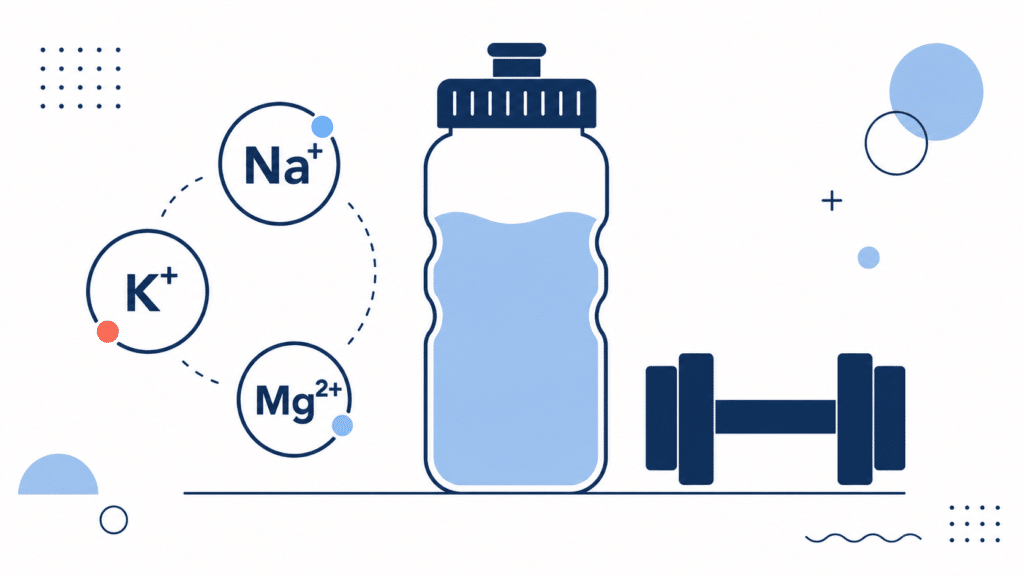
Electrolytes for strength training are often marketed as essential for hydration, muscle function, and performance. Colorful powders promise better workouts, fewer cramps, and faster recovery—but most lifters do not lose enough fluid or electrolytes during a normal gym session to require a dedicated supplement.
That does not make electrolytes useless. They can become relevant when training sessions are long, the environment is hot, sweat losses are high, or you need to recover quickly before another demanding session.
The main electrolyte lost through sweat is sodium. This means the most useful electrolyte product for a sweating athlete is not necessarily the one with the longest mineral list—it is usually the one that provides an appropriate amount of sodium.
This article explains what electrolytes do, whether they improve strength training, who may benefit, and how to choose a product without falling for unnecessary supplement hype.
Key Takeaways
- Most lifters do not need an electrolyte supplement for an ordinary 45–90-minute gym workout.
- Electrolytes become more useful during long sessions, hot conditions, high sweat rates, or multiple workouts in one day.
- Sodium is the main electrolyte lost through sweat and usually matters more during exercise than magnesium or potassium.
- Electrolytes support hydration but do not directly stimulate muscle growth.
- Plain water and normal meals are usually enough when sweat losses are modest.
- A salty sweater may need more sodium than someone who barely sweats.
- Drinking excessive amounts of plain water can also be harmful during prolonged exercise.
- The best strategy is based on session length, temperature, sweat rate, diet, and individual tolerance.
What Are Electrolytes?
Electrolytes are minerals that carry an electrical charge when dissolved in fluid. They help regulate fluid balance, nerve signaling, muscle contraction, and several other physiological processes.
The main electrolytes in the body include:
| Electrolyte | Main roles | Relevance during training |
|---|---|---|
| Sodium | Fluid balance, nerve signaling, muscle contraction | Main electrolyte lost through sweat |
| Chloride | Fluid balance and acid-base balance | Lost alongside sodium in sweat |
| Potassium | Cellular fluid balance, nerve and muscle function | Lost in smaller amounts through sweat |
| Magnesium | Energy metabolism, nerve function, muscle contraction | Important overall, but sweat losses are relatively small |
| Calcium | Bone health, nerve signaling, muscle contraction | Essential nutrient, but not usually the priority during training |
All of these minerals are essential. However, that does not mean they must be consumed in a sports drink during every workout. A normal diet already provides electrolytes, and the kidneys continually help regulate their concentration in the body.
Why Do Lifters Lose Electrolytes?
Electrolytes are lost primarily through sweat and urine. During training, the amount lost depends on how much you sweat and the concentration of electrolytes in that sweat.
Sweat rate can vary considerably based on:
- Training duration and intensity
- Temperature and humidity
- Body size
- Clothing
- Heat acclimatization
- Genetics
- Individual sweat response
Sweat composition also differs substantially between people. Two lifters can complete the same workout in the same gym while losing very different amounts of fluid and sodium.
Some people are also visibly “salty sweaters.” White marks on dark clothing, salt crystals on the skin, or sweat that frequently stings the eyes may indicate relatively high sodium losses. These signs are not a precise laboratory measurement, but they can provide a useful practical clue.
Do You Need Electrolytes for Strength Training?
For a standard strength-training session lasting approximately 45–90 minutes in a comfortable indoor environment, most people can rely on water and their regular meals.
If you begin the workout normally hydrated, have eaten during the day, and do not sweat heavily, an electrolyte supplement is unlikely to improve your performance noticeably.
I have used electrolytes in hot weather and while travelling, and I often felt better hydrated, more focused, and sometimes stronger after taking them. I have also occasionally found them helpful when dealing with a headache or the after-effects of alcohol. For a while, those experiences made it easy for me to believe that electrolytes simply made my training better and were almost a must before a workout.
Looking back, the context probably mattered more than I realised. Heat, travel, sweating, alcohol, irregular meals, and inadequate fluid intake can all make hydration more challenging. Replacing fluid and sodium may genuinely help when one of those factors is present, but that does not mean the same drink will improve an ordinary gym session when hydration and sodium intake are already adequate. Electrolytes are also not a universal treatment for headaches or hangovers, which involve more than dehydration alone.
Clients have also asked me whether they should take electrolytes before training. My answer today is situational: they can be useful when there is a meaningful hydration problem to solve, but they are not a mandatory pre-workout supplement.
Electrolytes become more relevant when one or more of the following applies:
- Your training lasts longer than approximately 90 minutes
- You train in hot or humid conditions
- You sweat heavily
- You lose large amounts of body weight during the session
- You perform strength training after endurance exercise
- You complete two demanding sessions on the same day
- You need rapid rehydration before another event or workout
- Your diet is temporarily low in sodium or total food intake
| Training situation | Likely need for electrolytes |
|---|---|
| 45–60-minute workout in a cool gym | Usually unnecessary |
| 60–90-minute normal hypertrophy session | Usually optional |
| Long, high-volume session with heavy sweating | Potentially useful |
| Training outdoors in hot weather | More likely to be useful |
| Strength and endurance training combined | Potentially useful |
| Multiple sessions with limited recovery time | Often useful for rapid rehydration |
Can Electrolytes Improve Strength or Muscle Growth?
Electrolytes do not directly stimulate hypertrophy. They do not activate muscle protein synthesis in the way resistance training and dietary protein do, and they should not be treated as a muscle-building supplement like creatine monohydrate or protein powder.
The potential benefit is indirect.
If substantial sweat and fluid losses leave you dehydrated, training quality may decline. The session may feel harder, cardiovascular strain can increase, and your ability to sustain repeated effort may be reduced. Replacing fluid and sodium can help maintain normal hydration and allow you to perform closer to your usual capacity.
Over time, maintaining training quality can support productive volume and progression. However, electrolytes only help when hydration or electrolyte losses are actually becoming a limiting factor.
If you are already adequately hydrated and have lost very little sodium, consuming more electrolytes will not automatically increase strength, repetitions, or muscle growth.
Why Sodium Matters Most During Exercise
Electrolyte supplements frequently emphasize magnesium and potassium because these minerals sound more sophisticated than ordinary salt. During a sweaty workout, however, sodium is generally the primary mineral to consider.
Sodium helps retain ingested fluid, supports thirst, and replaces the main electrolyte lost in sweat. This can make a sodium-containing drink more effective than plain water when fluid losses are substantial or rapid rehydration is required.
Potassium and magnesium remain important nutrients, but they are normally better managed through total daily food intake. If you are concerned about magnesium specifically, read our guide to magnesium for muscle growth and recovery.
| Ingredient | What to know |
|---|---|
| Sodium | The main priority when replacing sweat losses |
| Potassium | Useful dietary mineral, but less is lost through sweat |
| Magnesium | Essential overall, but not usually needed in large amounts during training |
| Calcium | Important for health and contraction, but rarely the limiting electrolyte in a workout |
How Much Sodium Do Lifters Need?
There is no single sodium target that fits every lifter. Requirements depend on sweat rate, sweat sodium concentration, training duration, environmental conditions, and sodium intake from food.
For a normal gym workout with modest sweating, you may not need any supplemental sodium. Your pre-workout and post-workout meals can usually replace what you lose.
During long or particularly sweaty sessions, a drink providing approximately 300–600 mg of sodium per hour can be a practical starting range. Heavy or salty sweaters may require more, while people with low sweat losses may require less or none at all.
This range should not be interpreted as a universal prescription. The objective is not to replace every milligram in real time. It is to prevent large, uncompensated losses when they are likely to affect hydration, comfort, or performance.
People with high blood pressure, kidney disease, heart disease, or medical instructions to restrict sodium should speak with a healthcare professional before deliberately increasing sodium intake.
How to Estimate Your Sweat Rate
You can estimate how much fluid you lose during training by weighing yourself before and after a representative session.
- Use the bathroom before weighing yourself.
- Record your body weight before training with minimal clothing.
- Track how much fluid you drink during the session.
- Weigh yourself again afterward in similarly dry clothing.
- Add the fluid consumed to the amount of body weight lost.
As a practical approximation, one kilogram of body weight lost represents about one liter of fluid.
For example, if you lose 0.7 kg during a one-hour workout and drink 0.5 liters, your estimated sweat loss is approximately 1.2 liters per hour.
This method is not perfectly precise. Urination, wet clothing, food intake, and measurement error can affect the result. However, it is useful for comparing your sweat response across different conditions.
Repeat the measurement during different types of training and weather. Your sweat rate during a cool upper-body session may be very different from your sweat rate during a demanding leg workout in summer.
Electrolytes and Muscle Cramps
Electrolytes are frequently promoted as a guaranteed solution to muscle cramps. The reality is more complicated.
Severe fluid or electrolyte disturbances can contribute to neuromuscular symptoms. However, many exercise-associated cramps appear to be influenced by local muscle fatigue, altered neuromuscular control, exercise intensity, and insufficient conditioning for the task.
This means a cramp during a difficult leg session does not prove that you are deficient in sodium, potassium, or magnesium.
An electrolyte drink may help when cramps occur alongside heavy sweating and large sodium losses. But if cramps repeatedly occur in the same muscle during demanding sets, it may be more useful to examine fatigue, exercise selection, pacing, range of motion, and recent training load.
Similarly, taking extra magnesium does not reliably prevent ordinary exercise-associated cramps in people whose magnesium status is already adequate.
Electrolytes vs Plain Water
Plain water is sufficient for most ordinary strength-training sessions. It is inexpensive, widely available, and effective when fluid and sodium losses are modest.
An electrolyte drink becomes more useful when sodium losses are meaningful or when you need to retain a larger proportion of the fluid you consume.
| Choose water when | Consider electrolytes when |
|---|---|
| The workout is relatively short | The workout is long or combined with endurance exercise |
| The gym is cool | The environment is hot or humid |
| You sweat only moderately | You sweat heavily or leave salt marks on clothing |
| You have eaten normal meals | You have eaten very little or follow a low-sodium diet |
| You have plenty of time to recover | You need to recover quickly for another session |
A useful middle ground is simply drinking water and eating a normal meal containing some salt before or after training. You do not necessarily need a branded supplement to replace sodium.
Should an Electrolyte Drink Contain Carbohydrates?
Carbohydrates and electrolytes serve different purposes.
Sodium helps replace sweat losses and support fluid retention. Carbohydrates provide energy and can help maintain performance during longer training sessions.
Most lifters do not need carbohydrates during a short workout if they have eaten beforehand. However, carbohydrates may become useful during sessions lasting longer than 90 minutes, very high-volume training, combined strength and endurance sessions, or training performed after inadequate food intake.
A drink containing both sodium and carbohydrates can therefore make sense during long, demanding sessions. A zero-calorie electrolyte drink may be more appropriate when hydration is the main concern and additional energy is unnecessary.
Electrolytes should not be confused with a complete pre-workout supplement. They do not provide the stimulant effect associated with caffeine for strength training, nor do they work through muscular carnosine like beta-alanine.
How to Choose an Electrolyte Supplement
Start by checking the amount of sodium per serving. Some products advertise an extensive mineral blend but contain very little sodium, making them less useful for replacing meaningful sweat losses.
A practical product should:
- Clearly list sodium per serving
- Provide an amount appropriate for your sweat losses
- Be easy to mix at the intended concentration
- Taste pleasant enough that you will drink it
- Avoid unnecessary proprietary blends
- Contain carbohydrates only if they fit your training needs
- Be third-party tested if you compete in drug-tested sport
Large doses of magnesium are usually unnecessary in an intra-workout drink and may cause gastrointestinal discomfort. More minerals do not automatically make a formula more effective.
A Simple Homemade Electrolyte Drink
You do not necessarily need a commercial electrolyte product. A simple homemade drink can be cheaper and lets you control the amount of salt, sugar, flavoring, and other ingredients yourself. That does not automatically make it healthier, but it can make the formula easier to match to your actual needs.
- 750 ml water
- Approximately 1/8–1/4 teaspoon of table salt
- Juice from half a lemon or lime
- Optional: 1–2 teaspoons of sugar, a small amount of juice, or sugar-free flavoring
The exact salt amount can be adjusted based on session length, sweat rate, taste, and sodium consumed through food. One-quarter teaspoon of ordinary table salt generally provides roughly 575 mg of sodium, although the exact amount varies by salt type and measurement. If the session is long or demanding, a little sugar or juice can provide carbohydrates, improve the taste, and support fluid absorption. For an ordinary workout where extra energy is unnecessary, the drink can remain sugar-free.
This is not inherently better than a well-formulated commercial product. It is simply a practical, low-cost way to obtain fluid and sodium without paying for elaborate branding or ingredients you may not need.
Can You Drink Too Many Electrolytes?
Yes. More is not always better.
Excessive electrolyte intake can cause gastrointestinal discomfort and may be inappropriate for people with certain medical conditions. Very high intakes of potassium or magnesium can be especially problematic when kidney function is impaired.
It is also possible to drink too much fluid. During prolonged exercise, consuming water faster than the body can eliminate it can dilute blood sodium and contribute to exercise-associated hyponatremia. This is uncommon during ordinary strength training but is an important reason not to force excessive amounts of fluid.
Use thirst, environmental conditions, session demands, and your measured sweat response as guides. The goal is sensible replacement—not finishing a predetermined amount regardless of need.
Practical Electrolyte Strategy for Lifters
| Situation | Practical approach |
|---|---|
| Normal 45–90-minute workout | Begin hydrated and drink water according to thirst |
| Long session with moderate sweating | Consider water with a moderate amount of sodium |
| Hot conditions or heavy sweating | Use fluid and sodium based on estimated losses |
| Long session with declining energy | Consider sodium plus carbohydrates |
| Two sessions in one day | Prioritize fluid, sodium, carbohydrates, and a normal recovery meal |
| Little sweating and normal diet | No dedicated electrolyte product is likely needed |
Electrolytes belong in the situational category of the evidence-based supplement hierarchy for muscle growth. They solve a specific hydration problem; they are not a universal requirement.
For more evidence-based supplement guides, visit the Supplements Hub.
THG Verdict
Most lifters do not need an electrolyte supplement for a normal gym workout. If you train for 45–90 minutes in a comfortable environment, begin adequately hydrated, and eat a normal diet, water is usually sufficient.
Electrolytes—especially sodium—become more valuable during long sessions, hot conditions, heavy sweating, combined training, or rapid recovery between workouts. In those situations, replacing some of the fluid and sodium lost through sweat may help maintain hydration and training quality.
Electrolytes do not directly build muscle, and a more complicated mineral blend is not necessarily better. Match your intake to the actual demands of your training rather than assuming every workout requires a sports drink.
FAQ
Should I drink electrolytes while lifting weights?
Most people do not need electrolytes during an ordinary 45–90-minute strength workout. They may be useful if the session is long, the environment is hot, or you sweat heavily.
Do electrolytes improve strength?
Electrolytes do not directly increase strength when hydration and mineral status are already adequate. They may help maintain performance when substantial fluid and sodium losses would otherwise reduce training quality.
Do electrolytes help build muscle?
Electrolytes do not directly stimulate muscle growth. Their potential benefit is indirect: maintaining hydration may help you preserve training performance during long or sweaty workouts.
Which electrolyte is most important for lifters?
Sodium is generally the most important electrolyte to replace during sweaty exercise because it is the main electrolyte lost through sweat. Magnesium and potassium remain important but are usually obtained through the daily diet.
How much sodium should an electrolyte drink contain?
Needs vary widely. For long or sweaty training, approximately 300–600 mg of sodium per hour can be a practical starting range, while heavy or salty sweaters may require more. Many ordinary gym sessions require no supplemental sodium.
Are electrolytes better than water?
Not automatically. Water is usually sufficient for short or moderately sweaty workouts. Electrolytes may be more appropriate when fluid and sodium losses are high or rapid rehydration is needed.
Do electrolytes prevent muscle cramps?
Not reliably. Electrolytes may help when cramps occur alongside substantial sweating and sodium loss, but exercise-associated cramps can also result from local muscle fatigue, training intensity, and neuromuscular factors.
Can I take electrolytes every day?
Healthy people can consume electrolyte-containing foods and drinks daily, but a dedicated supplement is often unnecessary. Daily use should reflect your training, sweat losses, diet, health status, and total sodium intake.
References
- Sawka MN, et al. American College of Sports Medicine position stand: Exercise and fluid replacement. Medicine & Science in Sports & Exercise. 2007.
- McDermott BP, et al. National Athletic Trainers’ Association position statement: Fluid replacement for the physically active. Journal of Athletic Training. 2017.
- Baker LB. Sweating rate and sweat sodium concentration in athletes: A review of methodology and intra/interindividual variability. Sports Medicine. 2017.
- Périard JD, et al. Exercise under heat stress: Thermoregulation, hydration, performance implications, and mitigation strategies. Physiological Reviews. 2021.
- Hew-Butler T, et al. Statement of the Third International Exercise-Associated Hyponatremia Consensus Development Conference. Clinical Journal of Sport Medicine. 2015.
- Hew-Butler T, et al. Exercise-associated hyponatremia: 2017 update. Frontiers in Medicine. 2019.