Caffeine for Strength Training: Does It Improve Performance?
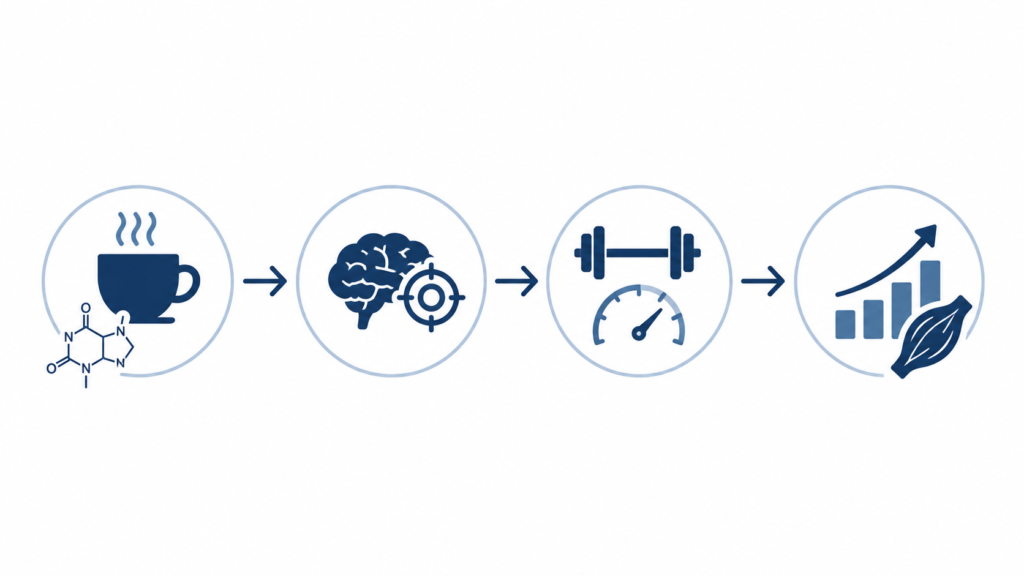
Caffeine for strength training is popular because it can make workouts feel more focused, energetic and productive. But caffeine is not a muscle-building supplement by itself.
Its value depends on whether it improves training performance without creating problems for sleep, anxiety, recovery or consistency.
For some lifters, caffeine can be a useful tool. For others, it becomes a crutch that makes training feel better in the moment while quietly hurting recovery later.
This article explains what caffeine actually does, how it may affect strength training, how much to take, when it can backfire, and how it fits into a broader evidence-based supplement strategy.
TL;DR
- Caffeine can improve strength training performance for some lifters, especially when fatigue or low energy would otherwise limit effort.
- The main benefits are acute: better alertness, focus, perceived effort and sometimes strength or muscular endurance.
- Caffeine does not directly build muscle, but it may support hypertrophy indirectly if it improves training quality.
- More caffeine is not always better. High doses can increase jitters, anxiety and sleep disruption.
- Timing matters because caffeine taken too late can hurt sleep, which can undermine recovery and long-term progress.
- Caffeine is often the main active ingredient in pre-workout supplements, but you do not need a full pre-workout formula to benefit from caffeine.
What Caffeine Actually Does
Caffeine is a stimulant that mainly works by blocking adenosine receptors in the brain. Adenosine is involved in sleep pressure and perceived tiredness, so blocking its effects can make you feel more alert and less fatigued.
In training, that can matter. A hard strength session is not limited only by muscle tissue. It is also influenced by focus, arousal, motivation, perceived effort and the ability to keep pushing when sets become uncomfortable.
This is why caffeine can make a workout feel more productive. It may help you feel more awake, more focused and more willing to produce high effort.
But the effect is not the same for everyone. Genetics, habitual caffeine intake, sleep quality, stress, dose and timing can all affect how useful caffeine feels.
Does Caffeine Improve Strength Training Performance?
Caffeine can improve some aspects of resistance training performance, but the effect is usually modest rather than dramatic.
Research suggests caffeine may improve strength, power and muscular endurance in some contexts. In practical terms, this might mean slightly better bar speed, an extra rep in some sets, better focus during hard work, or better performance when you feel tired before training.
However, caffeine is not a guaranteed performance upgrade. Some lifters respond strongly. Others notice very little beyond feeling more stimulated. Some feel worse because they become jittery, rushed or anxious.
The most realistic way to think about caffeine is this: it may help you express performance you are already capable of, especially when tiredness or low arousal would otherwise reduce training quality.
It does not replace good programming, progressive overload, proper technique or enough recovery.
How Caffeine May Support Muscle Growth Indirectly
Caffeine does not stimulate muscle growth directly in the same way that adequate dietary protein supports muscle protein synthesis. It is better understood as a performance-support supplement.
That distinction matters.
Muscle growth is primarily driven by consistent progressive training, enough total volume, sufficient effort, adequate protein intake and recovery. Caffeine can only help hypertrophy if it improves one or more parts of that process.
For example, caffeine may indirectly support hypertrophy if it helps you:
- train with better focus
- maintain performance across hard sets
- feel less limited by tiredness before training
- complete productive volume with better intent
- perform better in sessions where motivation is low
But the opposite can also happen. If caffeine improves one workout but reduces sleep quality later, the tradeoff may not be worth it. For hypertrophy, the goal is not to feel stimulated. The goal is to train productively and recover from it.
Why it matters: caffeine should be evaluated by its effect on the full training system, not just by how intense it makes a single session feel.
How Much Caffeine Should You Take Before Strength Training?
Many studies use caffeine doses around 3–6 mg/kg body weight, but that does not mean every lifter should start there.
For a 90 kg lifter, 3–6 mg/kg would equal roughly 270–540 mg of caffeine. That can be a lot, especially for people who are sensitive to stimulants or train later in the day.
A more practical approach is to start lower and only increase if needed.
- Low dose: about 1–2 mg/kg, or roughly one strong coffee for many people.
- Moderate dose: about 2–3 mg/kg, often enough for a noticeable performance effect.
- High dose: 4–6 mg/kg, more likely to cause side effects and sleep issues.
For most recreational lifters, the best dose is not the highest dose. It is the lowest dose that improves training without making you feel overstimulated or hurting sleep.
If you already drink coffee throughout the day, your total daily caffeine intake matters too. A pre-workout dose on top of multiple coffees can add up quickly.
When Should You Take Caffeine Before Training?
Most people take caffeine around 30–60 minutes before training. That timing usually gives enough time to feel the stimulant effect during the session.
However, the best timing depends on your schedule and sensitivity.
If you train in the morning or early afternoon, caffeine is less likely to interfere with sleep. If you train in the late afternoon or evening, caffeine becomes more risky because it can stay active in your system for several hours.
This is one of the most important practical points: caffeine can improve training acutely while making recovery worse later if it disrupts sleep.
If evening training is your only option, consider a lower dose, earlier timing, coffee instead of a high-stimulant pre-workout, or a stimulant-free approach.
When Caffeine Can Backfire
Caffeine is useful for many lifters, but it is not free performance.
It can backfire when the dose is too high, timing is too late, or the lifter becomes dependent on it to train with normal effort.
Common problems include:
- jitters
- increased anxiety
- higher heart rate
- rushed technique
- digestive discomfort
- sleep disruption
- feeling unable to train without stimulants
The biggest long-term issue is sleep. If caffeine reduces sleep duration or quality, it can interfere with recovery, motivation and performance across the week.
For hypertrophy, that tradeoff matters. A slightly better workout today is not worth consistently worse recovery tonight.
If caffeine makes you train harder but sleep worse, it may be helping the session while hurting the system.
Caffeine vs Pre-Workout Supplements
Caffeine is often the main active ingredient in many pre-workout supplements. This is why a pre-workout can feel powerful even when many of the other ingredients are underdosed or less important.
That does not mean pre-workout supplements are useless. Some formulas include useful ingredients such as citrulline or electrolytes. But if your main goal is energy and focus, caffeine alone may explain most of the noticeable effect.
This is also why coffee can work well for many lifters.
A simple coffee before training may provide the main benefit without the extra cost, sweeteners, proprietary blends or stimulant stacking that sometimes come with commercial pre-workouts.
For a broader overview of which products are worth caring about, see the guide to the best supplements for muscle growth.
Should You Use Caffeine for Every Workout?
Not necessarily.
Using caffeine every workout is not automatically a problem, but it can make it harder to judge your natural energy, fatigue and readiness. It may also increase your total caffeine intake across the week.
A practical approach is to reserve caffeine for sessions where it has the most value:
- heavy lower-body sessions
- high-volume sessions
- training after poor sleep
- training after a long workday
- performance-focused sessions where effort matters most
You may not need caffeine for shorter sessions, lighter pump work or workouts close to bedtime.
This keeps caffeine as a useful tool rather than something you depend on to train at all.
Who Should Be Careful With Caffeine?
Some people should be more cautious with caffeine, especially higher doses.
This includes people who:
- are sensitive to stimulants
- have anxiety that worsens with caffeine
- train late in the day
- already consume a lot of caffeine
- notice sleep problems after caffeine
- have high blood pressure or heart-related concerns
- use medication that may interact with stimulants
If you have a medical condition, use medication, are pregnant, or are unsure whether caffeine is appropriate for you, speak with a qualified healthcare professional before using high-dose caffeine or stimulant-based supplements.
Practical Takeaways
- Caffeine can improve strength training performance, but the effect varies between lifters.
- It works mainly by improving alertness, focus and perceived effort.
- Caffeine may support hypertrophy indirectly if it improves training quality.
- It does not directly build muscle.
- Start with a lower dose before considering higher doses.
- Avoid high doses late in the day if sleep matters to your progress.
- Coffee may provide most of the benefit of a stimulant-based pre-workout.
- The best caffeine strategy improves the whole training week, not just one session.
FAQ: Caffeine for Strength Training
Is caffeine good for strength training?
Caffeine can be useful for strength training because it may improve alertness, focus, perceived effort and some performance outcomes. The effect varies between individuals, and higher doses are not always better.
Does caffeine build muscle?
Caffeine does not directly build muscle. It may support muscle growth indirectly if it helps you train harder, maintain performance or complete more productive work without hurting recovery.
How much caffeine should I take before lifting?
Many studies use 3–6 mg/kg body weight, but many lifters should start lower. A practical starting point is often 1–2 mg/kg, especially if you are sensitive to caffeine or train later in the day.
When should I take caffeine before a workout?
Most people take caffeine around 30–60 minutes before training. If you train late in the day, a lower dose or stimulant-free option may be better to reduce the risk of sleep disruption.
Is coffee enough before strength training?
Yes, coffee can be enough for many lifters. Since caffeine is often the main active ingredient in stimulant-based pre-workouts, coffee may provide much of the practical benefit at a lower cost.
Should I take caffeine before every workout?
You can, but you do not have to. Many lifters are better off saving caffeine for demanding sessions or low-energy days rather than relying on it for every workout.
Can caffeine hurt recovery?
Caffeine can hurt recovery indirectly if it disrupts sleep. If caffeine improves one workout but reduces sleep quality later, it may be a poor tradeoff for long-term hypertrophy.
References
- Guest NS, VanDusseldorp TA, Nelson MT, et al. International society of sports nutrition position stand: caffeine and exercise performance. Journal of the International Society of Sports Nutrition. 2021. PubMed
- Grgic J, Trexler ET, Lazinica B, Pedisic Z. Effects of caffeine intake on muscle strength and power: a systematic review and meta-analysis. Journal of the International Society of Sports Nutrition. 2018. PubMed
- Pickering C, Kiely J. What should we do about habitual caffeine use in athletes? Sports Medicine. 2019. PubMed
- Clark I, Landolt HP. Coffee, caffeine, and sleep: A systematic review of epidemiological studies and randomized controlled trials. Sleep Medicine Reviews. 2017. PubMed