Range of Motion for Muscle Growth
Choose a controlled range of motion and understand why full reps, short-length partials and lengthened partials are different training choices.

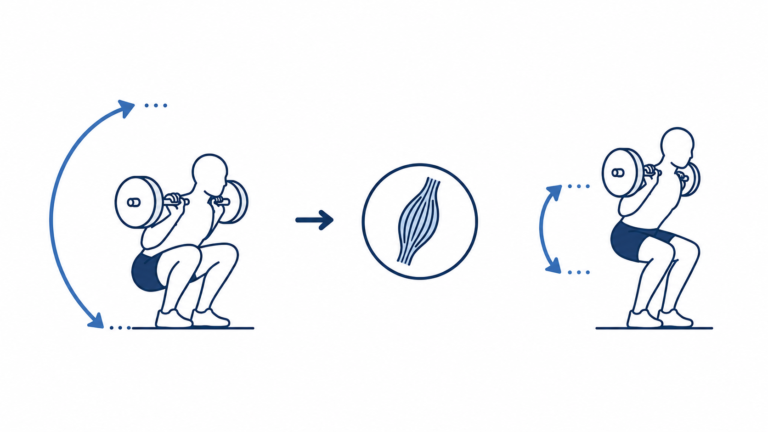
Choose a controlled range of motion and understand why full reps, short-length partials and lengthened partials are different training choices.
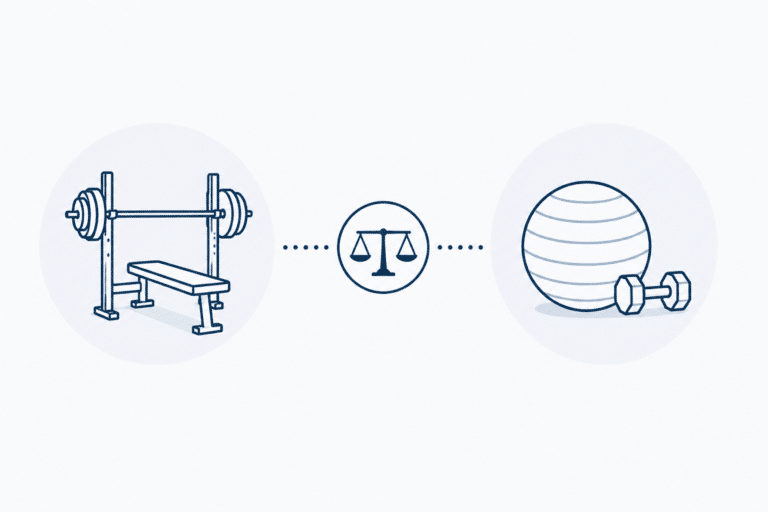
Stable exercises generally outperform unstable exercises for hypertrophy because they allow greater force production, higher training quality, and better progression. Learn when instability helps and when it may limit muscle growth.
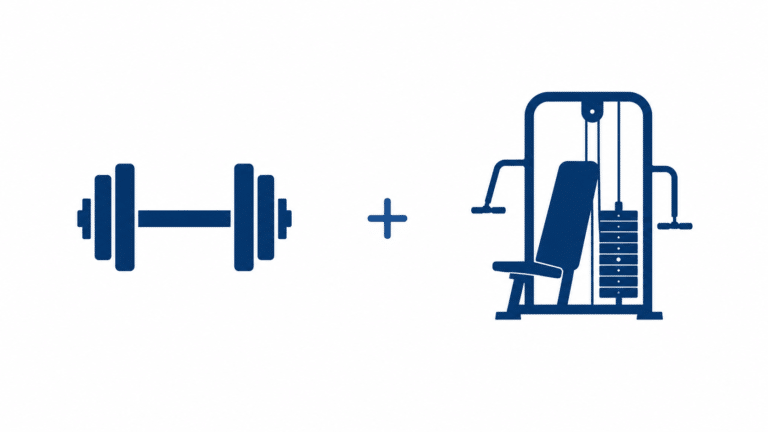
Free weights vs machines for muscle growth: learn when each is useful, what the research shows, and why most lifters should use both.
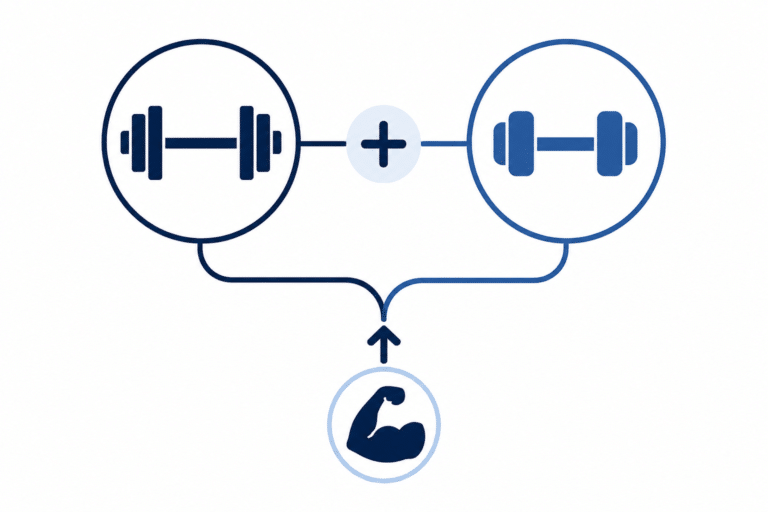
Compound and isolation exercises can both build muscle. Learn where each works best, which muscles need direct work, and how to combine them efficiently.
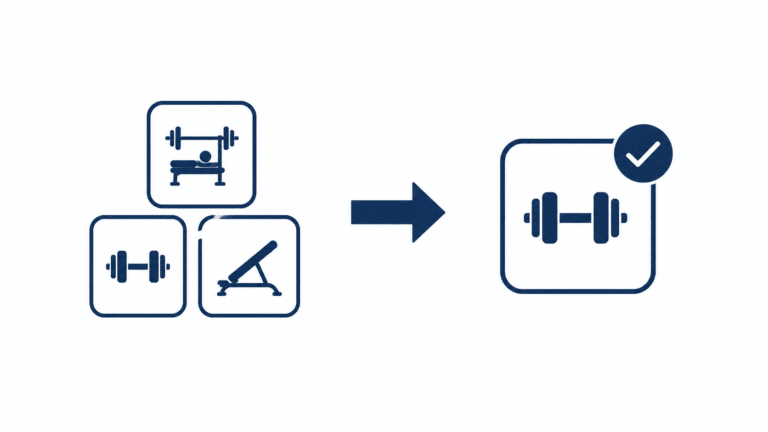
Not all exercises are equally effective for muscle growth. Learn how to evaluate exercises using stability, range of motion, fatigue cost, and progression to make smarter hypertrophy training decisions.

Training intensity for hypertrophy is not just about lifting heavy. Learn how %1RM, effort, RIR, and proximity to failure affect muscle growth.

Mechanical tension vs metabolic stress is a key concept in hypertrophy training. This article explains why tension is the primary driver of muscle growth and why the pump is not enough.

Reps in reserve (RIR) helps you control training effort and manage fatigue. Learn how close to failure you should train for hypertrophy and how to balance stimulus with recovery.
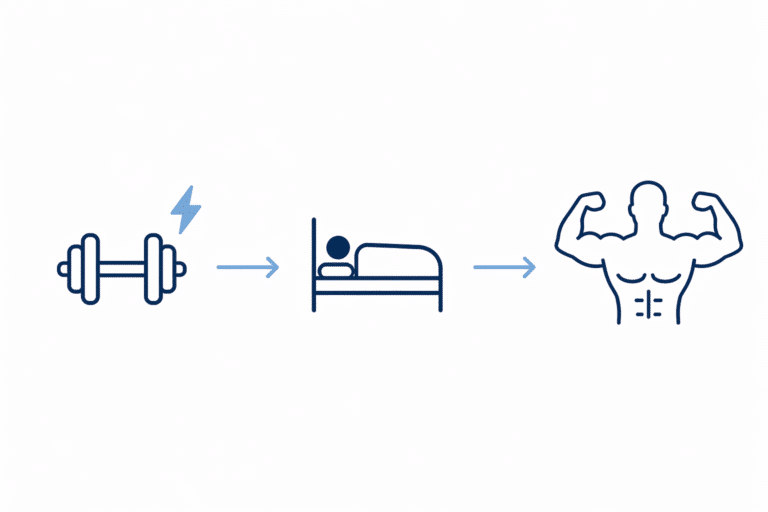
What causes muscle growth is often misunderstood. Learn how volume, effort, and recovery work together to drive hypertrophy in a simple, science-based way.