Cable Fly for Muscle Growth: Height, Technique & Reps
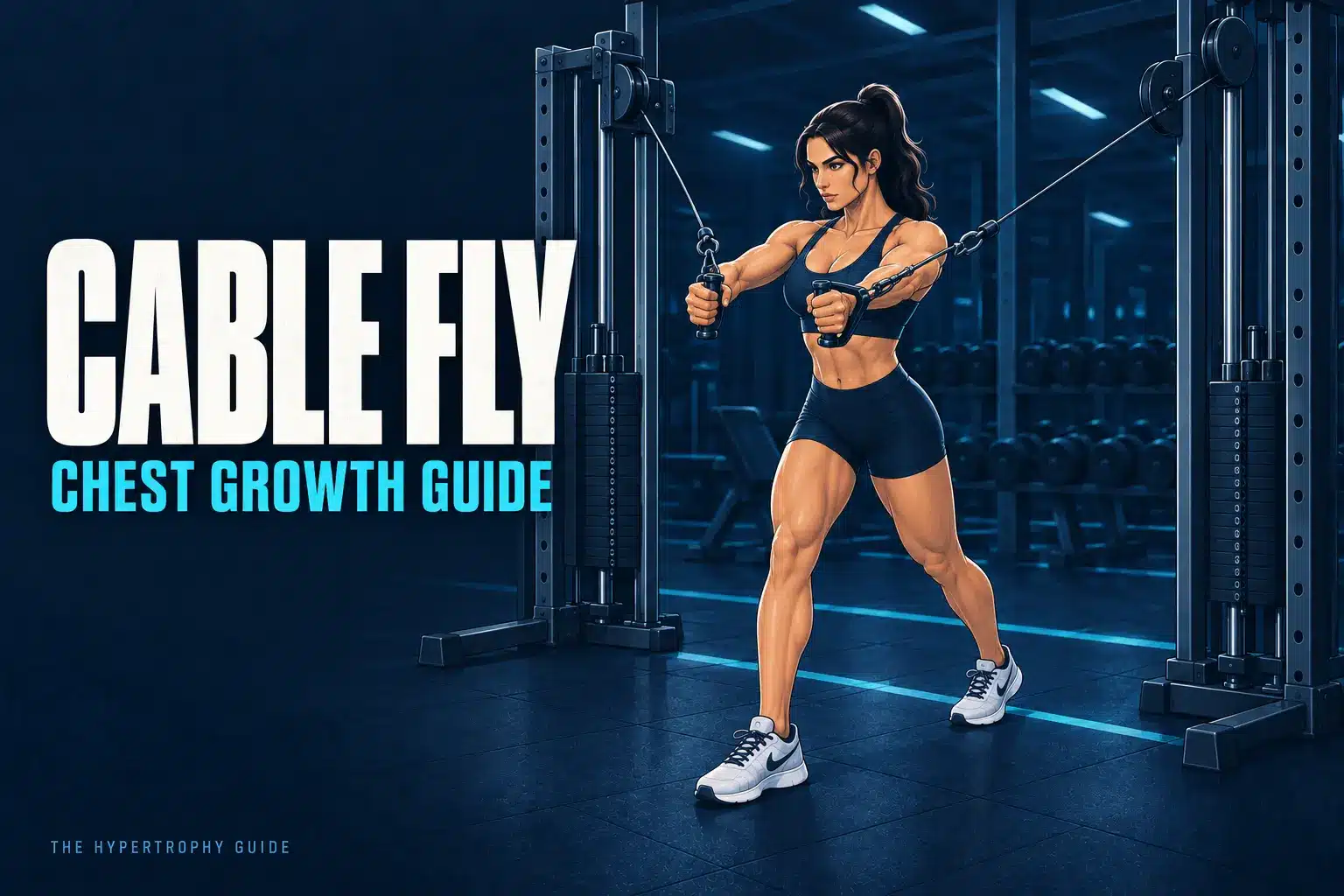
The cable fly is an isolation exercise for adding chest volume without the stability and triceps demands of another heavy press. Pulley height changes the line of pull, but comfort, control and a useful stretch matter more than chasing one “perfect” angle.
What Muscles Does the Cable Fly Work?
The pectoralis major brings the upper arm across the body. The anterior deltoid and stabilisers around the shoulder blade assist, while the triceps work only isometrically because the elbow angle should remain nearly constant.
I do not currently use cable flies often because I train full body and have other priorities. They are useful when the chest needs extra volume without much additional fatigue, especially in an upper/lower split or a programme with more weekly sessions. I normally place them after a compound press, around the second or third chest exercise-not first.
What Pulley Height Should You Use?
| Path | Practical use |
|---|---|
| Mid cable fly | Reliable default with a horizontal arm path |
| Low to high | Can complement a flat press and bias the line toward the clavicular fibres |
| High to low | Comfortable for some lifters, but easy to turn into a whole-body movement |
Changing the line can alter regional emphasis, but no version isolates a separate “upper” or “lower” chest muscle. Choose the path that feels natural and fits the other presses in the programme.
I use the mid cable fly most often. If the main compound press was flat, a low-to-high fly can create useful variation. With high-to-low flies, I often see people move the entire body or let the shoulders take over, so the load needs to stay honest.
How to Perform a Cable Fly
- Step forward into a stable stance with enough space to clear the stacks.
- Set a small elbow bend and keep that angle fixed.
- Open the arms until the chest reaches a strong, comfortable stretch.
- Sweep the upper arms together in a broad arc.
- Return slowly without allowing the stacks to pull the shoulders backward.
The hands do not need to collide or cross. The important work occurs as the upper arms move across the body. The shoulder blades should not be pinned rigidly together throughout; allow normal movement as the arms come forward while keeping the shoulders controlled.
For a mid cable fly, I sometimes cue the lifter to keep the thumbs pointing up as if holding coffee in a cup. The elbows remain locked in a slight bend. The stretch is important and can approach the edge of tolerable discomfort, but it should not become joint pain.
Standing vs Seated Cable Fly
I personally like standing flies because setup is quick. For clients, I have often used a seated version because the extra stability makes technical cheating much harder. If the equipment allows it, seated is probably the cleaner hypertrophy setup.
Sets, Reps and Progression
| Use | Sets x reps | Effort | Rest |
|---|---|---|---|
| Secondary chest work | 2-4 x 10-15 | 1-3 RIR | 60-120 sec |
| Higher-rep isolation | 2-4 x 15-20 | 0-3 RIR | 60-120 sec |
Higher repetitions often make it easier to maintain the elbow angle and control the stretch. Progress with repetitions first, then make the smallest available weight increase. Shortened reps near the contracted position can extend a final set, but do not remove the stretched portion simply to move more weight.
Use cable flies to complement-not automatically replace-compound work such as the bench press, incline dumbbell press or machine chest press.
Common Mistakes
Frequently Asked Questions
Are cable flies good for muscle growth?
Yes. They add direct chest work with little triceps involvement and usually modest systemic fatigue.
Are cables better than dumbbells?
They maintain tension across a different range and are easy to adjust. Neither tool is universally superior.
How far should I stretch?
Use the deepest position that creates a strong chest stretch while the shoulder remains comfortable and controlled.
Bottom Line
Use the cable fly after pressing when you want more chest volume without another fatiguing compound lift. Keep the elbows softly locked, preserve the controlled stretch and choose a seated or standing setup according to the stability you need.
References
- Schoenfeld BJ, et al. Loading recommendations for muscle strength, hypertrophy, and local endurance. Sports. 2021.
- Pallares JG, et al. Effects of range of motion on resistance training adaptations. Scand J Med Sci Sports. 2020.
- Refalo MC, et al. Influence of resistance training proximity-to-failure on skeletal muscle hypertrophy. Sports Med. 2023.