When Should You Swap an Exercise in Your Upper/Lower Split?
You have one lower-body session where the hack squat feels awful. Last week you managed ten reps. Today you get eight. Do you change the exercise for next week? I’d start by opening the training log. A single disappointing set gives you very little to go on. A machine you can rarely get onto before work gives you a much clearer reason to switch.
Decide what the exercise is there to do
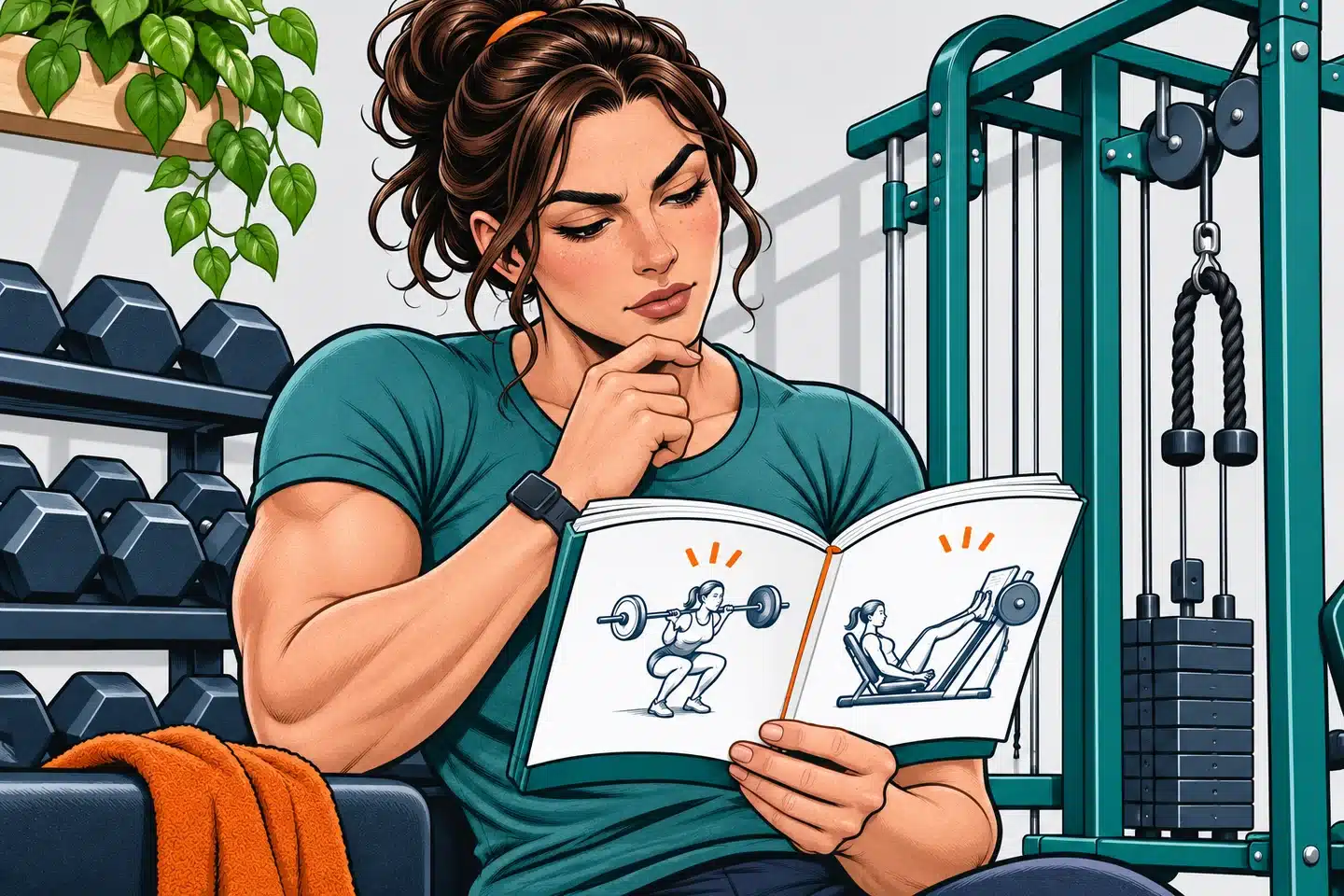
Suppose the first lift on Lower A is a squat. If you want to improve your barbell squat, keeping a squat in the week gives you practice with the skill you want to improve. If all you need from that slot is a hard, repeatable set for your quads, a leg press or hack squat may do the job just as well for your programme. Decide which of those goals you mean before choosing the replacement. The exercise selection guide walks through setup, range of motion and loading.
What if you enjoy variety?
One trial assigned 70 young women to ten weeks of lower-body training three times a week. One group repeated the leg press and stiff-leg deadlift each session. The other followed a fixed rotation that also included the hack squat, Smith-machine squat and two leg curls. The groups made similar gains in the measured thigh muscles and strength tests. The rotation was planned: each exercise came back on a predictable day. That matters if you want to apply the result to your own split. Read the lower-body trial.
There is no particular week when a productive exercise expires. A practical way to use variety in an upper/lower split is to put a hack squat on Lower A and a leg press on Lower B. Each has its own line in your log, so you can still compare Tuesday with last Tuesday. Compare this with choosing whichever machine looks interesting each time you walk through the door. Research review on exercise variation.
Keep it, adjust it or swap it?
Keep it after one off day. Check whether the lift came later in the session, you rested less, or you used a deeper range of motion. Write that detail beside the set. Next time, repeat the usual setup and see whether the pattern persists.
Adjust it when the comparison is messy. If your chest-supported row feels different every week, record the bench angle, handle and seat setting. If those details make the movement repeatable, you can decide whether you actually need a different row. See the chest-supported row setups.
Swap it when the same obstacle keeps costing you training. If the hack squat is always occupied during your lunch break and you keep skipping your quad work, make the available leg press your regular Lower A exercise. A machine you can use consistently is easier to progress. If a movement hurts, stop that set. A training log cannot tell you the cause of pain.
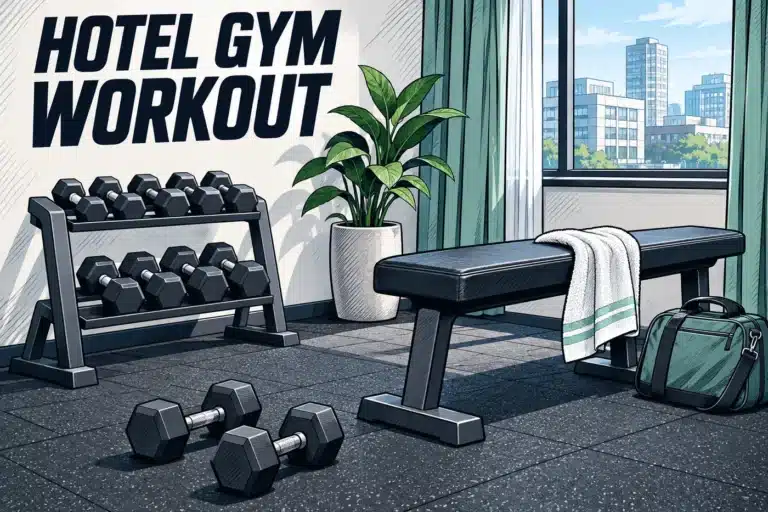
If you’re travelling and the hotel only has light dumbbells, try a two-session hotel gym workout until you can return to your usual equipment.
A worked example from an upper/lower split
Imagine Lower A calls for two sets of 8–12 on the hack squat. You have decided to switch to a leg press because of the queue. Keep the rest of that day familiar. Record the machine and seat position, then use warm-up sets to find a load you can move through a comfortable, repeatable range. The numbers printed on two different machines are a poor way to choose your starting weight.
Your first entry might read Leg press, seat 3, 10 and 9 reps, about two reps left on each set. On the next Lower A, use the same setup. If you get 11 and 10 with similar effort and depth, you now have a meaningful comparison. Keep the old hack-squat entries in case you return to it later.
If you’re rearranging an entire week, start with the four-day upper/lower guide. If it’s just one exercise that no longer fits, choose its replacement, give it its own line in the log and leave the rest of the week easy to compare.