Not Recovering From Training? Signs You’re Under-Recovered (and Fixes That Work)
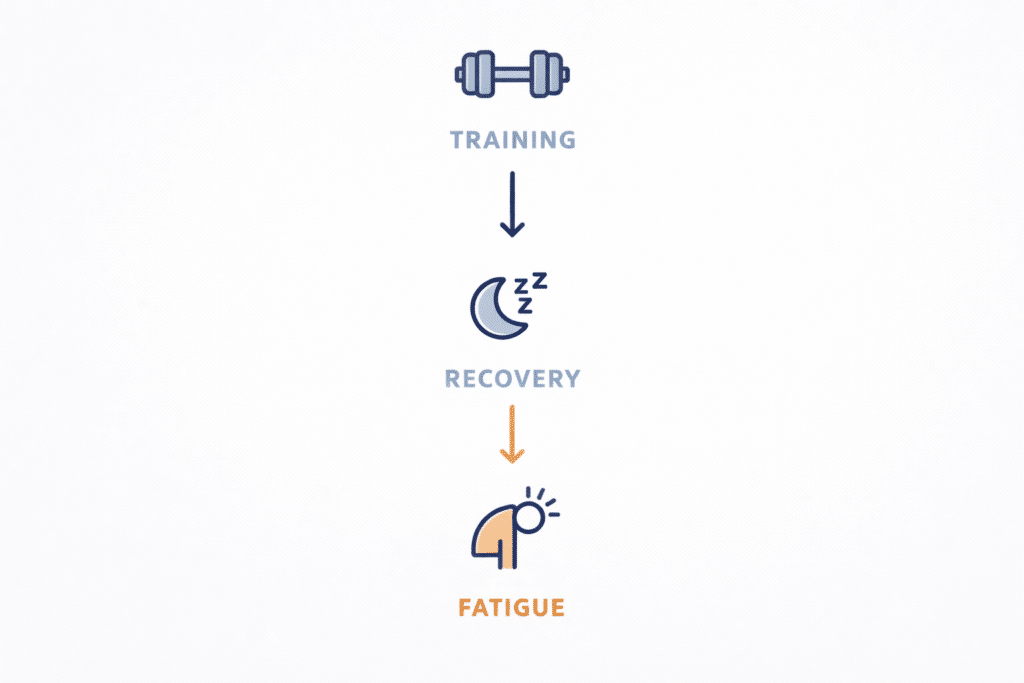
If training repeatedly feels harder to recover from, review both the workouts and the conditions around them. More soreness, lower motivation or a few weaker sets do not by themselves identify the cause.
This is a practical review for adult lifters, not a diagnostic test for overtraining or a substitute for assessing unexplained symptoms.
Separate a Bad Workout from a Repeated Problem
An isolated session after poor sleep or a demanding day is weak evidence that your program has become unsustainable. Repeated deterioration under similar conditions is more useful information.
Compare several entries in your log. Have you lost repetitions at the same load and estimated effort? Did the rest periods, exercise order or setup change? Is discomfort affecting movement? A fair comparison comes before interpreting the result.
What Changed Recently?
| Area to review | Useful questions | A possible first adjustment |
|---|---|---|
| Training | Did you add sets, unfamiliar exercises, more failure work, running or sport? | Remove a recent low-priority addition or temporarily make sessions less demanding. |
| Sleep | Did bedtimes, travel, night waking or early starts change? | Protect a realistic sleep opportunity and address the specific disruption. |
| Food | Are meals being skipped or has dieting become more aggressive? | Restore regular eating and review whether intake supports the workload. |
| Life stress | Did work, caring responsibilities or other demands increase? | Fit the gym plan to the current week rather than forcing an old workload. |
| Health and symptoms | Is fatigue persistent, unusual or present well beyond workouts? | Seek appropriate assessment instead of repeatedly changing supplements or training variables. |
The table is a coaching framework. It does not establish which explanation applies to you.
Local Trouble and Whole-Program Trouble Need Different Responses
If leg sessions suffer after adding running, first examine how those activities are arranged and how much work changed. If your upper-body sessions remain normal, a complete program replacement may be unnecessary.
If several unrelated movements and daily energy decline together, look wider. Sleep, insufficient food, illness and stress can matter alongside training. The cardio-and-lifting guide addresses combining sessions; the volume troubleshooting guide focuses specifically on the set-count question.
Feeling generally tired does not measure central fatigue or prove that the nervous system is “fried.” The central versus peripheral fatigue guide explains that distinction.
Make the Next Few Sessions Easier to Interpret
- Record the concern: identify the exercises, sessions or symptoms that changed.
- Restore basic consistency: use familiar setups, realistic rests and comparable effort.
- Reduce a relevant demand if needed: remove optional work or use a short lighter period.
- Review the response: compare subsequent similar sessions, including comfort and readiness.
- Reconsider if the pattern persists: do not keep escalating adjustments without asking whether the cause lies elsewhere.
There is no need to establish a precise maximum recoverable volume before making a sensible reduction. A program can temporarily exceed what fits your life even if the same workload was manageable last month.
What a Deload Can and Cannot Tell You
Deloading reduces training stress to support readiness for later work. Expert consensus offers design principles, but it does not supply one proven timetable for everyone. [1]
Feeling better after a lighter week can help guide your next block. It does not retrospectively diagnose overtraining syndrome or show which biological mechanism caused the problem. Use deload planning for the practical options.
Sleep and Food Are Not Afterthoughts
Do not demand the same training output while sleep opportunity and meals keep shrinking. Athlete sleep guidance emphasizes individual needs and the factors disrupting sleep rather than one perfect number for everyone. [2] Persistent sleep problems deserve more than a different pre-workout routine.
For food, check regular meals, adequate overall energy and a workable mix of protein, carbohydrate and fat. A protein shake cannot compensate for an otherwise poorly supported training week. The protein guide and Macro Calculator can help organize intake, but neither diagnoses a medical cause of fatigue.
When to Seek Help
Unusual, persistent or worsening fatigue, repeated unexplained performance loss, significant sleep disturbance or symptoms outside training warrant a healthcare discussion. Sudden severe symptoms need prompt attention. Do not wait for a self-imposed deload deadline when you feel seriously unwell.
Overtraining syndrome is not interchangeable with soreness or a stressful week. The ECSS/ACSM consensus describes a complex assessment that includes excluding other causes; no single gym symptom establishes the diagnosis. [3]
A Hypothetical Example
A lifter adds a weekly run and extra leg sets while work becomes busier and lunches become inconsistent. Lower-body performance then slips. Several things changed together, so confidently blaming “too much volume” is premature.
A practical response is to restore regular meals, remove the recent optional leg work and keep the remaining sessions manageable. Record the response rather than immediately adding recovery products. If unusual fatigue continues beyond the expected training context, seek assessment.
References
- Bell L, et al. (2023). Integrating Deloading into Strength and Physique Sports Training Programmes: An International Delphi Consensus Approach. Sports Medicine – Open.
- Walsh NP, et al. Sleep and the athlete: narrative review and 2021 expert consensus recommendations. British Journal of Sports Medicine. Published online 2020.
- Meeusen R, et al. (2013). Prevention, diagnosis, and treatment of the overtraining syndrome: joint consensus statement of the European College of Sport Science and the American College of Sports Medicine. Medicine & Science in Sports & Exercise.