Cable Lateral Raise for Side-Delts: Technique, Variations & Reps
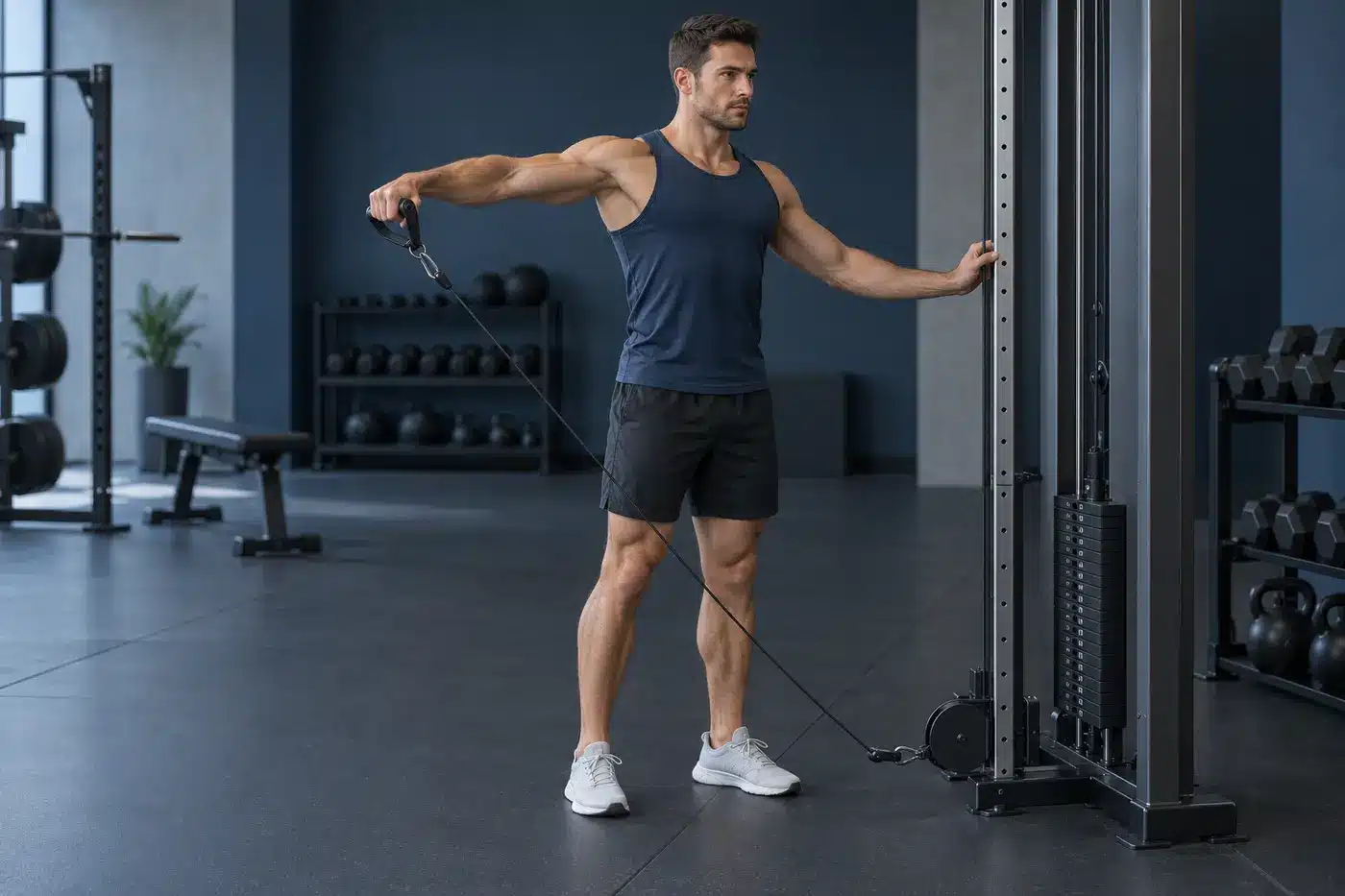
The cable lateral raise is a practical isolation exercise for the lateral deltoid. Its main advantage is not that cables are automatically superior to dumbbells, but that they offer an adjustable resistance direction, small loading increments and several comfortable setup options.
What Muscles Does the Cable Lateral Raise Work?
The main target is the lateral region of the deltoid, which contributes strongly to raising the arm away from the body. The anterior and posterior deltoid can assist depending on arm path and body position. The supraspinatus contributes near the beginning of shoulder abduction, while the trapezius and serratus anterior help rotate and control the shoulder blade as the arm rises.
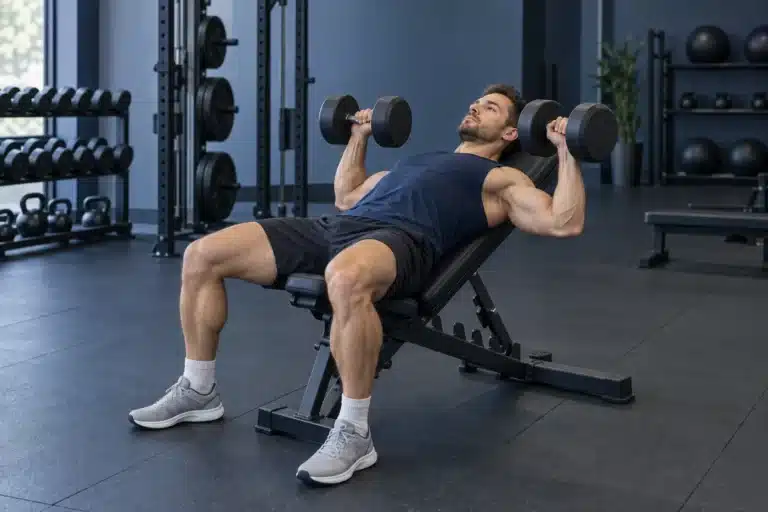
Pressing movements train the anterior deltoid substantially, but they may not provide the same lateral-delt emphasis. That is why a lateral raise can complement pressing such as the incline dumbbell press rather than compete with it.
Cable vs Dumbbell Lateral Raises
Cables are often described as categorically better because they provide “constant tension.” That claim is too simple. Muscle force, external torque and internal leverage all change across a repetition; a cable does not create identical muscular tension at every joint angle.
The best direct evidence currently available found similar lateral-deltoid hypertrophy from cable and dumbbell lateral raises after eight weeks in trained men and women. Both sides of each participant were trained, with one arm assigned to each exercise. The observed increases in muscle thickness were similar, which makes equipment preference, comfort and progression more important than declaring one implement the winner.1
| Factor | Cable | Dumbbell |
|---|---|---|
| Resistance direction | Adjusted by pulley position and body placement | Always directed vertically by gravity |
| Loading increments | Often small, especially with fractional add-ons | Depends on available dumbbell jumps |
| Setup | Requires a cable station and sometimes waiting | Fast and widely available |
| Hypertrophy evidence | Effective | Effective; no clear superiority in the direct trial |
How to Perform a Cable Lateral Raise
- Set the cable low. Attach a single handle or cuff. Stand side-on with the working arm away from the stack.
- Create light body tension. Hold the machine with the free hand if useful. Keep the torso stable without turning the exercise into a rigid full-body brace.
- Start with a soft elbow. Maintain a small and consistent elbow bend rather than flexing and extending the arm during the rep.
- Raise in a comfortable plane. Move the arm slightly forward of directly out to the side if that feels smoother. Lead with the elbow and let the hand follow.
- Stop around shoulder height. Going somewhat higher is not automatically wrong, but only use the range that remains comfortable and controlled.
- Lower deliberately. Resist the cable until you return to the chosen start position. Do not let the stack pull the arm down.
Should you “pour the jug”?
No. Deliberately turning the thumb far downward is not required to train the side delt and can be uncomfortable for some shoulders. A neutral hand or a small amount of natural rotation is sufficient. The humerus and shoulder blade must move together; preventing all shrugging or scapular motion is neither realistic nor desirable.
Pulley Height, Handle and Body Position
| Variation | What changes | When to use it |
|---|---|---|
| Low pulley | Provides resistance from the start and through the middle | Simple default |
| Cross-body start | Adds shoulder adduction and a longer starting position | When comfortable and easy to control |
| Cable cuff | Removes most grip and wrist demand | If the handle distracts or grip limits the set |
| Leaning away | Changes body angle and where the rep feels hardest | Optional variation, not a mandatory upgrade |
| Two-arm cable raise | Trains both sides together | Time efficiency when the station allows it |
A cuff does not have proven muscle-building superiority over a handle. It simply moves the point of force application and may make the exercise more comfortable. Similarly, starting behind the body can create a greater stretch, but more stretch is not automatically better if the shoulder position feels unstable.
Sets, Reps and Progression
Lateral raises work well in moderate and high repetition ranges because the target is relatively small and very heavy loads often invite body English. That does not make a specific repetition number magical.
| Goal | Sets × reps | Effort | Rest |
|---|---|---|---|
| Standard hypertrophy work | 2–4 × 10–20 | 1–3 RIR | 60–120 sec |
| Heavier controlled work | 2–3 × 8–12 | 1–3 RIR | 90–150 sec |
| Higher-rep finisher | 1–3 × 15–30 | 0–2 RIR | 60–90 sec |
Use double progression and preserve the same range. When you reach the top of the rep range across all sets, add the smallest available load. Cable stacks sometimes jump too much; a fractional plate, an extra rep or a slower controlled eccentric can bridge the gap without inventing a completely different exercise.
Two or three weekly exposures can be practical because the movement usually creates less systemic fatigue than compound pressing. However, count all direct shoulder work when setting weekly volume, and use RIR to keep effort consistent.
Common Cable Lateral Raise Mistakes
When Should You Choose Another Exercise?
If cable access is inconvenient, dumbbell or machine lateral raises are completely reasonable. Persistent shoulder pain is not a sign that the side delt is being trained more effectively. Choose a comfortable variation and review the general framework for exercise selection.
Frequently Asked Questions
Are cable lateral raises better than dumbbells?
Current direct evidence does not show a meaningful hypertrophy advantage. Cables may be easier to microload or adjust, while dumbbells are simpler and more accessible.
Should the cable be in front of or behind the body?
Either can work. A cross-body or slightly behind-body start lengthens the starting position, but comfort and control matter more than forcing a specific alignment.
How high should I raise my arm?
Around shoulder height is a useful default. A little lower or higher can also work if the movement remains comfortable and controlled.
Why do I feel my traps?
The trapezius helps rotate the shoulder blade during arm elevation, so some involvement is normal. If it dominates, reduce the load, slow the rep and focus on moving the elbow outward.
Can I train lateral raises every workout?
Possibly, but frequency should serve weekly volume and recovery. Start with two or three exposures and adjust based on performance, soreness and joint comfort.
Bottom Line
Cable lateral raises are an effective and adjustable way to train the lateral deltoid, but cables are not automatically superior to dumbbells. Choose a comfortable arm path, keep the elbow angle and range consistent, use moderate-to-high reps and progress in small increments.
References
- Larsen S, et al. Dumbbell versus cable lateral raises for lateral deltoid hypertrophy. Front Physiol. 2025.
- Schoenfeld BJ, et al. Strength and hypertrophy adaptations between low- vs high-load resistance training: a systematic review and meta-analysis. J Strength Cond Res. 2021.