
Animal vs Plant Protein for Muscle Growth
TL;DR
This article examines animal vs plant protein muscle growth from a physiological and evidence-based perspective.
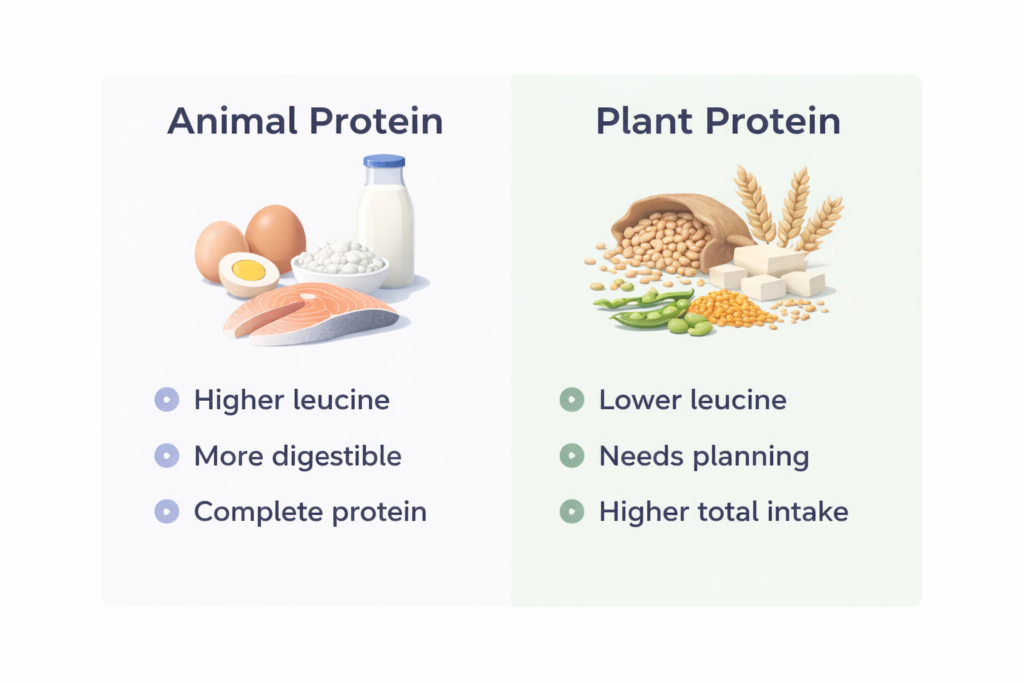
- Animal-based proteins stimulate muscle growth more efficiently due to higher leucine content, a complete amino acid profile, and superior digestibility
- Plant-based proteins can support similar hypertrophy outcomes, but usually require higher total protein intake and more deliberate planning
- Protein source matters most when total protein intake is low or borderline
- When protein intake is optimized, differences between animal and plant protein become secondary
This comparison fits within the broader context of protein for muscle growth, which is covered in detail in the main guide.
Beginner Explanation: Why Protein Source Matters
Protein supports muscle growth by providing amino acids—the building blocks required for muscle protein synthesis. While total daily protein intake is the most important factor, protein source still influences how easily these requirements are met.
Animal and plant proteins differ in amino acid composition, digestibility, absorption, and protein density per calorie. These differences affect how practical a given diet is for supporting muscle growth, particularly for people who train regularly, have high protein needs, or struggle with appetite.
This has led to ongoing debate around whether plant protein is inferior for hypertrophy. The reality is more nuanced.
Science Review: What the Research Actually Shows
Amino Acid Profile and the Role of Leucine
Muscle protein synthesis (MPS) is driven by the availability of essential amino acids (EAAs), with leucine acting as a key trigger through activation of the mTOR signaling pathway.
Animal-based proteins such as whey, milk, eggs, meat, and fish generally provide all essential amino acids in sufficient proportions, a higher leucine content per gram of protein, and an amino acid profile closely aligned with human muscle tissue.
Most single-source plant proteins, by comparison, tend to be lower in one or more essential amino acids, contain less leucine per gram, and vary substantially in amino acid composition.
As a result, gram for gram, animal proteins typically stimulate a stronger acute MPS response, particularly at lower protein doses. This does not mean plant proteins are ineffective. It means they are less efficient per gram, especially when protein intake is modest.
Digestibility and Bioavailability
A protein’s anabolic potential is also influenced by how well it is digested and absorbed.
Animal proteins consistently score higher on digestibility metrics such as PDCAAS (Protein Digestibility Corrected Amino Acid Score) and DIAAS (Digestible Indispensable Amino Acid Score). These scores account for both amino acid composition and absorption efficiency.
Plant proteins often contain fiber, phytates, and other anti-nutritional factors that can reduce amino acid absorption in whole-food form. This means a smaller proportion of ingested protein may become available for muscle protein synthesis.
Processing methods such as cooking, isolating protein fractions, and blending multiple plant sources can improve digestibility. Highly processed plant protein isolates, such as soy or pea isolate, perform substantially better than whole-food plant sources in this regard.
Matched Protein Intake: Does Source Still Matter?
Controlled studies comparing animal and plant protein sources while matching total protein intake provide important context.
When protein intake is sufficiently high, typically around 1.6–2.2 g/kg/day, and resistance training is well structured, differences in muscle mass gains are small or non-significant. Strength gains are largely comparable, and total protein intake becomes the dominant factor.
At lower protein intakes, however, animal proteins retain an advantage. Their higher leucine density and digestibility make it easier to reach the per-meal leucine threshold required to maximize muscle protein synthesis.
In practical terms, plant-based diets offer a smaller margin for error.
| Factor | Animal Protein | Plant Protein |
|---|---|---|
| Essential amino acids | Complete profile | Often incomplete in single sources |
| Leucine content | Higher per gram | Lower per gram |
| Digestibility | High (PDCAAS / DIAAS) | Lower in whole-food form |
| Protein efficiency | High (less needed) | Lower (more total protein needed) |
| Ease of meeting protein targets | Easier | Requires more planning |
| Suitability for hypertrophy | Highly effective | Effective when intake is optimized |
Practical Protein Adequacy: Why Vegan Diets Require More Planning
From a physiological standpoint, muscle growth depends on consistently meeting protein and essential amino acid targets. In practice, this can be more challenging on a fully plant-based diet, not because it is impossible, but because of several compounding factors.
Plant foods typically provide lower protein density per calorie, lower leucine content per gram, and require greater food volume to reach the same protein intake. As a result, individuals following vegan diets often need to consume higher total protein, distribute protein more evenly across meals, and rely on protein blends or isolated plant protein supplements.
Observational data consistently show that, on average, vegans consume less total protein than omnivores, even when energy intake is similar. This does not prevent muscle growth, but it increases the risk of under-consuming protein relative to training demands.
From a performance nutrition perspective, animal-based diets are generally more protein-efficient, allowing optimal protein and leucine targets to be reached with less total food intake.
Methodology & Practical Takeaways
Total daily protein intake is the primary driver of hypertrophy. Animal proteins offer practical advantages due to higher leucine content and superior digestibility. Plant proteins can support similar outcomes when total protein intake is sufficiently high.
Individuals relying primarily on plant protein should prioritize higher daily protein intake, larger per-meal protein doses, and strategic protein combinations to ensure essential amino acid adequacy.
Protein source matters most when intake is low or inconsistent. When intake is optimized, differences between animal and plant protein become secondary.
References
Phillips SM, Van Loon LJC. Dietary protein for athletes: from requirements to metabolic advantage.
https://pubmed.ncbi.nlm.nih.gov/22150425/
Morton RW et al. Protein supplementation and resistance training–induced gains in muscle mass and strength.
https://pubmed.ncbi.nlm.nih.gov/28698222/
van Vliet, S., Burd, N. A., & van Loon, L. J. C. (2015). The Skeletal Muscle Anabolic Response to Plant- versus Animal-Based Protein Consumption. Journal of Nutrition.
https://pubmed.ncbi.nlm.nih.gov/26224750/


