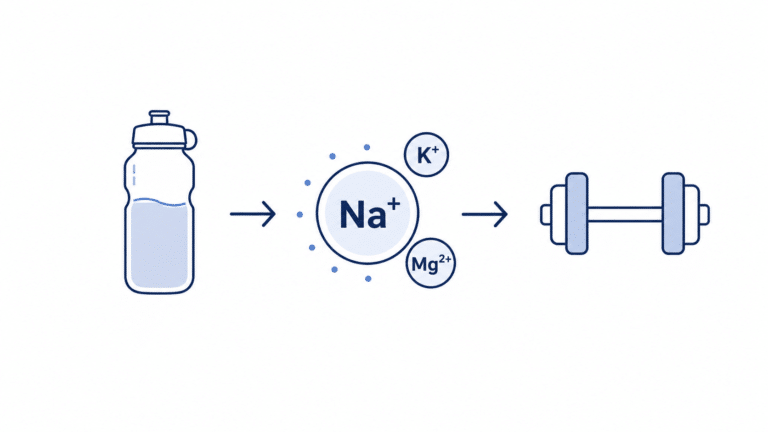
Creatine Timing: Before or After Training?
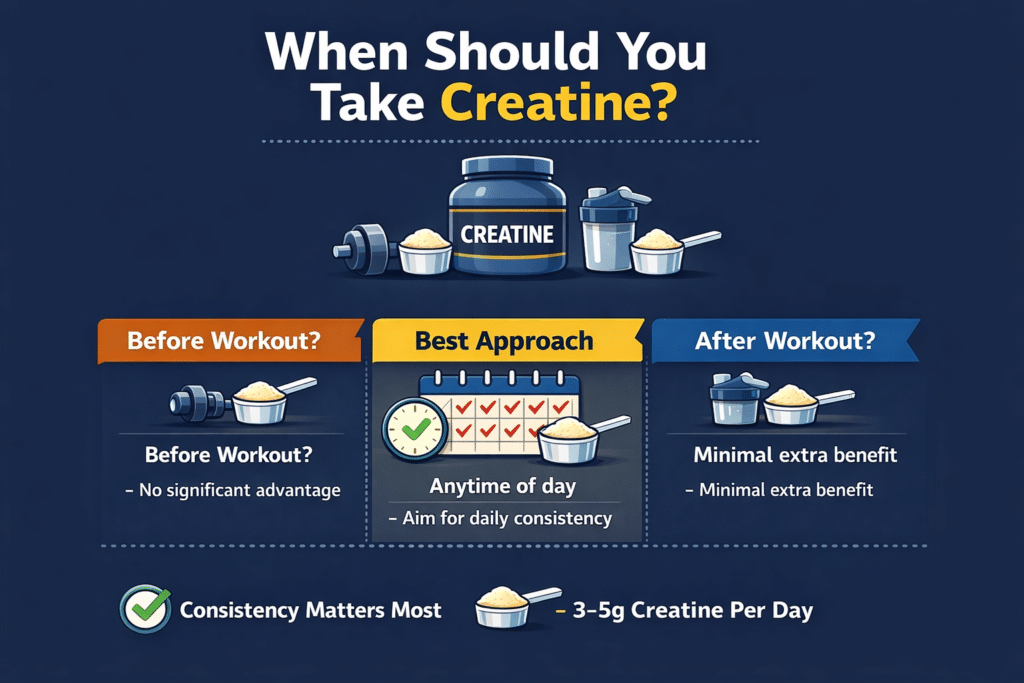
You can take creatine before or after training. Current research does not establish a meaningful advantage for either option. For most people, the best time to take creatine is whenever they can take it consistently.
Creatine Timing: The Short Answer
- Before or after training: Either is reasonable.
- Daily dose: Take 3–5 g of creatine monohydrate.
- Rest days: Continue taking your normal daily dose.
- With food: Optional, but it may make the habit easier to maintain.
- Main priority: Consistent intake matters more than precise timing.
Why Creatine Timing Matters Less Than You Think
Some supplements, such as caffeine, can produce noticeable effects shortly after you take them. Their timing relative to training may therefore affect the workout itself.
Creatine works differently. Supplementation gradually increases the creatine and phosphocreatine available in muscle. These elevated stores help regenerate ATP during repeated high-intensity exercise.
Because this process develops over repeated doses, one serving of creatine should not be treated like a conventional pre-workout stimulant. The broader pattern of supplementation matters more than whether today’s serving is taken immediately before or after training.
For a complete explanation of its mechanism, benefits and limitations, read our evidence-based creatine guide.
Is Creatine Better Before or After Training?
Current evidence does not provide a strong reason to prefer one side of the workout.
A small 2013 study reported results that appeared to favour post-workout supplementation, but it included only 19 recreational male bodybuilders, lasted four weeks and had methodological limitations that prevent a firm conclusion.1
Later research found that taking creatine immediately before or immediately after unilateral resistance training produced similar changes in muscle thickness and strength.2
An eight-week trial involving resistance-trained men and women also found no evidence that taking creatine before training was superior to taking it after training, or vice versa.3
The appropriate conclusion is not that timing has been proven completely irrelevant. The available studies are limited in number, sample size and design. Instead, there is currently no convincing evidence that a precise pre- or post-workout window produces meaningfully better results.4
Should You Take Creatine Before Training?
Taking creatine before training is perfectly reasonable if it fits naturally into your routine. For example, you could add it to a pre-workout drink or take it with a meal before going to the gym.
However, creatine should not be expected to create an immediate energy boost. A normal serving does not work like caffeine, and taking it shortly before training is unlikely to transform that individual workout.
Should You Take Creatine After Training?
Post-workout supplementation is equally reasonable. Adding creatine to a shake or meal after training can be an easy way to connect the supplement with an established habit.
Exercise and nutrient intake could theoretically influence creatine delivery or uptake, but mechanistic possibilities do not prove that post-workout supplementation produces greater long-term muscle or strength gains. Direct research has not established a reliable practical advantage.4
Do You Need to Take Creatine at the Same Time Every Day?
No. Your daily serving does not have to be taken at exactly the same time.
A regular time can still be useful because habits improve adherence. Breakfast, a post-workout meal or dinner can all work. Choose the routine that makes you least likely to forget.
If your schedule changes from one day to another, simply take your normal dose when convenient. There is no need to compensate by doubling the dose.
Does Creatine Timing Matter on Rest Days?
Timing matters even less on rest days because there is no workout window to consider. Take the same daily dose whenever it fits your schedule.
Continuing on rest days helps maintain the supplementation routine and elevated muscle creatine stores. Creatine is not limited to the hours in which you train.
Should You Take Creatine With Food?
Creatine can be taken with or without food. You do not need a special carbohydrate drink or post-workout shake for it to work.
Taking it with a normal meal may still be useful if this improves adherence or digestive comfort. The practical benefit of the meal is often that it provides a reliable reminder.
What If You Forget a Dose?
Missing one dose is unlikely to meaningfully change muscle creatine stores or training performance. Resume your normal daily dose rather than taking twice as much the following day.
If missed doses become frequent, connect creatine with something you already do every day. Read what happens if you miss creatine for a few days for a more detailed explanation.
A Simple Creatine Routine
- Choose ordinary creatine monohydrate.
- Take 3–5 g every day.
- Use the same dose on training and rest days.
- Take it before training, after training or with a convenient meal.
- Prioritise consistency rather than searching for a perfect window.
Women and men do not need different timing protocols. Loading is also optional. For the complete dosing explanation, read how much creatine to take per day.
You do not need a special “pre-workout” or “post-workout” form of creatine. If you are choosing a product, see our creatine monohydrate assessment and THG Fit Check for the formula, available quality information and limitations we identified.
Frequently Asked Questions
How long before training should I take creatine?
You do not need to take creatine a specific number of minutes before training. If pre-workout supplementation fits your routine, take your normal daily dose at a convenient time.
Can I put creatine in my post-workout shake?
Yes. Adding creatine to a post-workout shake is a convenient option, but the shake does not create a mandatory anabolic window for creatine.
Can I take creatine before bed?
Yes. Creatine is not a stimulant, so taking it before bed is generally a reasonable option if you tolerate it and the timing helps you remain consistent.
Should I take creatine on cardio days?
Yes. If you use creatine, continue your normal daily dose regardless of whether the day includes resistance training, cardio or rest.
Is dry scooping creatine better?
No. Dry scooping does not improve creatine absorption or results and can make the powder unpleasant or difficult to swallow. Mix it with an appropriate amount of liquid instead.
Bottom Line
Creatine can be taken before or after training. Current evidence does not establish that either timing produces meaningfully greater muscle or strength gains.
Take 3–5 g of creatine monohydrate per day and choose the time that makes consistent use easiest. A repeatable routine matters more than a precise workout window.
References
- Antonio J, Ciccone V. The effects of pre versus post workout supplementation of creatine monohydrate on body composition and strength. Journal of the International Society of Sports Nutrition. 2013;10:36.
- Forbes SC, Krentz JR, Candow DG. Timing of creatine supplementation and resistance training: a brief review. Journal of Exercise and Nutrition. 2021.
- Dinan NE, Candow DG, Forbes SC, et al. Effects of creatine monohydrate timing on resistance training adaptations and body composition after eight weeks in male and female athletes. Frontiers in Sports and Active Living. 2022;4:1033842.
- Ribeiro F, Longobardi I, Perim P, et al. Timing of creatine supplementation around exercise: a real concern? Nutrients. 2021;13(8):2844.