Creatine Buying Guide: Powder, Capsules & Real Cost
← Creatine guides · THG buying guide
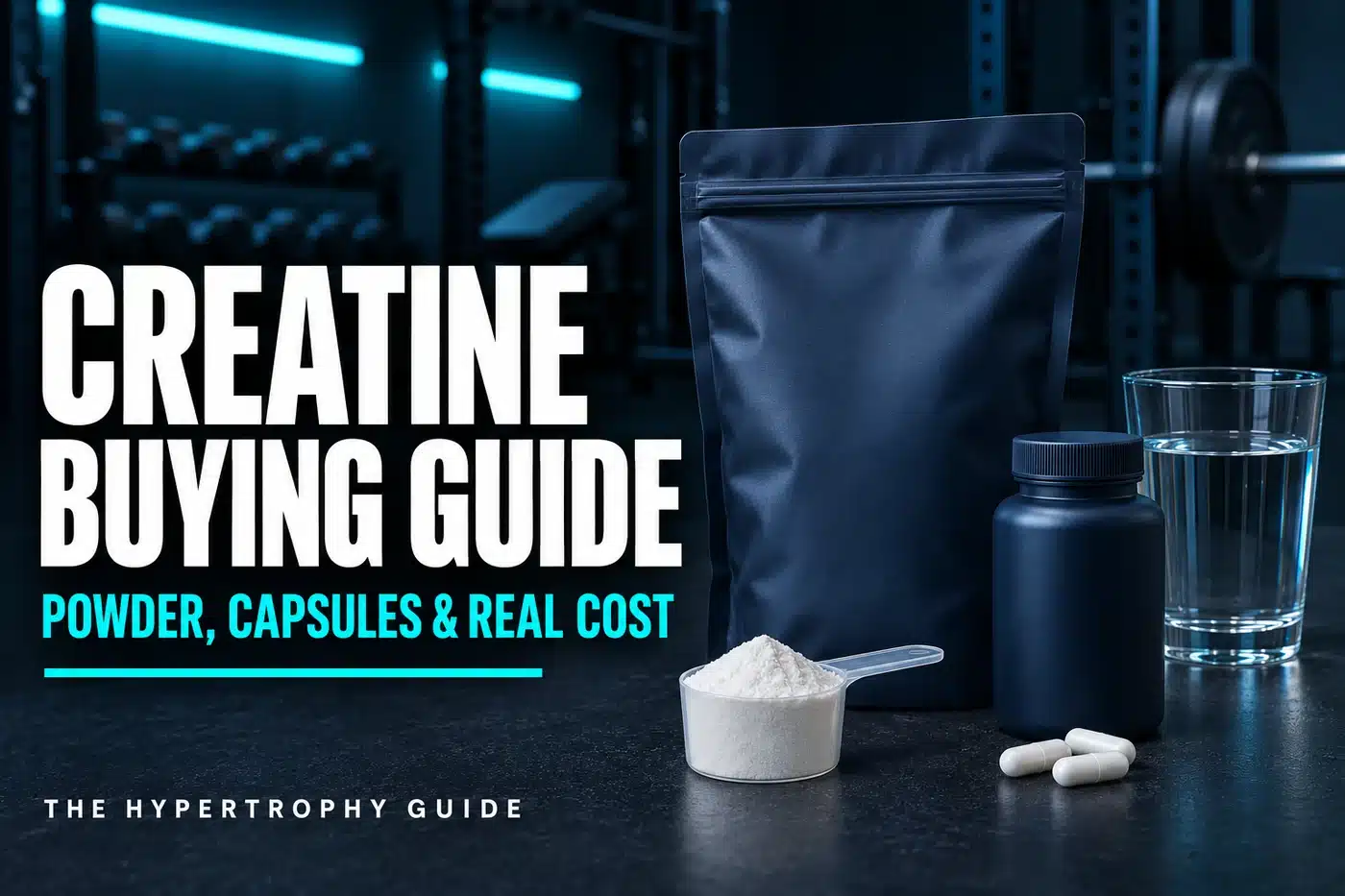
This creatine buying guide focuses on the purchase decision: powder or capsules, what a serving actually contains, and whether an extra is worth paying for. For benefits, dosing and safety, use our complete creatine guide.
How we assessed the examples: manufacturer information and price snapshots checked on 16 November 2026. These are label assessments, not hands-on mixing tests, laboratory tests or a ranking of every product. The two product cards link to UK and Danish stores through affiliate links; THG may earn a commission. They are regional examples, not a worldwide cheapest-product claim. See how we assess supplements.
Choose the Format Around Your Routine
Considering a chewable format? Compare creatine gummies with powder for product-specific testing, declared amounts and a worked cost comparison.
| Option | A reason to consider it | What to check |
|---|---|---|
| Plain monohydrate powder | A simple ingredient list and flexible measuring. | Net weight, the exact ingredient list, delivered price and your pack’s instructions. |
| Monohydrate capsules | No powder to measure or mix. | Capsules per serving, the amount of monohydrate, capsule ingredients and maximum labelled use. |
| Flavoured powder or a blend | A flavour or additional ingredient you deliberately want. | Total product weight is not necessarily the weight of creatine monohydrate. |
| A premium or certified product | Traceable product-specific testing may matter to your sport or preferences. | The exact certification, its scope and whether your product or batch is covered. |
Powder: simple, but read the scoop instructions
Unflavoured single-ingredient powder makes the ingredient list easier to interpret. It does not automatically make one brand cheaper, better mixed or better tested than another. Compare the exact pack you can actually buy.
A scoop, a teaspoon and a gram are different units. Use the current pack instructions rather than copying a scoop count from a different brand or an older label. A large tub is only good value if its delivered unit cost is lower and you will use it.
Capsules: compare the ingredient amount, not the bottle count
A bottle containing 200 capsules does not contain 200 grams of creatine. You need the number of capsules and the declared amount per capsule or serving. Capsule shells and other ingredients are part of the product’s weight too.
Follow the maximum use on the actual pack. A cost comparison is not a reason to take extra capsules to reach a number shown in a calculator.
Compare the Same Quantity Before Comparing the Price
Use the same currency and include delivery. Compare single packs with single packs, and account for any minimum spend or multipack commitment. A discount code is useful only if it applies to the order you would actually place.
Delivered cost per 100 g of creatine monohydrate = (price + delivery) ÷ total declared grams of creatine monohydrate × 100.
For a single-ingredient powder, the net powder weight can provide a straightforward pack-weight comparison. For capsules or a flavoured blend, calculate the declared creatine-monohydrate content separately. Do not count flavouring, capsule shells or a proprietary blend’s total weight as creatine.
Labels may distinguish creatine monohydrate from creatine. Keep the basis consistent across products. If one label provides only a different measure or has conflicting amounts, resolve that before treating the figures as an exact comparison.
Creatine Price Calculator
Start with the hypothetical £25 / 500 g example, then enter your own pack. Use the total declared grams of creatine monohydrate, not the weight of a mixed product. The portion size is for cost comparison, not a personalised dose recommendation. Enter price and delivery in the same currency; changing currency does not convert the amounts.
Capsules: capsule count × declared mg per capsule ÷ 1,000 = total grams. If the amount is given per serving, multiply the number of complete servings by the grams per serving. Keep creatine and creatine-monohydrate figures separate.
Two Regional Powder Examples
These examples show what to examine on a real product page. They are not a complete UK, Danish or US market comparison. If you live elsewhere, use the checklist with a locally available product and check delivery before following either shopping link.
Optimum Nutrition Micronised Creatine Powder
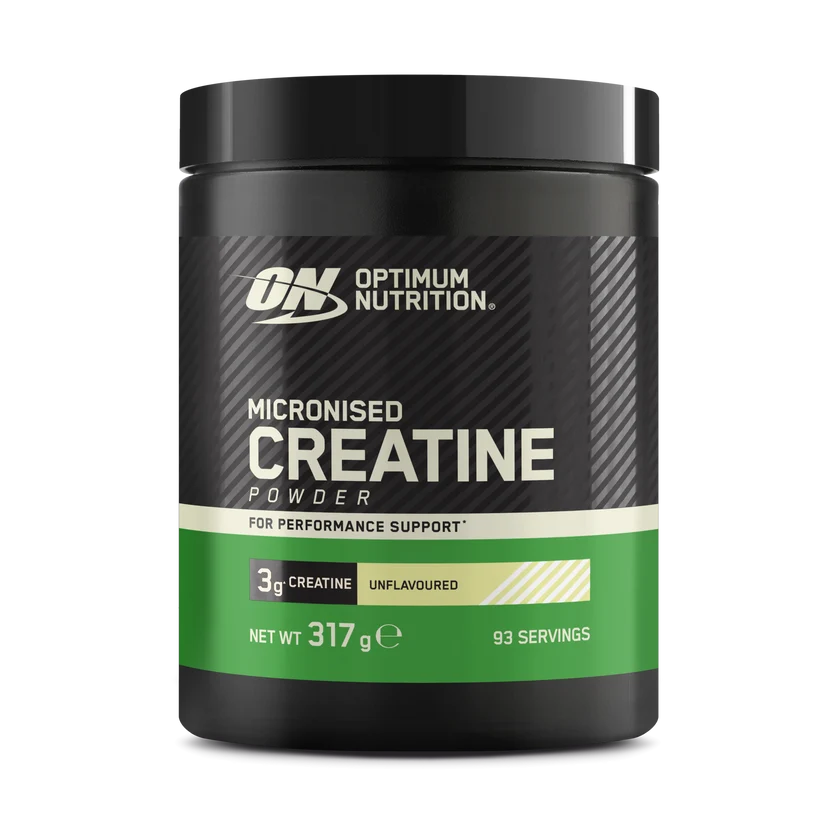
Unflavoured · 317 g · £22 when checked. The ingredient list specifies creatine monohydrate. The headline pack price works out to about £6.94 per 100 g of powder before delivery.
Label limitation: the UK page shows conflicting serving sizes and counts, including 88 and 93 servings. This guide therefore uses net pack weight for its price illustration and does not claim an exact cost per labelled daily serving. Verify your actual pack.
Check pack at ON UK ↗Affiliate link. Manufacturer information assessed; no hands-on test or independent batch certification verified by THG. Manufacturer source.
Bodylab Creatine
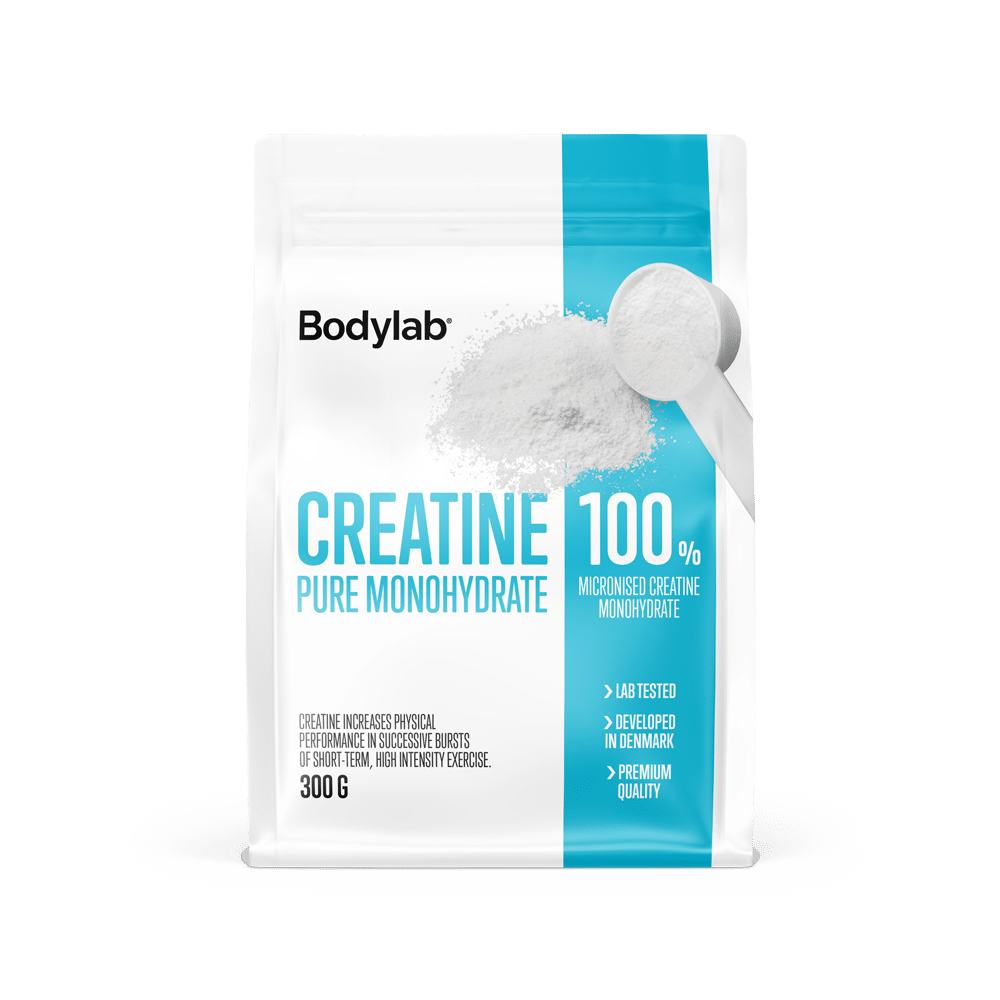
Neutral / unflavoured · 300 g · 99 DKK sale price when rechecked on 16 November 2026 (listed regular price: 159 DKK). The listed ingredient is creatine monohydrate. The sale price is 33 DKK per 100 g of powder before delivery; at the listed regular price it would be 53 DKK. The label distinguishes 3 g monohydrate from 2.64 g creatine.
Check pack at Bodylab DK ↗Affiliate link. Manufacturer label assessed; no hands-on test or independent batch certification verified by THG. Check the current pack’s allergen and use information. Manufacturer source.
Prices were checked on 16 November 2026 and can change. GBP and DKK figures have not been converted and are not a cross-country value ranking.
Comparing a larger pack in your country?
iHerb also lists an unflavoured 454 g pack of California Gold Nutrition Sport creatine monohydrate. Select your delivery country first. To compare it with a smaller tub, divide the delivered price by 4.54 for the cost per 100 g. Check the 454 g pack at iHerb (affiliate link).
Why there is no capsule “winner” here
The current ON UK Elite capsule page illustrates why label clarity matters: its price-per-serving display does not reconcile with its £50 / 200-capsule / 100-serving description, and it does not display full nutritional information for the variant. THG has not turned that incomplete information into an exact daily-cost comparison or a capsule recommendation.
What Would Justify Paying More?
A clear ingredient list, a verifiable testing programme or a format that makes your routine easier can be useful reasons. A premium-looking tub, a larger scoop or the word “micronised” alone does not establish a better muscle-growth result.
Creatine monohydrate is the benchmark used throughout the research literature. A more complicated name should prompt a request for relevant evidence, rather than an automatic upgrade. For the evidence behind the ingredient, use the main creatine guide and the review listed below.
For a testing claim, check the exact product and batch in the certification provider’s directory. NSF Certified for Sport supports product and lot searches; USADA explains why a logo alone is insufficient. Certification has a defined scope; it is not proof that one product produces more muscle than another.
A Short Checklist Before Checkout
- Can I identify the ingredient and the amount supplied?
- Have I compared the same quantity in the same currency, including delivery?
- Do the serving size, serving count and pack size agree?
- Does the exact formulation, capsule shell or allergen information suit my needs?
- Can I verify any certification that matters to me?
- Am I paying for a flavour, convenience or extra ingredient I actually want?
If the label is unclear, ask the manufacturer or choose a clearer alternative. Buying a simpler product can make the decision easier; buying no supplement remains an option too.
Frequently Asked Questions
Is powder always cheaper than capsules?
No. Compare the delivered cost for the same declared amount. Bottle count and tub weight alone cannot settle the comparison.
Can I compare the scoop count on two tubs?
Only after checking the amount in each scoop. Scoops and labelled serving definitions can differ. Net weight and a clearly declared ingredient amount are more useful.
Should I take more capsules to match the calculator?
No. The calculator compares cost, not personal dosing. Follow the actual pack’s maximum use; choose a different suitable product if its instructions do not fit your requirements.
Sources and Method
Label and price facts: the manufacturer pages linked in the two product examples and the capsule discussion, checked 16 November 2026. Calculator outputs are arithmetic from the values entered. Product examples do not demonstrate ingredient efficacy or brand superiority.
- Antonio et al. (2021): Common questions and misconceptions about creatine supplementation. A research review; it does not test or rank the retail packs shown here.
- NSF Certified for Sport product directory.
- USADA: Verify Third-Party Certified Logos and Product Batches.
Continue with daily creatine dosage, loading or no loading, or Alex’s protein powder buying guide.